

Przejdź do treści

Check out our NEWS 2026

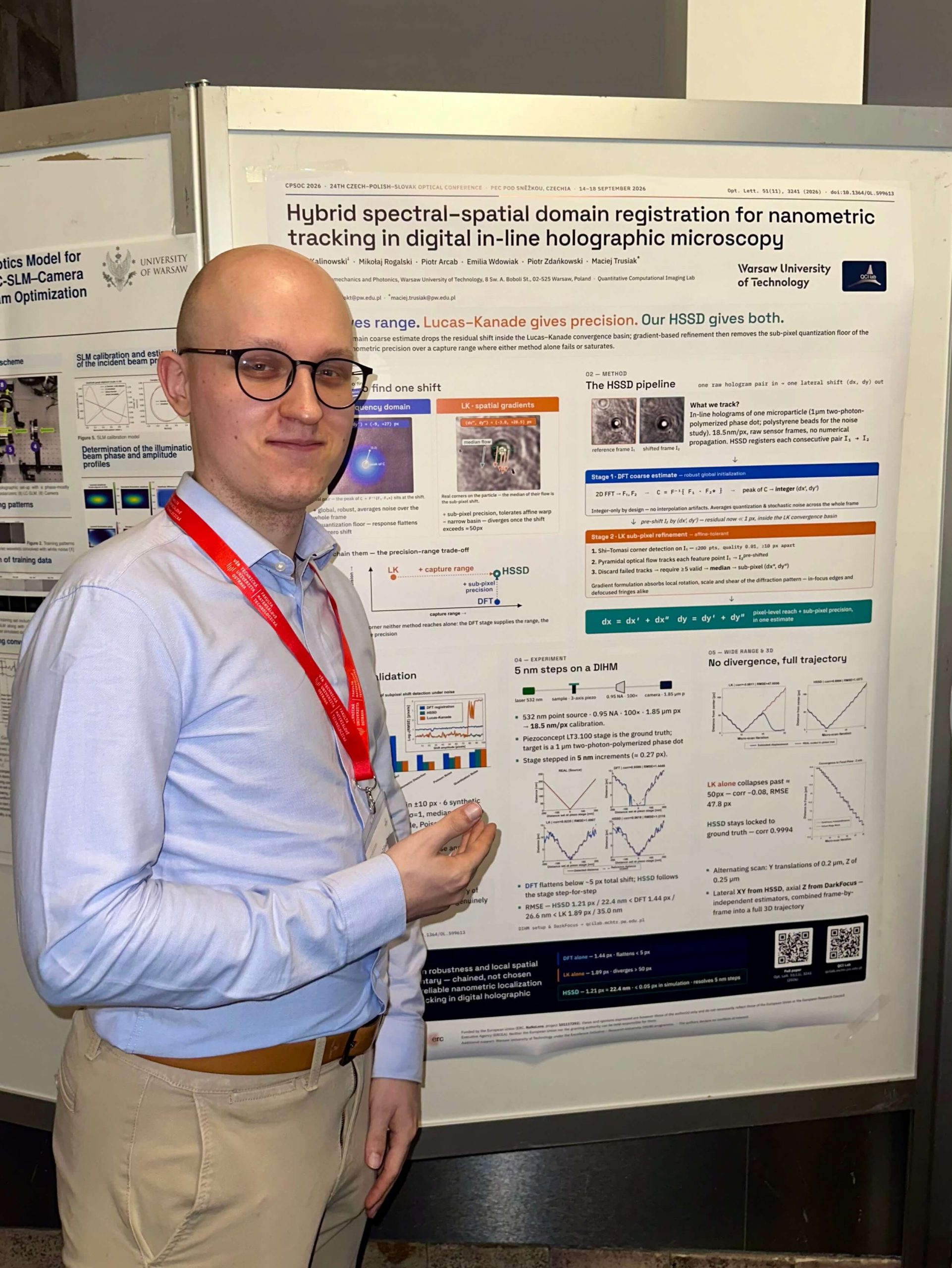
[July 2026] Discover our latest publication: “𝐇𝐨𝐋𝐋𝐨𝐀𝐩𝐩: 𝐚 𝐫𝐞𝐜𝐨𝐧𝐬𝐭𝐫𝐮𝐜𝐭𝐢𝐨𝐧 𝐭𝐨𝐨𝐥 𝐟𝐨𝐫 𝐡𝐢𝐠𝐡-𝐭𝐡𝐫𝐨𝐮𝐠𝐡𝐩𝐮𝐭 𝐥𝐚𝐛𝐞𝐥-𝐟𝐫𝐞𝐞 𝐜𝐨𝐦𝐩𝐥𝐞𝐱-𝐟𝐢𝐞𝐥𝐝 𝐢𝐦𝐚𝐠𝐢𝐧𝐠 𝐢𝐧 𝐥𝐞𝐧𝐬𝐥𝐞𝐬𝐬 𝐡𝐨𝐥𝐨𝐠𝐫𝐚𝐩𝐡𝐢𝐜 𝐦𝐢𝐜𝐫𝐨𝐬𝐜𝐨𝐩𝐲”, in 𝘑𝘗𝘩𝘺𝘴 𝘗𝘩𝘰𝘵𝘰𝘯𝘪𝘤𝘴 (IOP Publishing)

📏 𝐓𝐡𝐞 𝐧𝐨𝐯𝐞𝐥𝐭𝐲
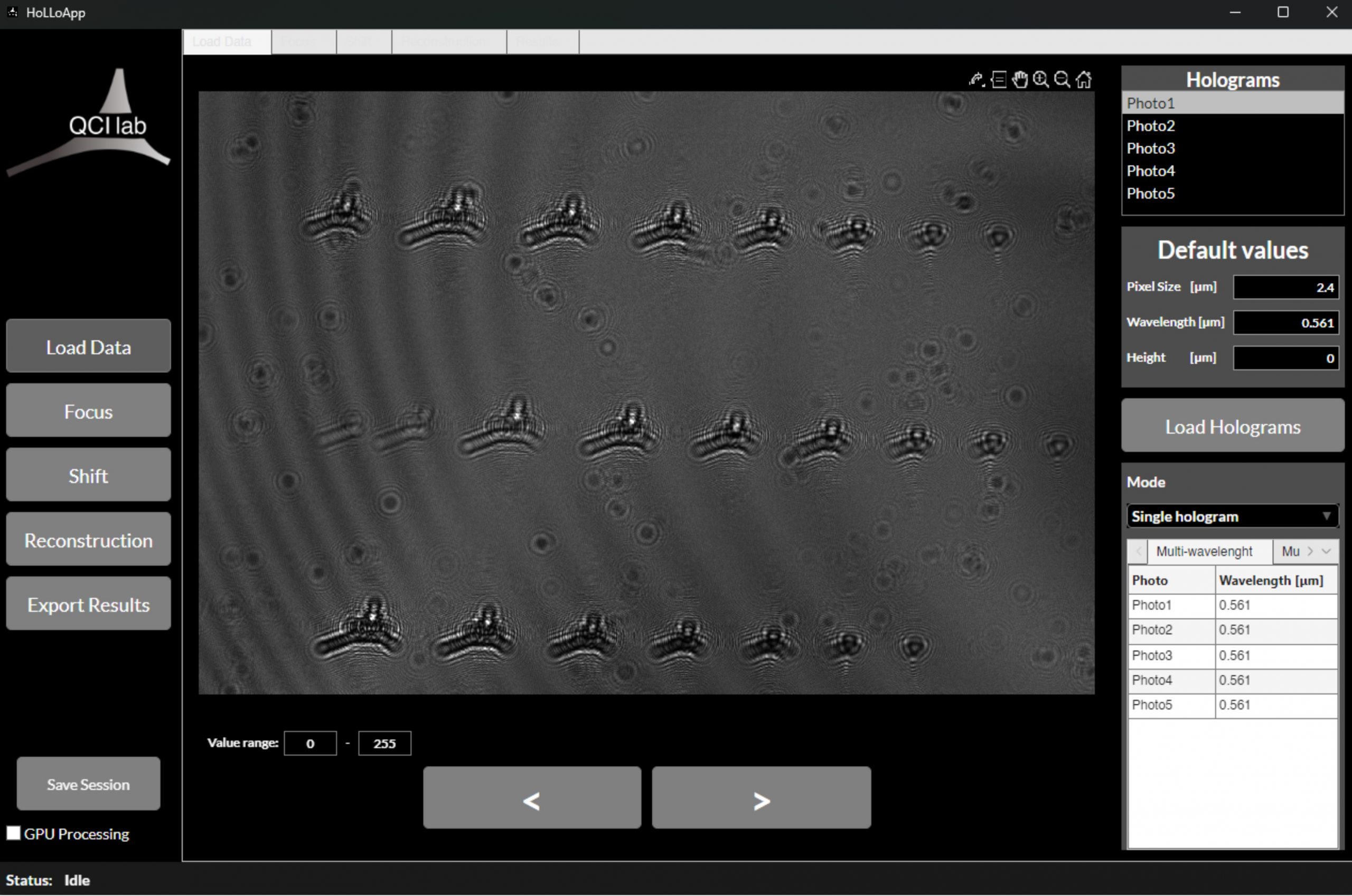
We present HoLLoApp, an open-source, end-to-end MATLAB application that converts raw holograms into analysis-ready amplitude and phase images through a single unified workflow. It integrates robust autofocusing, automatic shift/scale correction, and GPU-accelerated Gerchberg-Saxton-based iterative phase retrieval, removing the manual, multi-step bottlenecks that typically limit throughput and reproducibility in lensless digital in-line holographic microscopy (LDIHM). By standardizing reconstruction and exporting outputs together with processing parameters and metadata, HoLLoApp bridges raw holographic measurements and scalable, label-free, high-throughput quantitative bioimage analysis – with a user-friendly GUI accessible to both expert and non-expert users.

👥 𝐓𝐞𝐚𝐦
This study is the result of great work by QCI Lab members: Bartosz Górski, Mikołaj Rogalski, Emilia Wdowiak, Piotr Arcab, Kamil Kalinowski and Maciej Trusiak.

♦️ 𝐅𝐮𝐧𝐝𝐢𝐧𝐠
The National Centre for Research and Development, Poland (LIDER14/0329/2023, Lider XIV call).

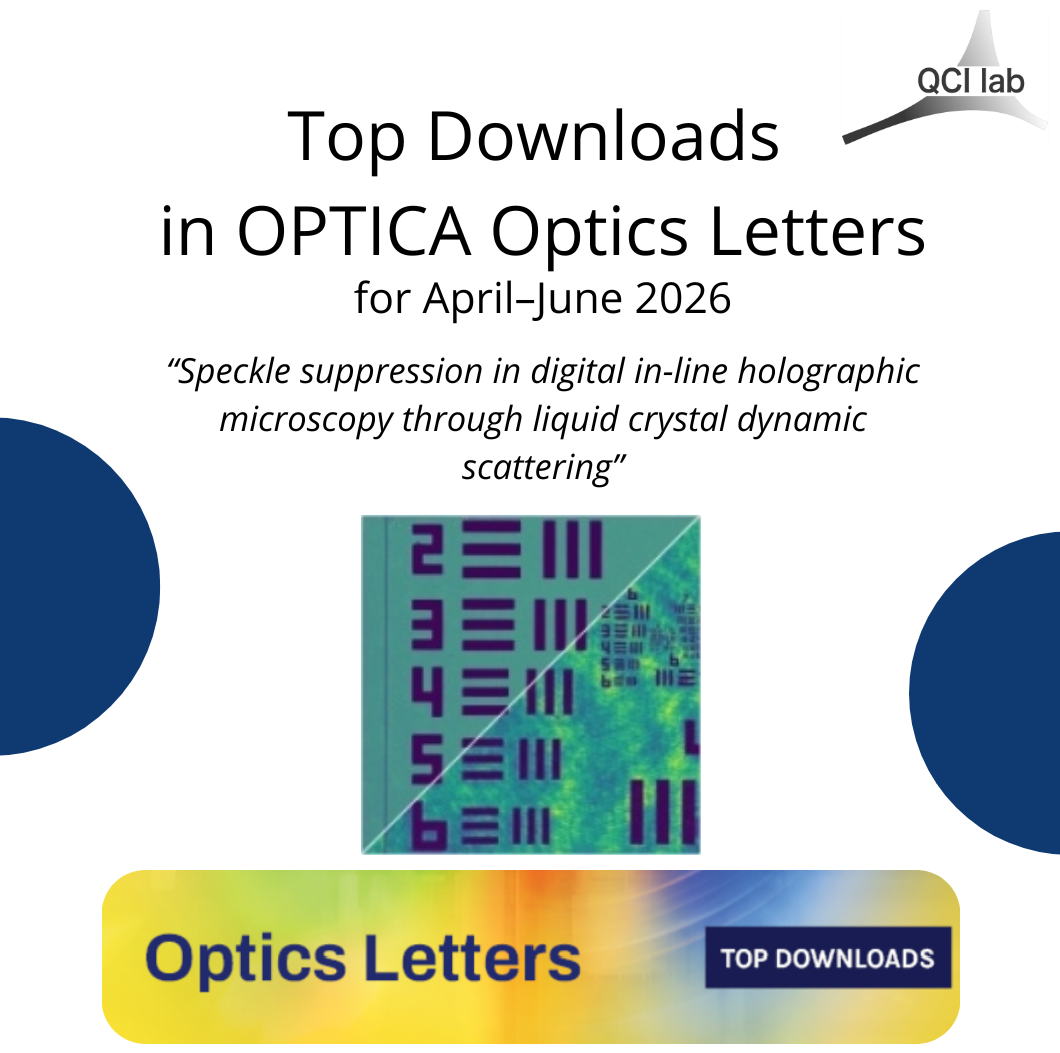
[July 2026] We’re excited to share that our paper “Speckle suppression in digital in-line holographic microscopy through liquid crystal dynamic scattering” was featured among the 𝐓𝐨𝐩 𝐃𝐨𝐰𝐧𝐥𝐨𝐚𝐝𝐬 𝐢𝐧 𝐎𝐩𝐭𝐢𝐜𝐬 𝐋𝐞𝐭𝐭𝐞𝐫𝐬 𝐟𝐨𝐫 𝐀𝐩𝐫𝐢𝐥–𝐉𝐮𝐧𝐞 𝟐𝟎𝟐𝟔 by Optica Publishing Group. 🎉

This work is based on the research carried out by our PhD student and first author, Emilia Wdowiak, during her research stay at the University of Oxford under Martin Booth’s supervision. It’s great to see the results of this fantastic international partnership gaining such strong visibility within the photonics community.

Congratulations to all the authors:
Emilia Wdowiak, Nathan Spiller, Tianxin Wang, Camron Nourshargh, Jolanta Mierzejewska, Piotr Zdańkowski, Stephen Morris, Steve Elston, Maciej Trusiak, Martin Booth.

A huge congratulations to the whole team! It’s wonderful to see the work from QCI Lab reaching and resonating with the global photonics community. 🌍✨

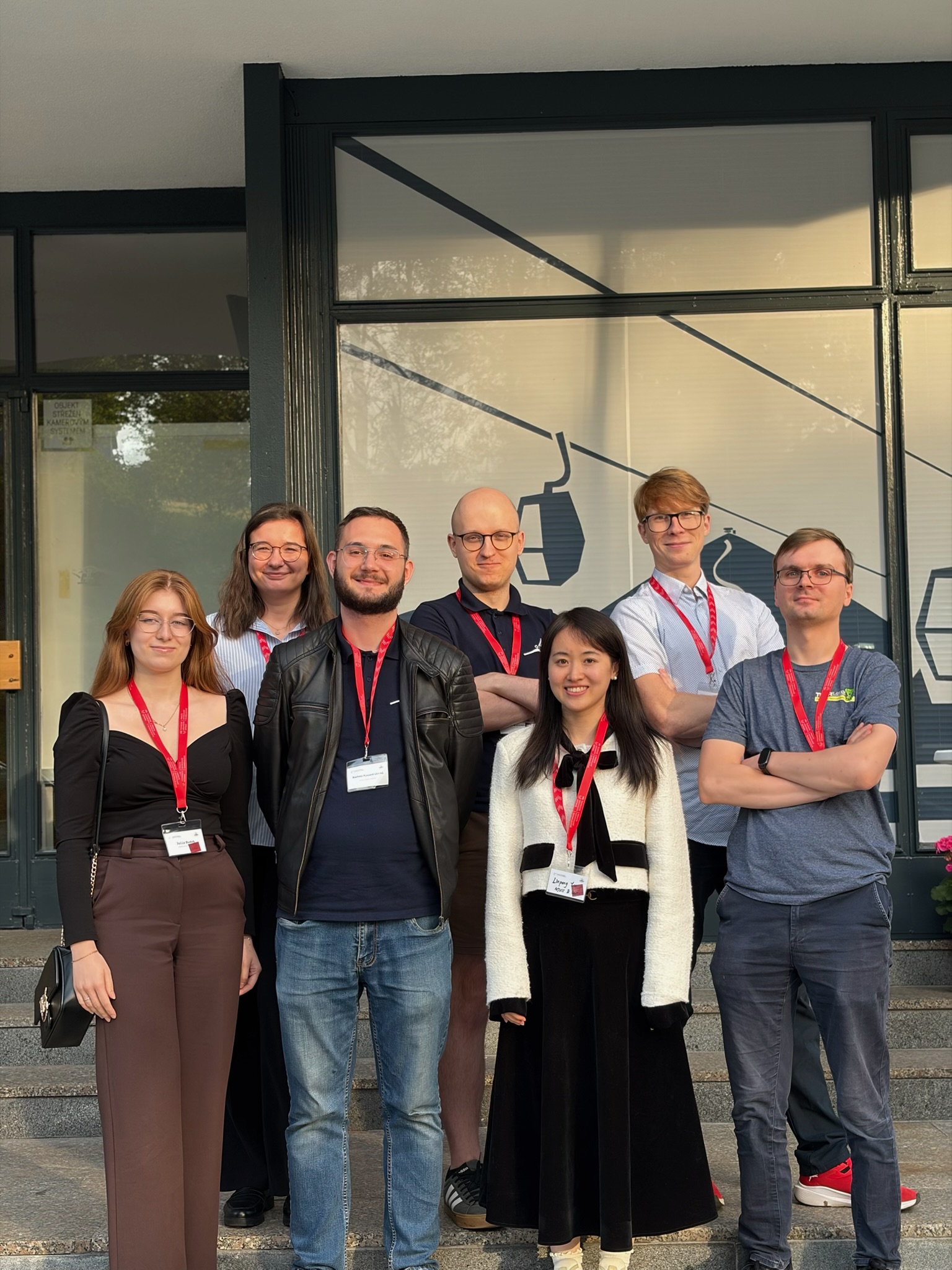
[July 2026] What an inspiring week at ImageSense Congress 2026 in Maastricht! 🇳🇱✨

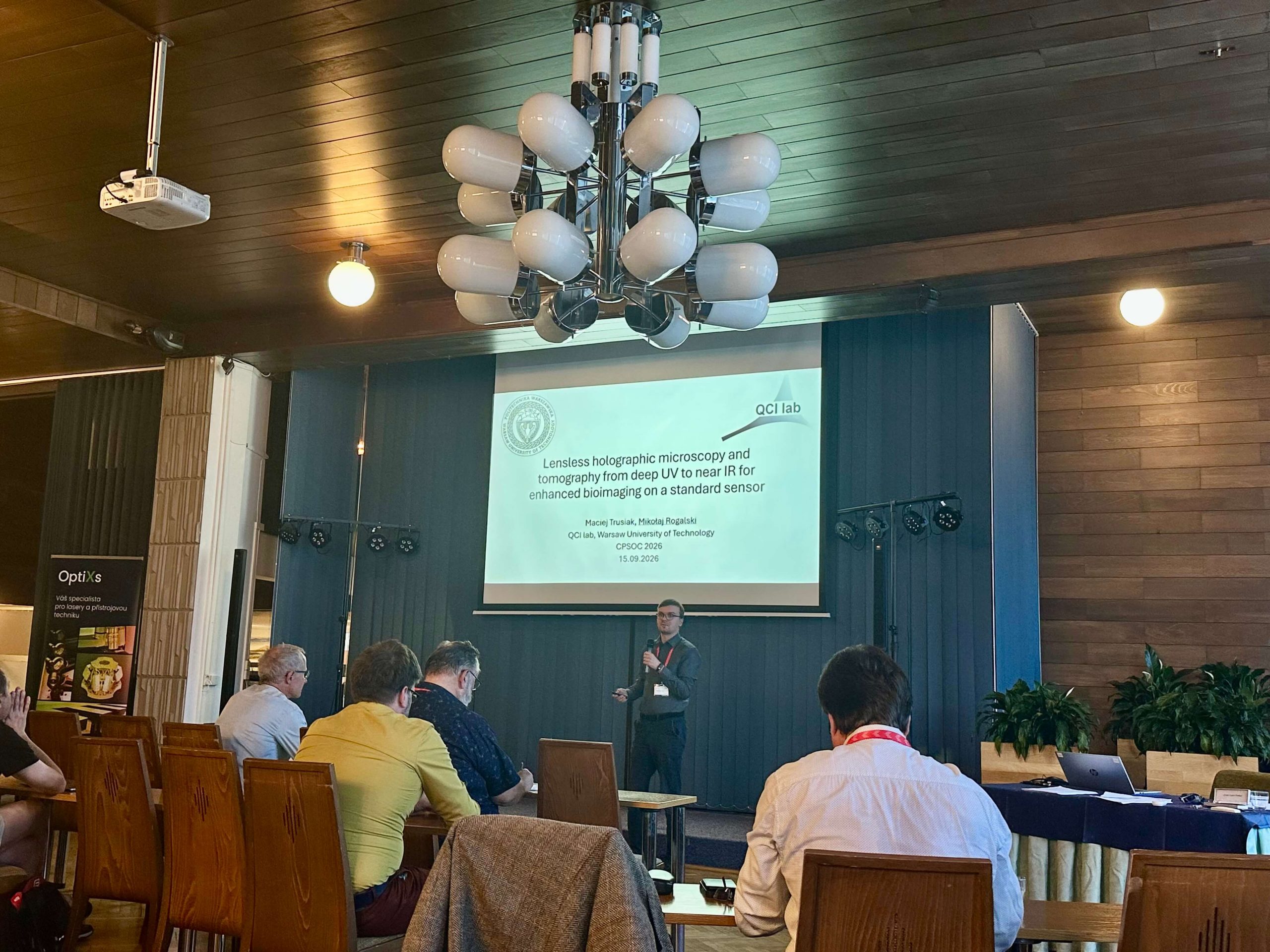
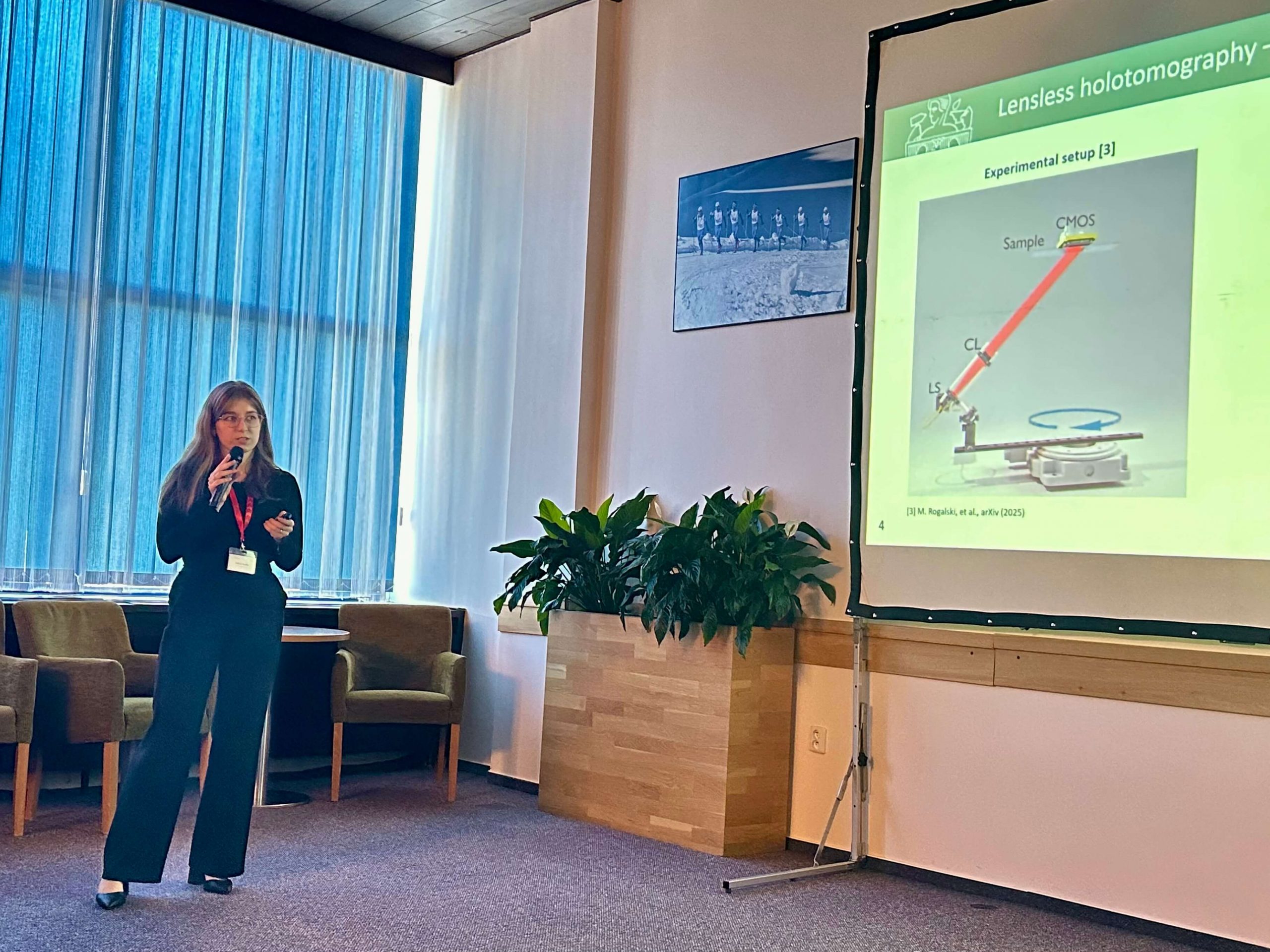
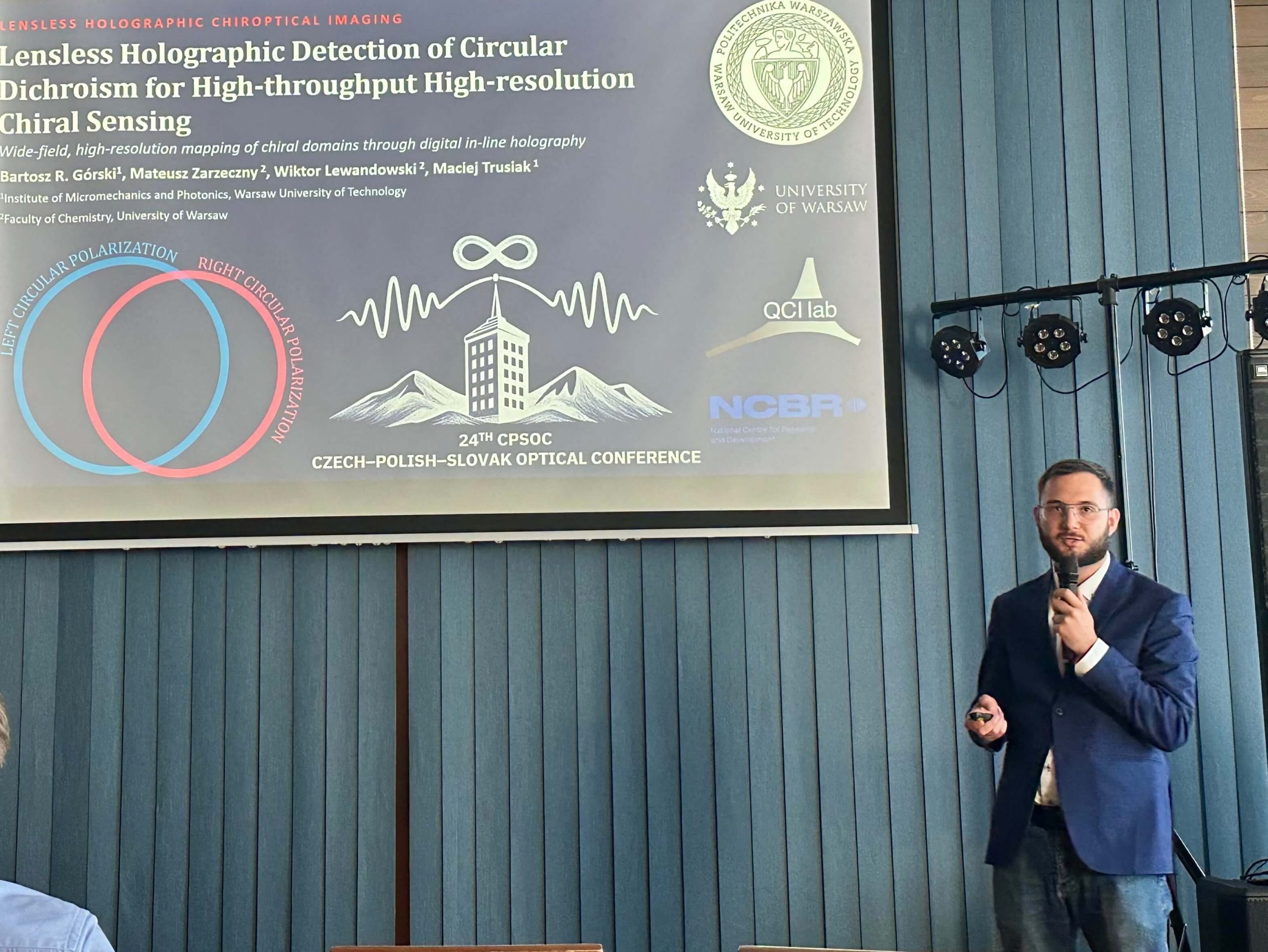
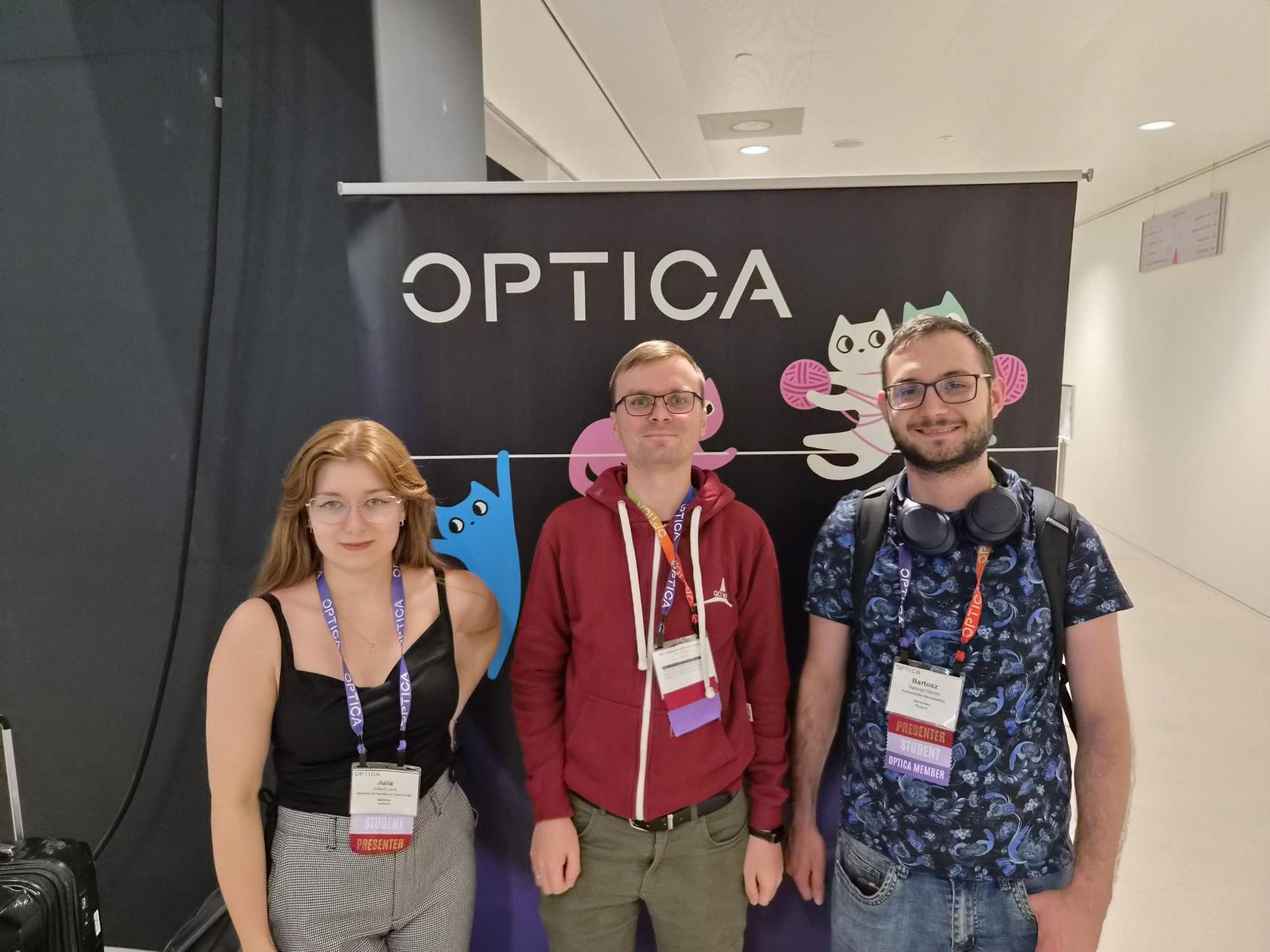
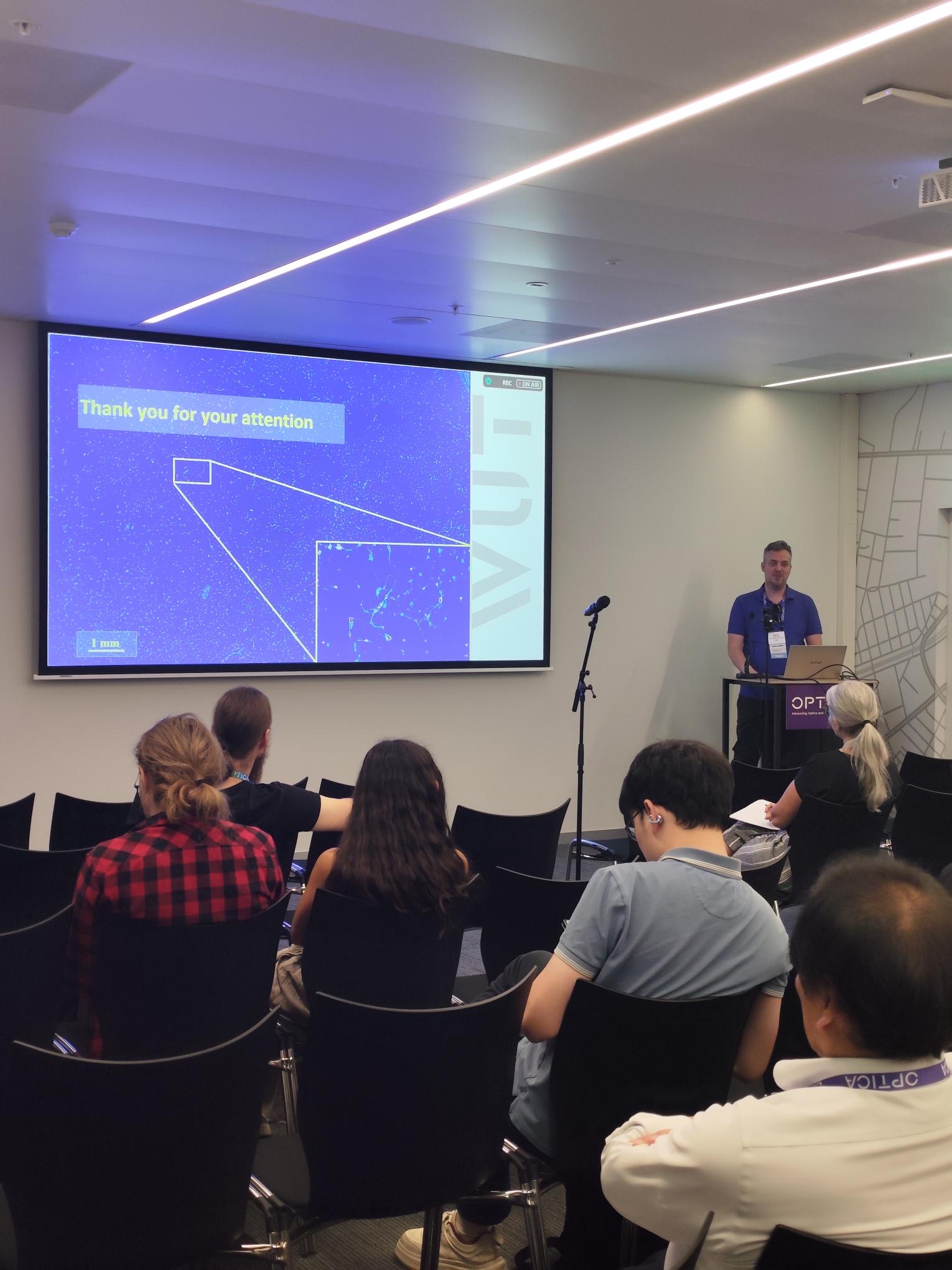
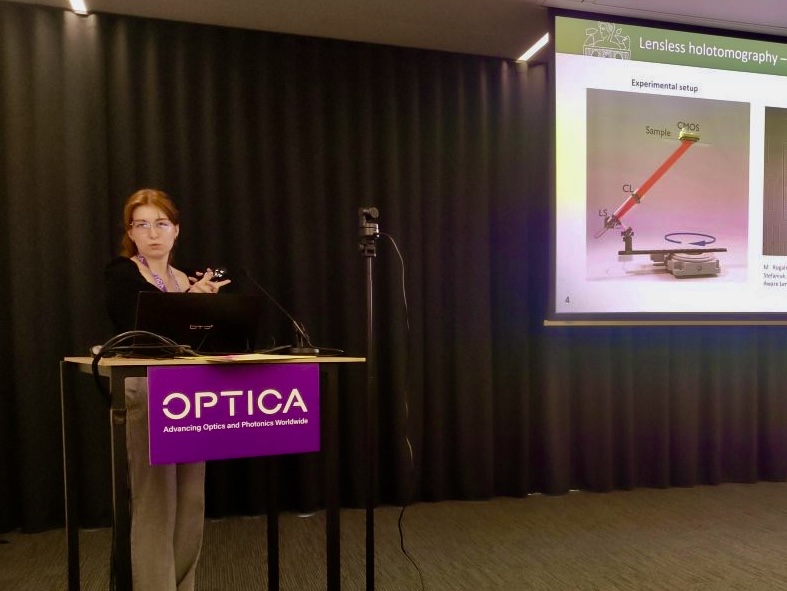
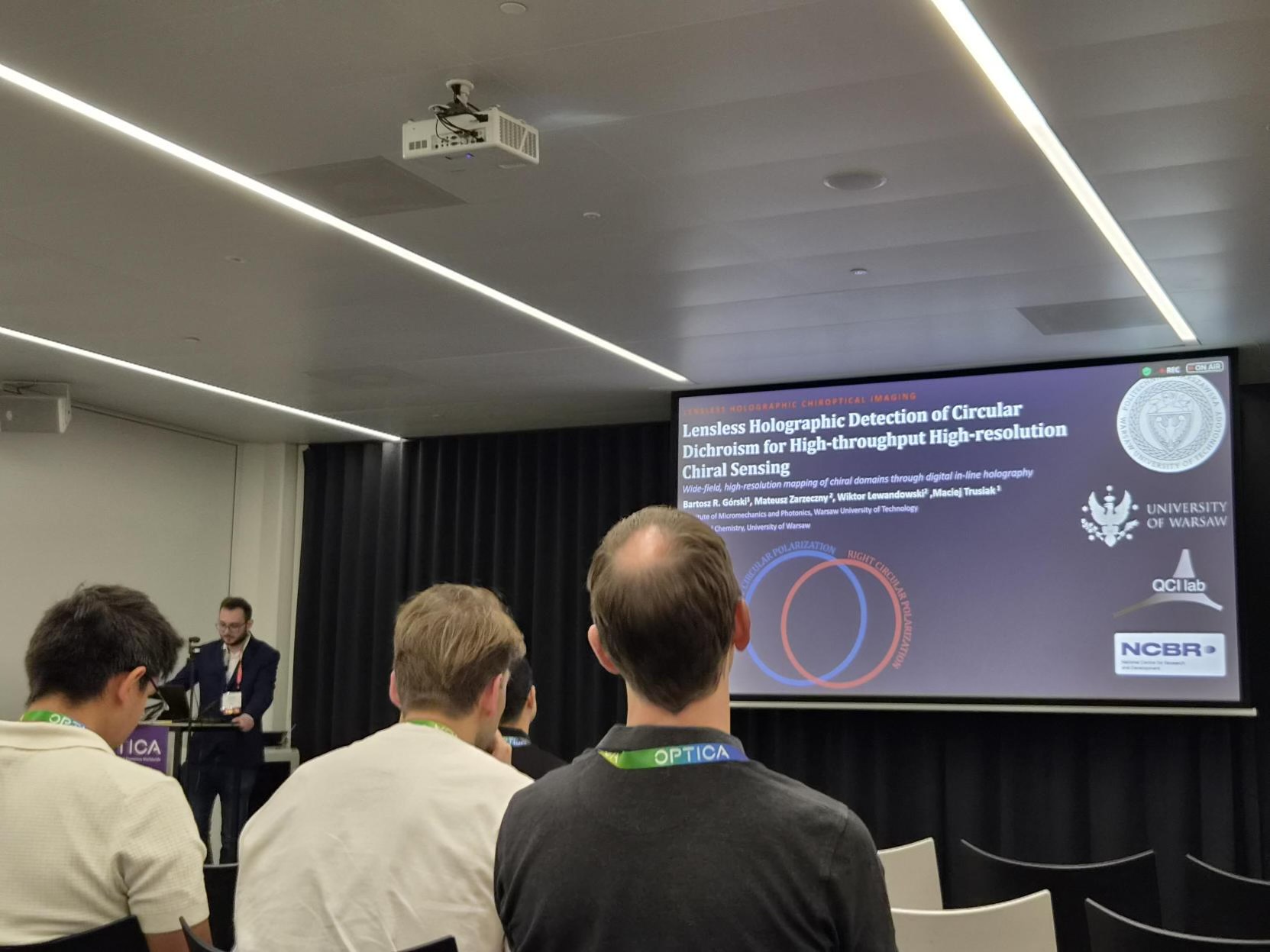
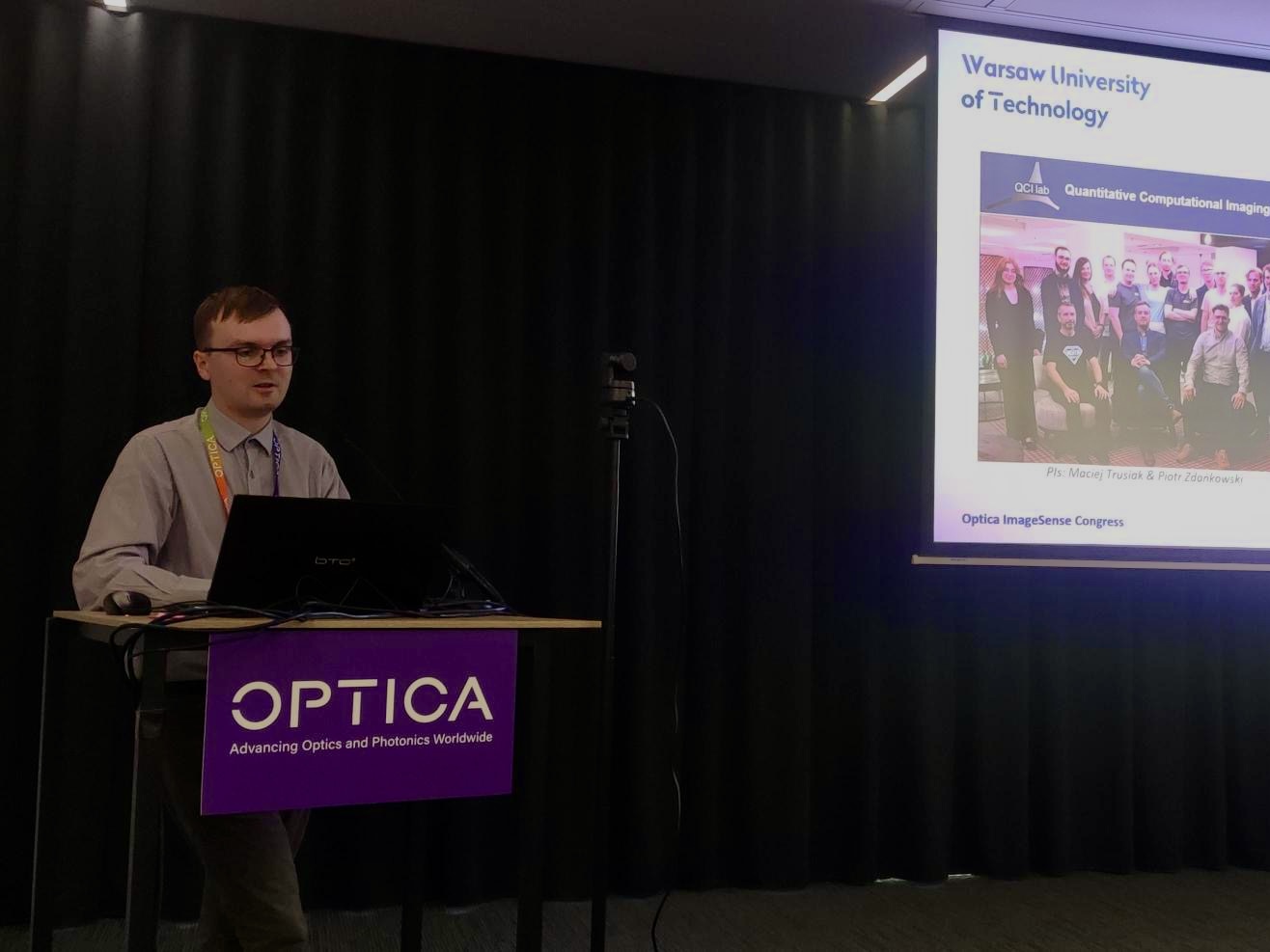
We were proud to be part of this year’s Computational Optical Sensing and Imaging (COSI) conference and to showcase the breadth of our research through four oral presentations. Julia Dudek presented new results in lensless holotomography, Bartosz Górski introduced our latest approach to lensless holographic chiral sensing, Mikołaj Rogalski discussed computational imaging using Fourier ptychographic microscopy under spherical illumination. Maciej Trusiak shared advances in broadband lensless holographic microscopy and tomography during his invited talk at the 3D conference. Another highlight for our group was Maciej Trusiak serving as the COSI Program Chair, while also chairing two conference sessions.

ImageSense once again proved to be an excellent venue for exchanging ideas, discovering the latest developments in computational imaging, and building new collaborations.

We would like to thank everyone who attended our presentations, engaged in inspiring discussions, and shared their perspectives throughout the week. Our thanks also go to the organisers andthe entire Optica community for delivering such a well-organised and engaging event. We return home with new ideas, valuable connections, and fresh motivation for future research. See you at the next ImageSense Congress!

Funding
This work was supported by The National Centre for Research and Development through the INTENCITY project and European Research Council (ERC) though the NaNoLens project.

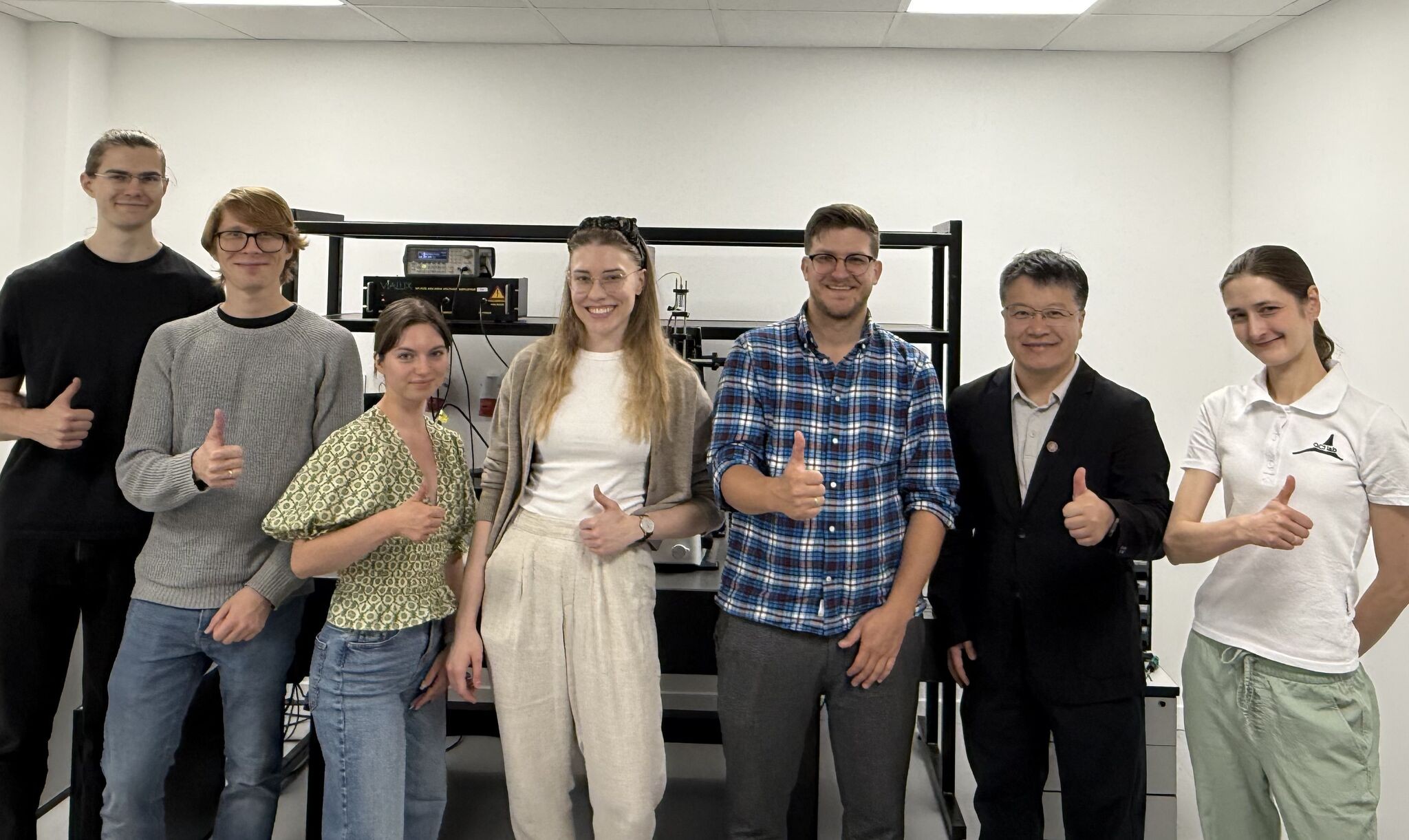
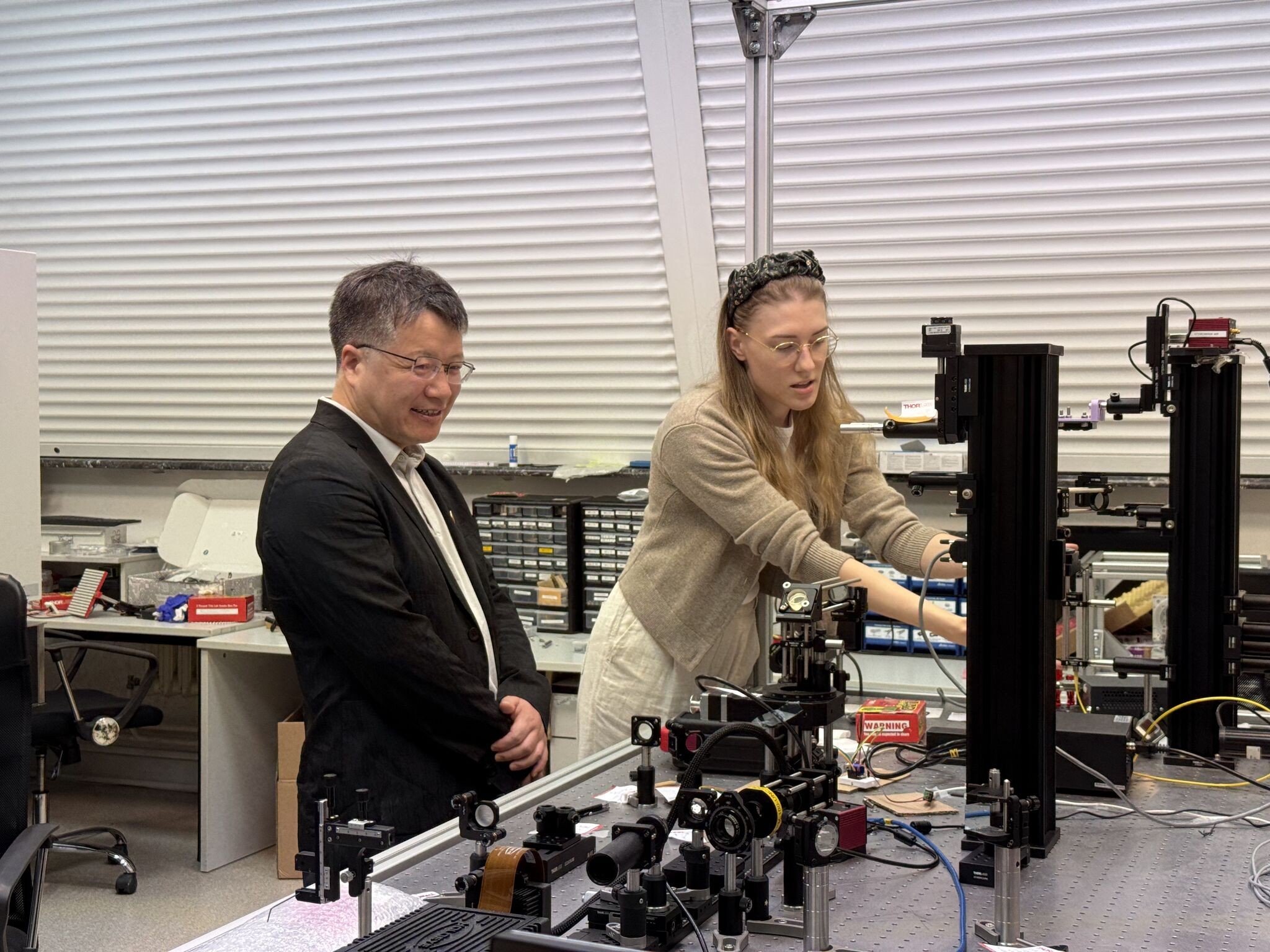
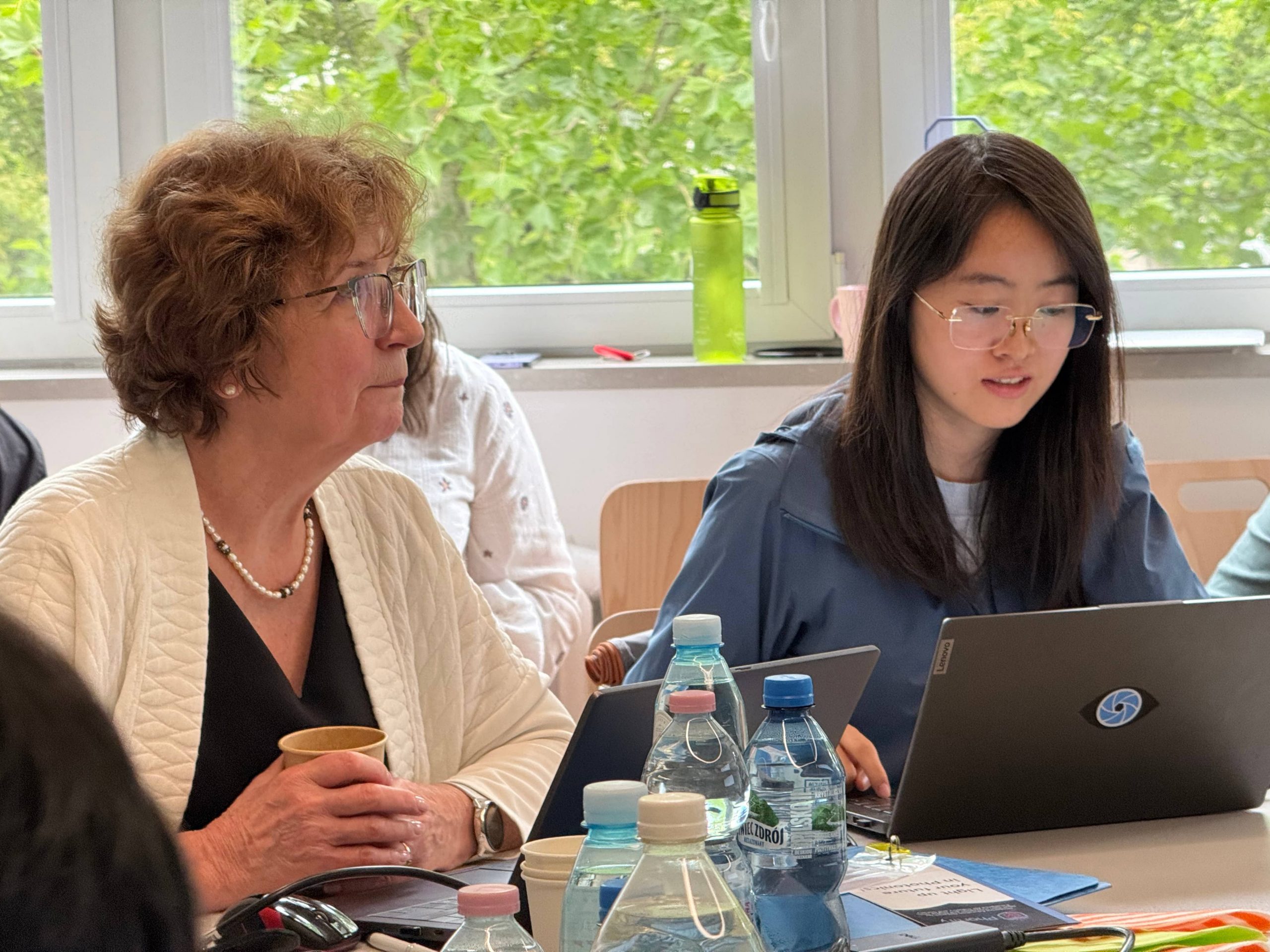
[July 2026] We were delighted to welcome Professor Liangcai Cao!

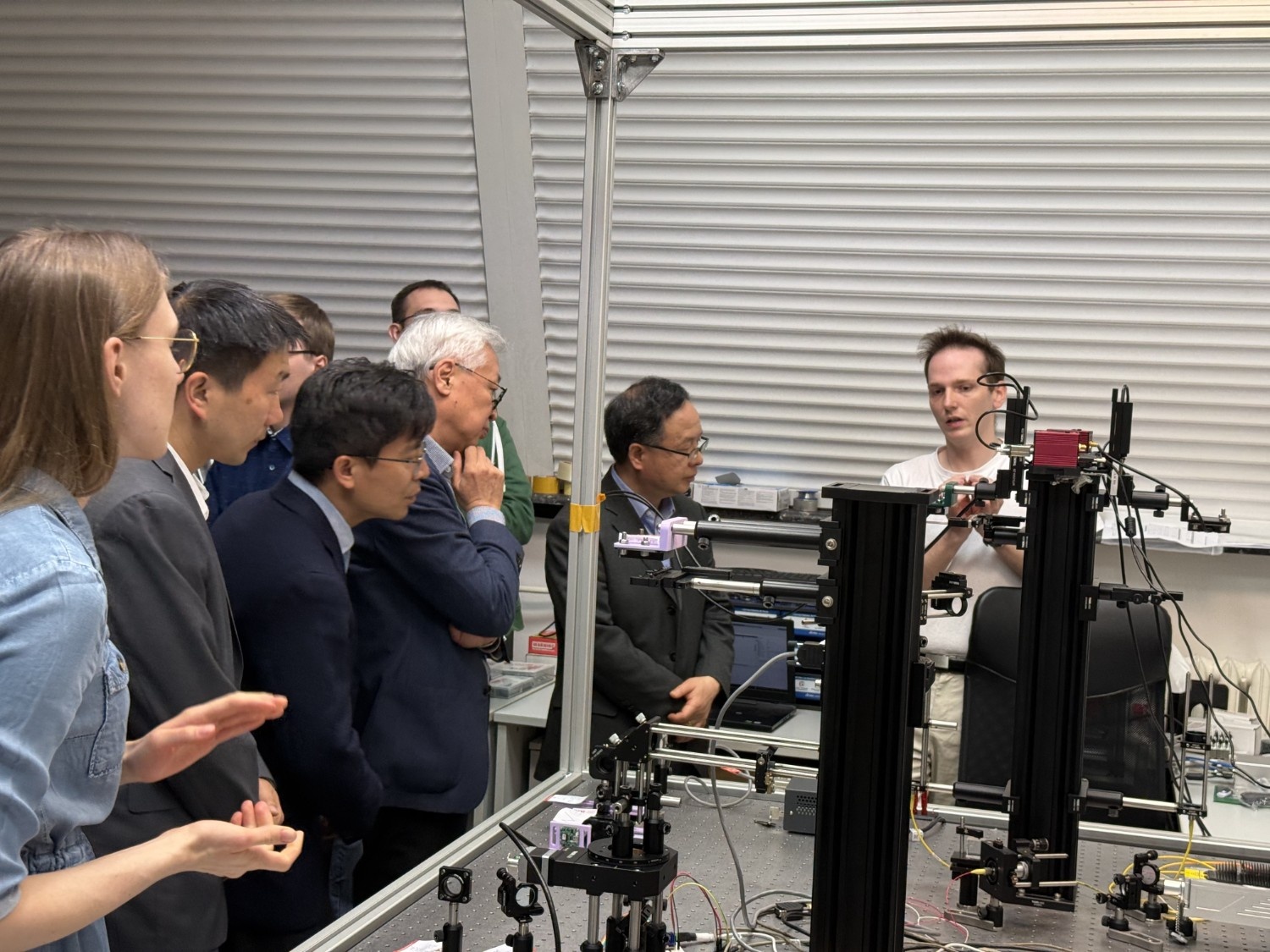
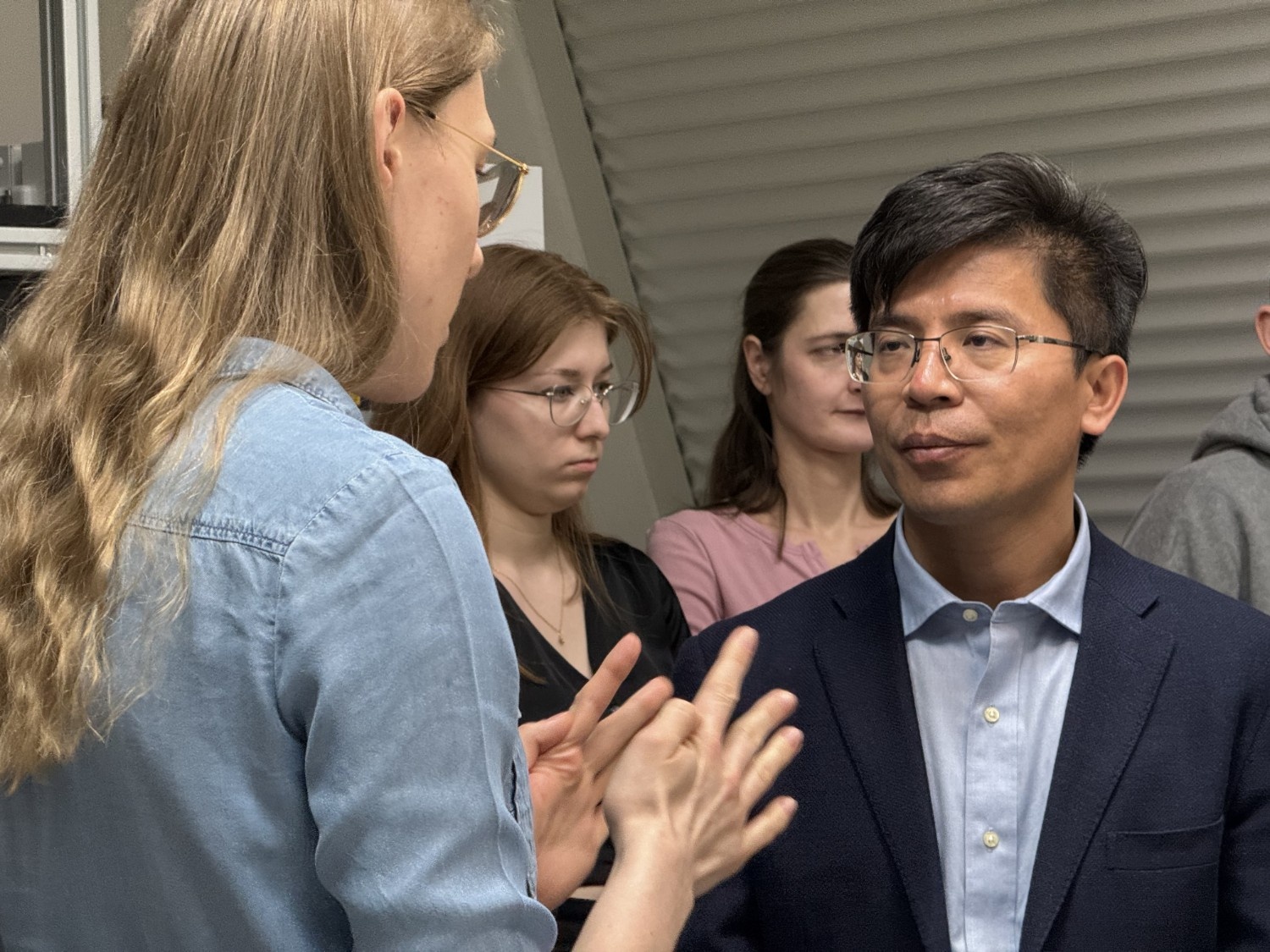
During his visit, we had the opportunity to present our laboratories and imaging systems, discuss our ongoing research, and exchange ideas and experiences. It was a valuable opportunity to benefit from Professor Cao’s insights and extensive expertise, making the discussions especially inspiring.

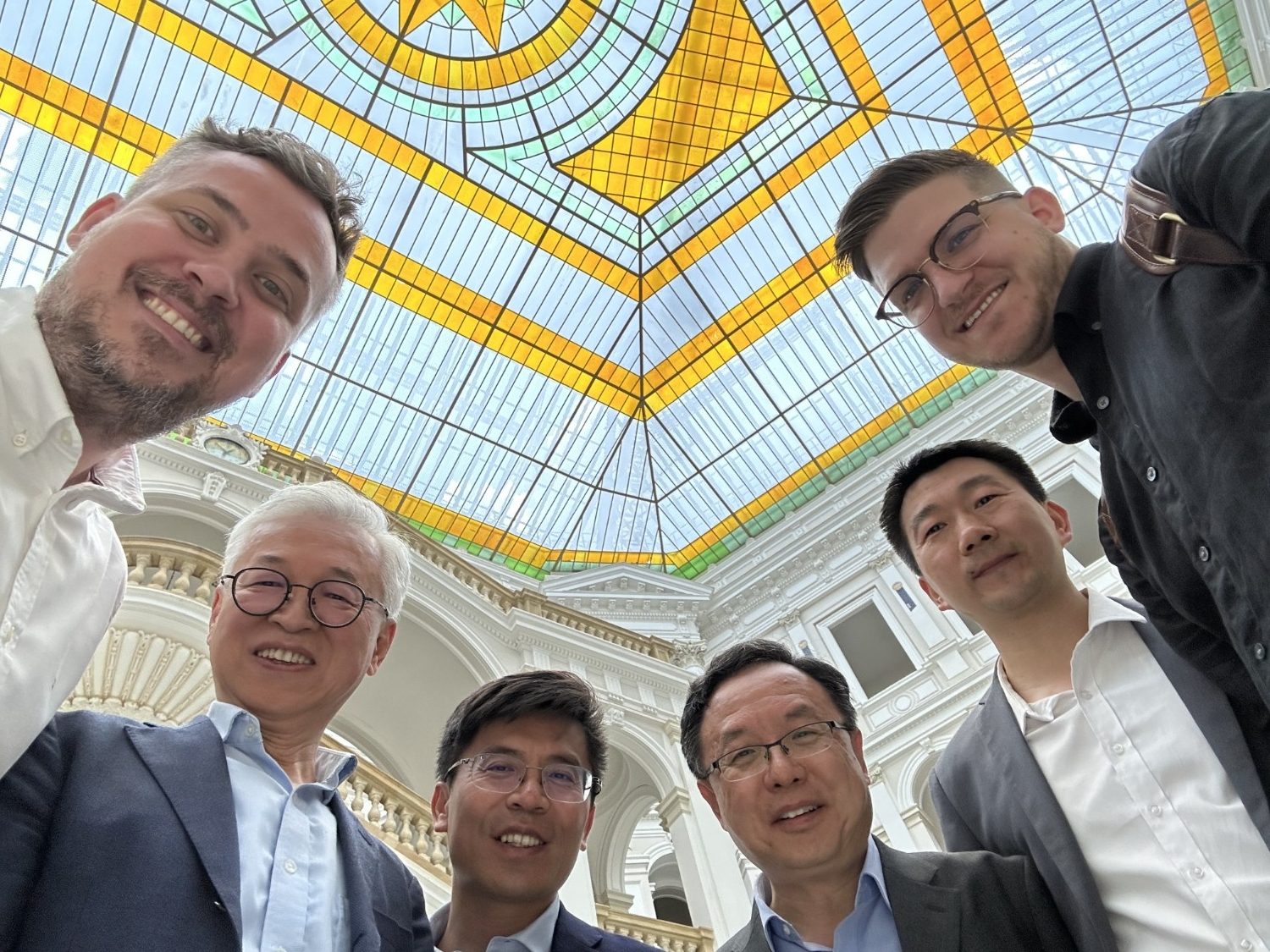
Thank you for visiting us – we look forward to future opportunities to collaborate.

[July 2026] Discover our latest publication: “A Reversible Clearing Strategy Enables Robust Label-Free Phase Imaging of Thick Tissues”, in Laser & Photonics Reviews.

📏 The novelty
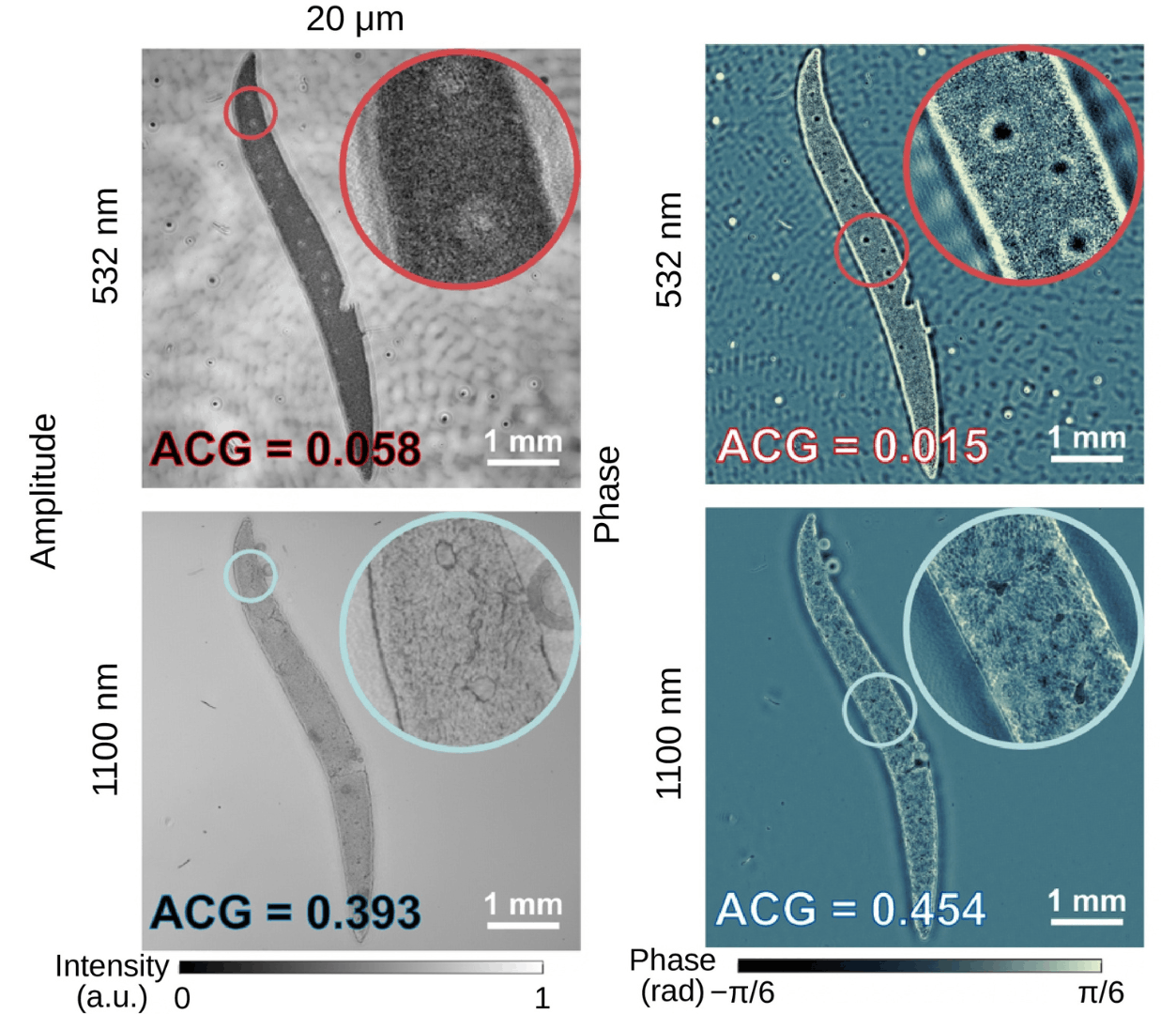
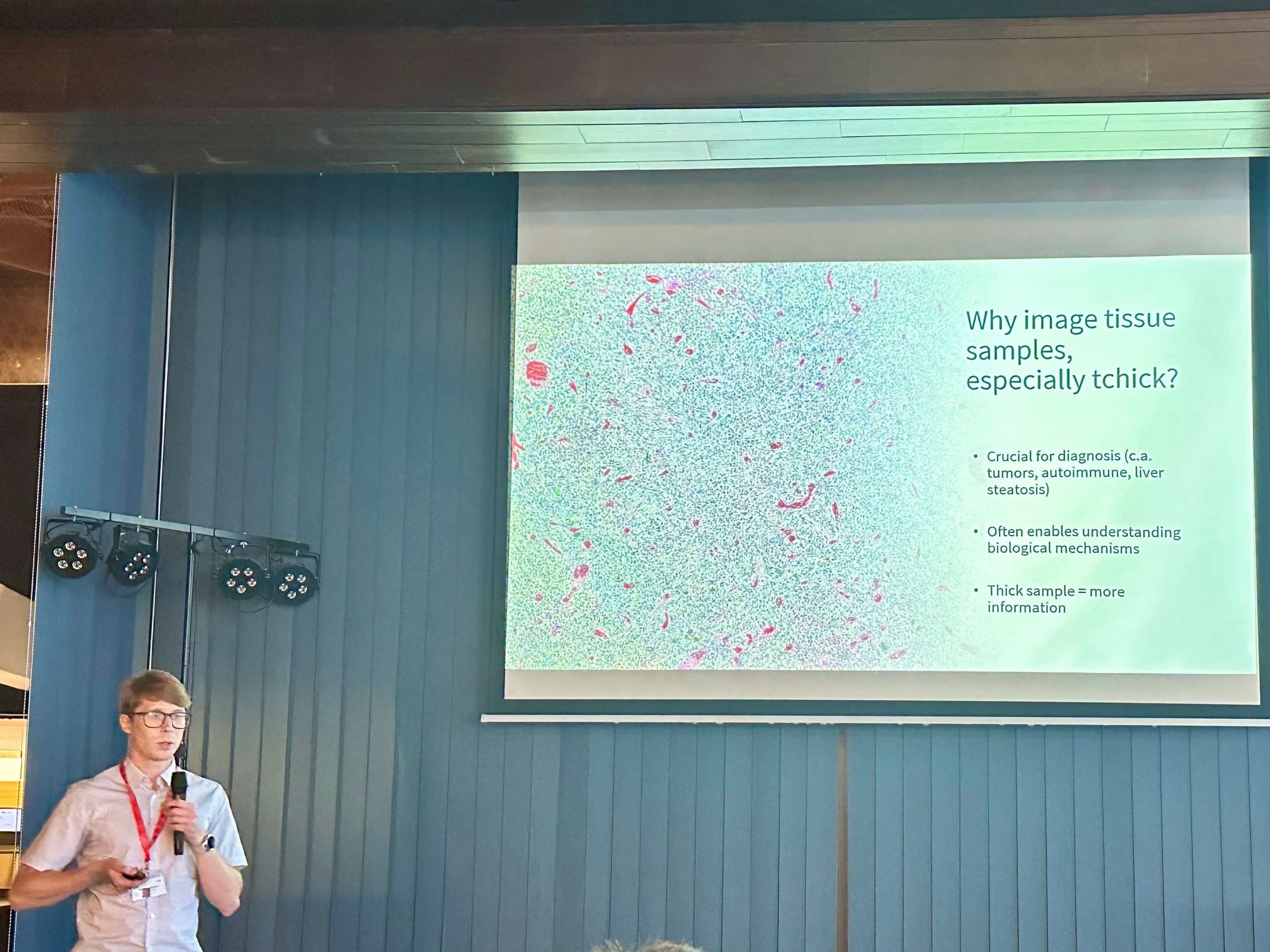
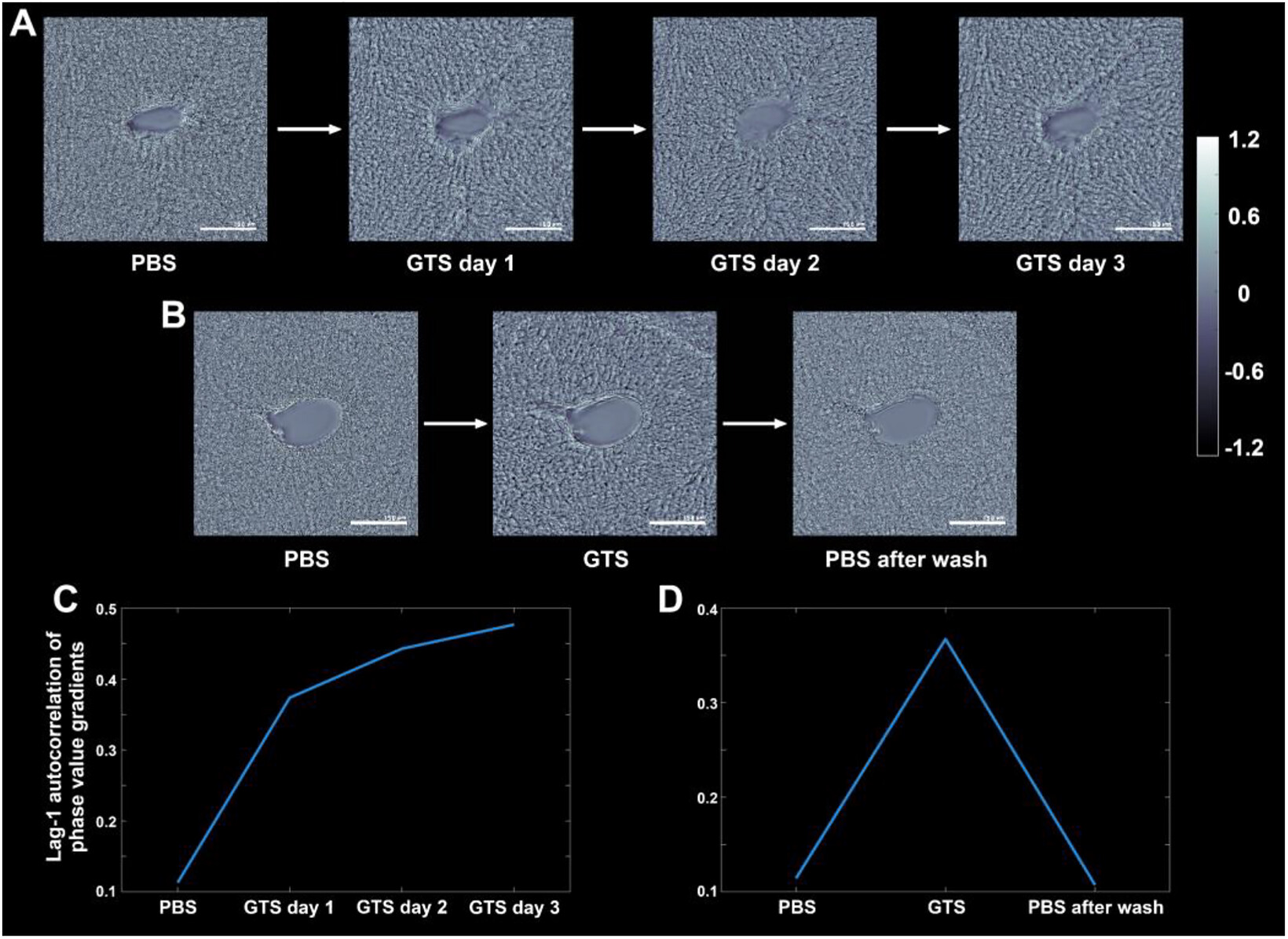
We present a simple optical clearing medium based on a glycerin–tartrazine solution (GTS) that rapidly increases tissue transparency while preserving morphology. It reduces scattering-driven phase artifacts and improves structural visibility in phase maps, enabling efficient, label-free quantitative phase imaging of thick (up to 80 µm) murine liver and kidney sections using low-cost imaging systems such as Fourier ptychographic microscopy and lensless digital holographic microscopy. GTS is inexpensive, safe, stable for months at room temperature, and its clearing effect can be reversed within minutes by a water/PBS wash, allowing subsequent standard staining and histological analysis.

👥 Team
This study is the result of a fantastic collaboration between researchers from QCI Lab members – Mikołaj Krysa, Piotr Zdańkowski, Maciej Trusiak and Anna Chwastowicz, Małgorzata Lenarcik and Pawel Matryba

Funding
NCN National Science Centre, Poland (SONATA 2020/39/D/ST7/03236); NCN National Science Centre, Poland (SONATA 2024/55/D/ST7/02792); The National Centre for Research and Development, Poland (LIDER14/0329/2023; INTENCITY WPC3/2022/47/INTENCITY/2024). The research was conducted on devices co-funded by the Warsaw University of Technology within the Excellence Initiative: Research University (IDUB) programme.

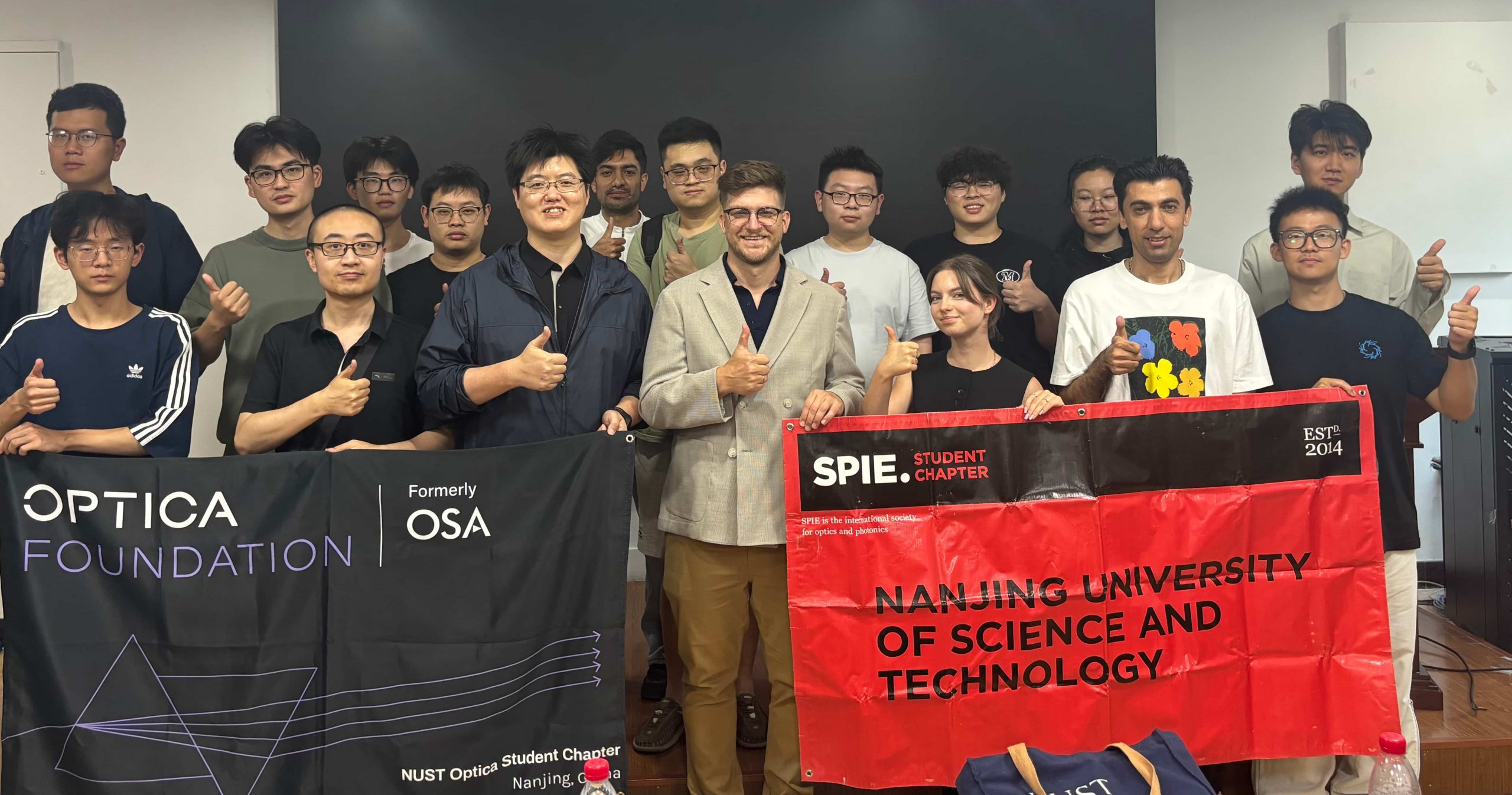
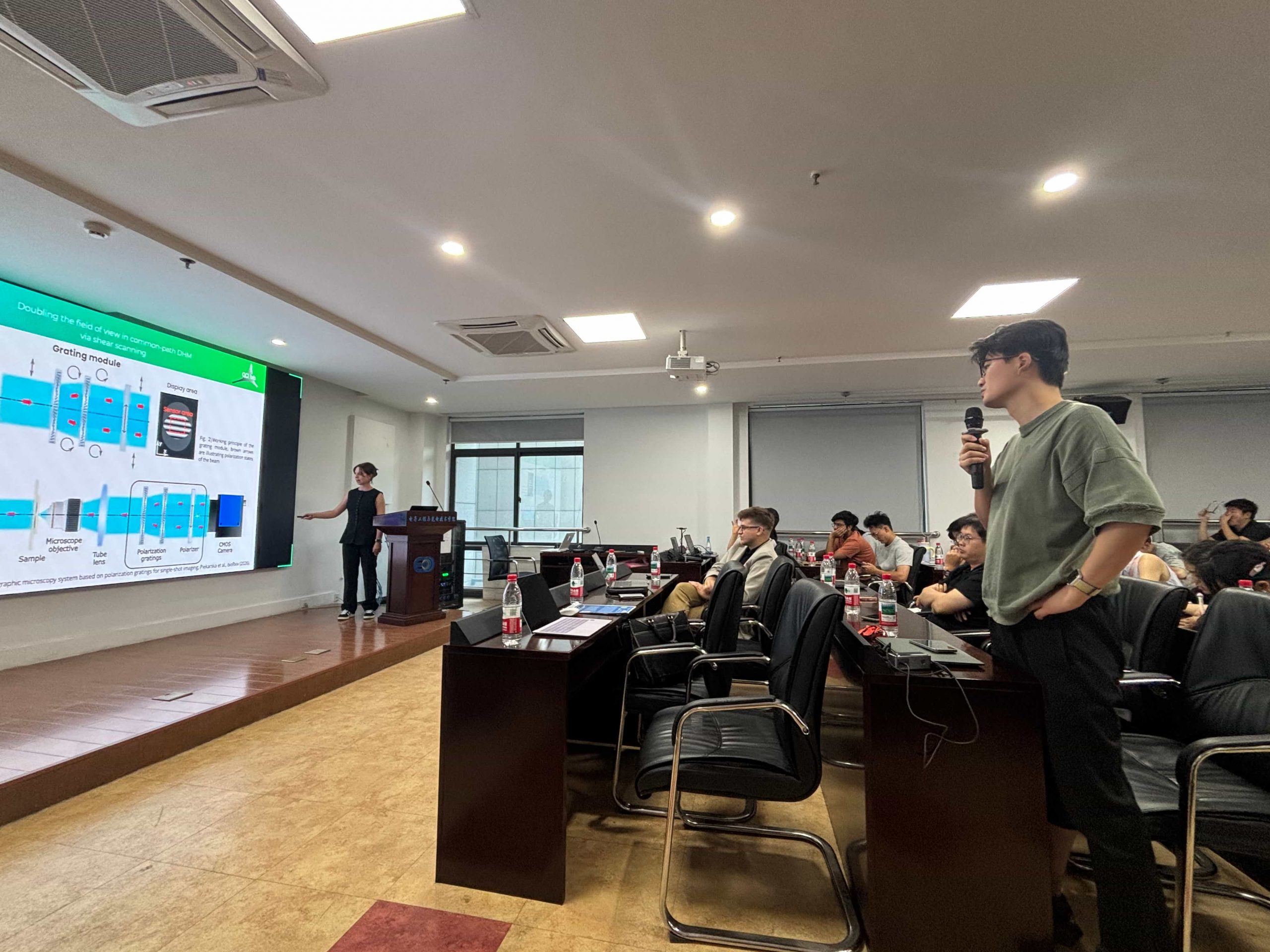
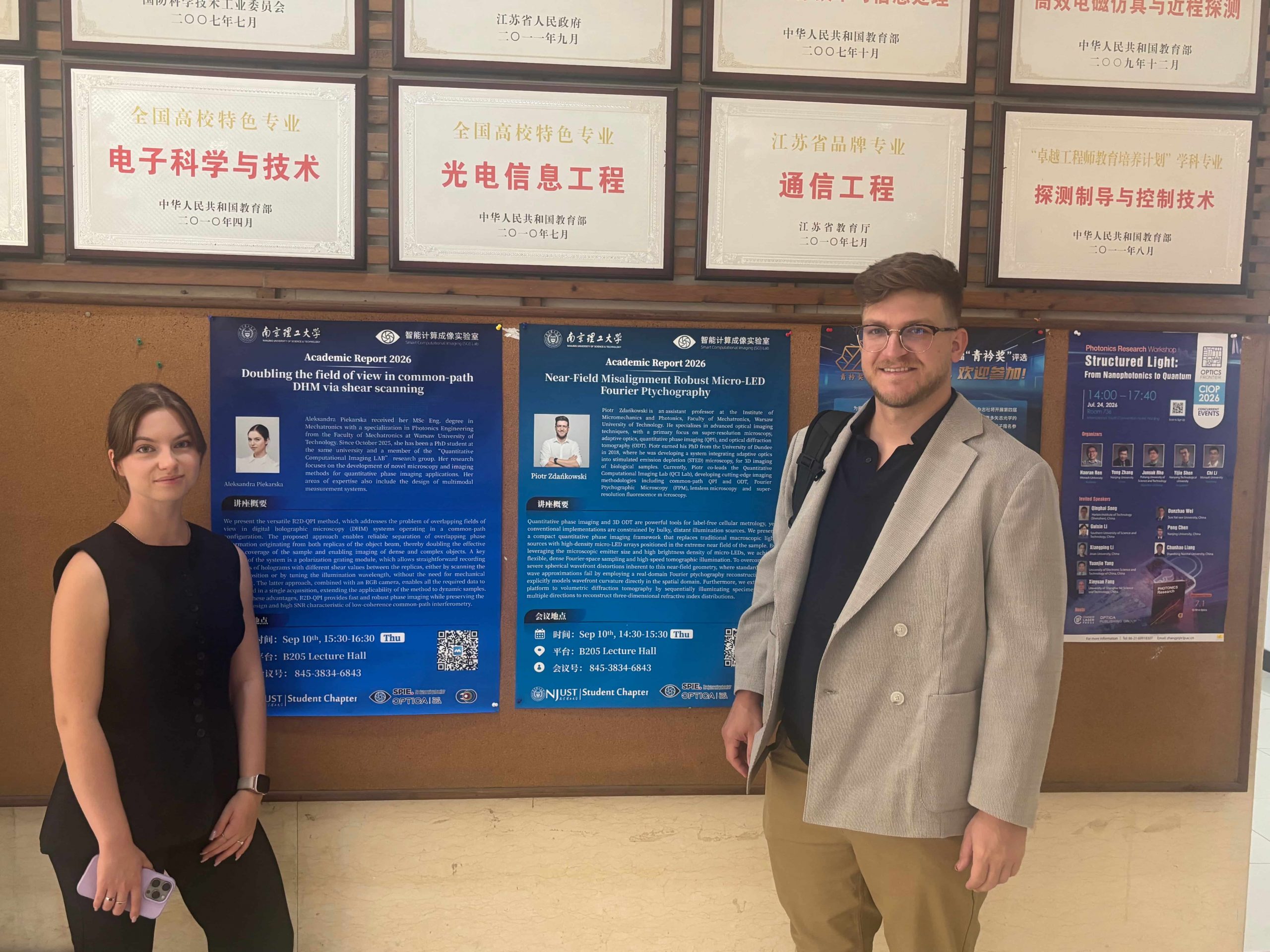
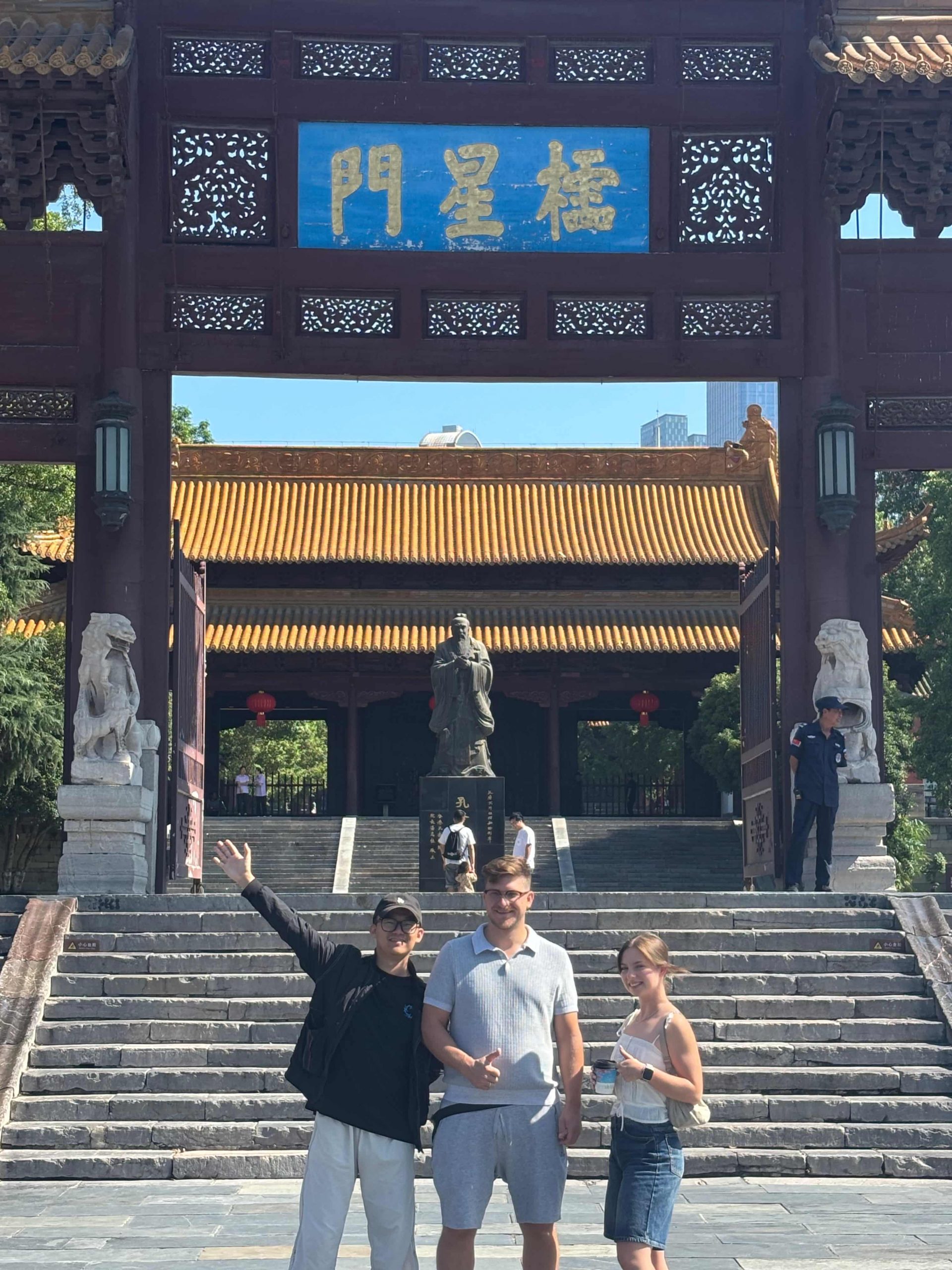
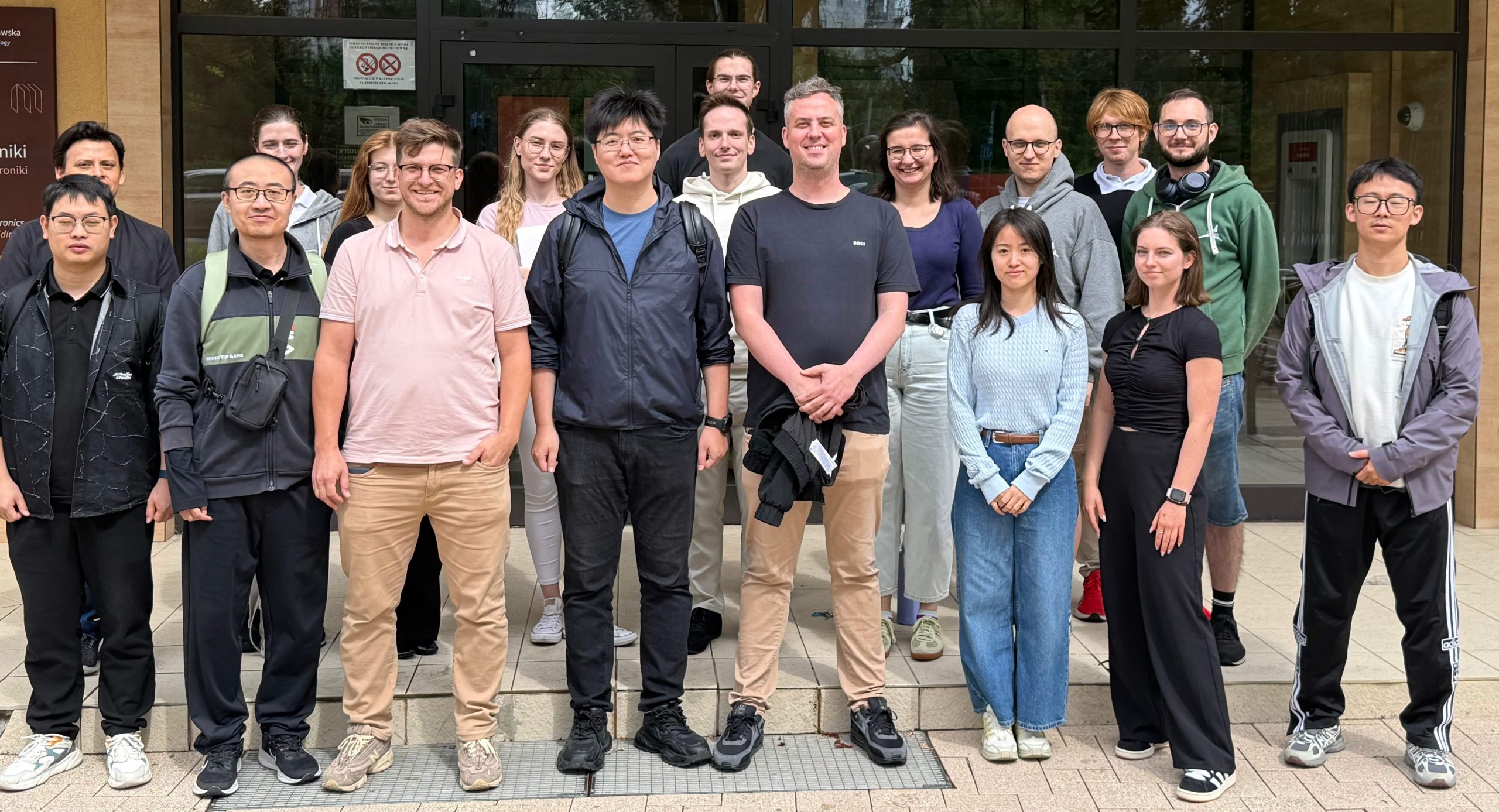
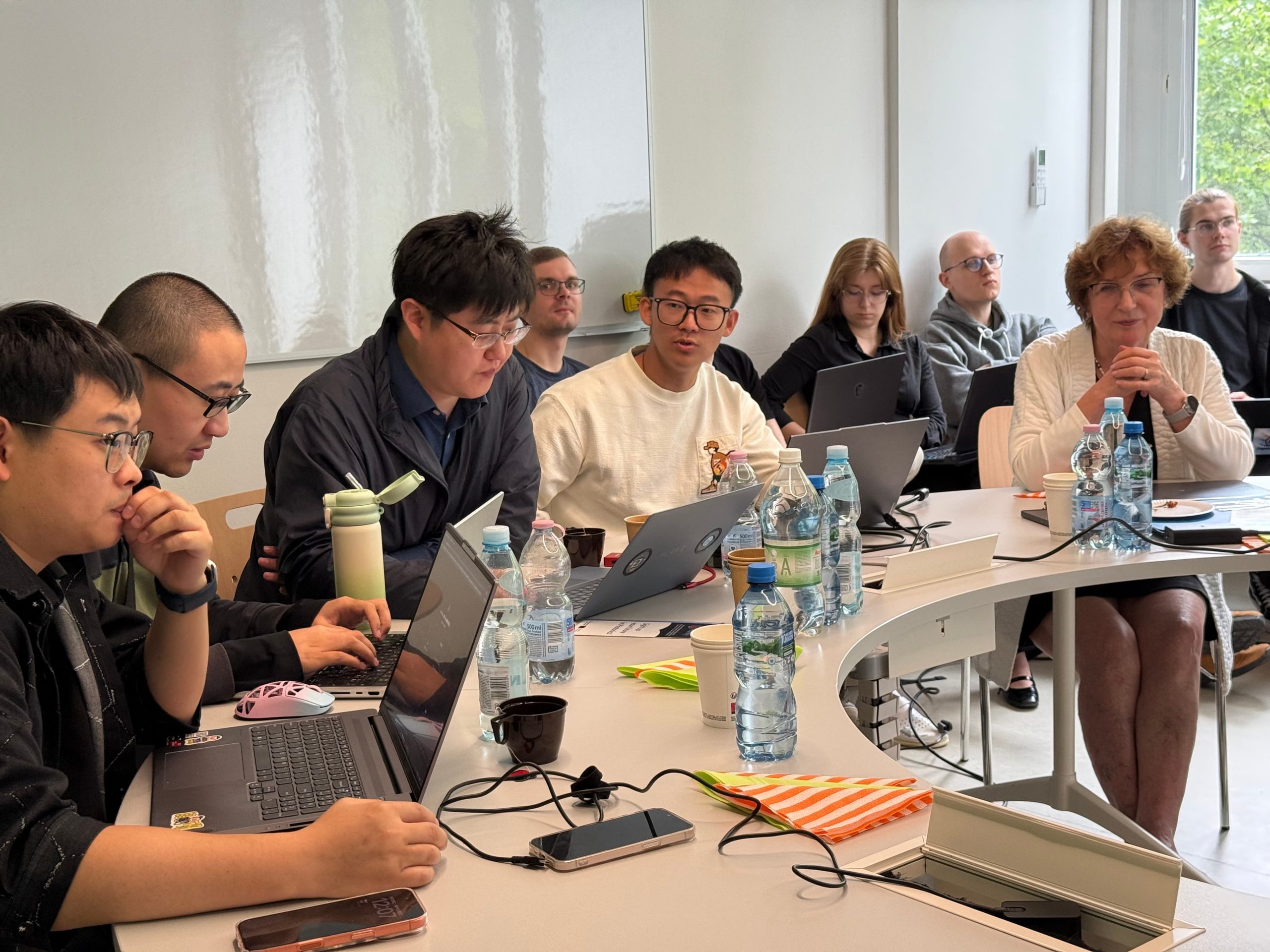
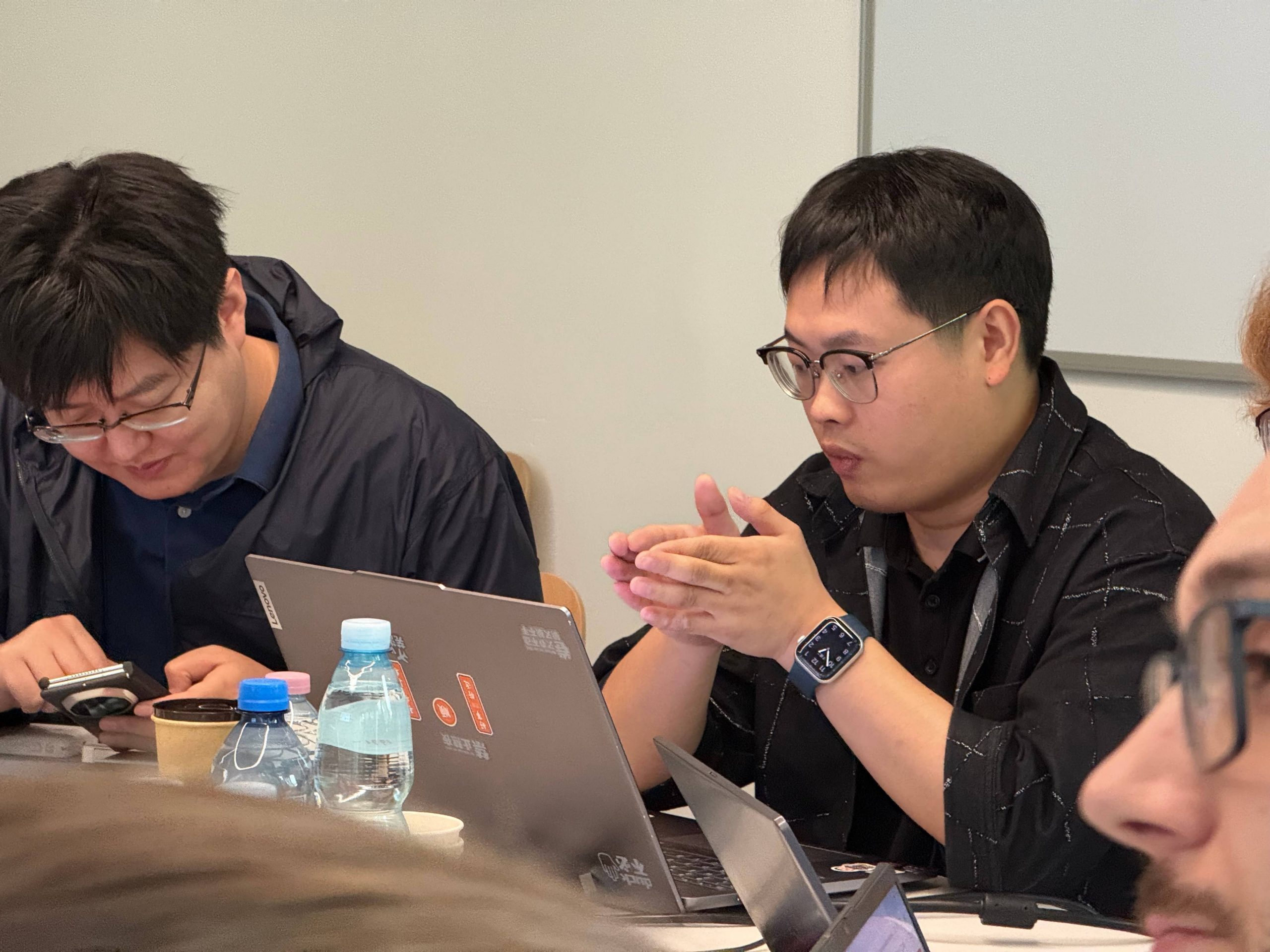
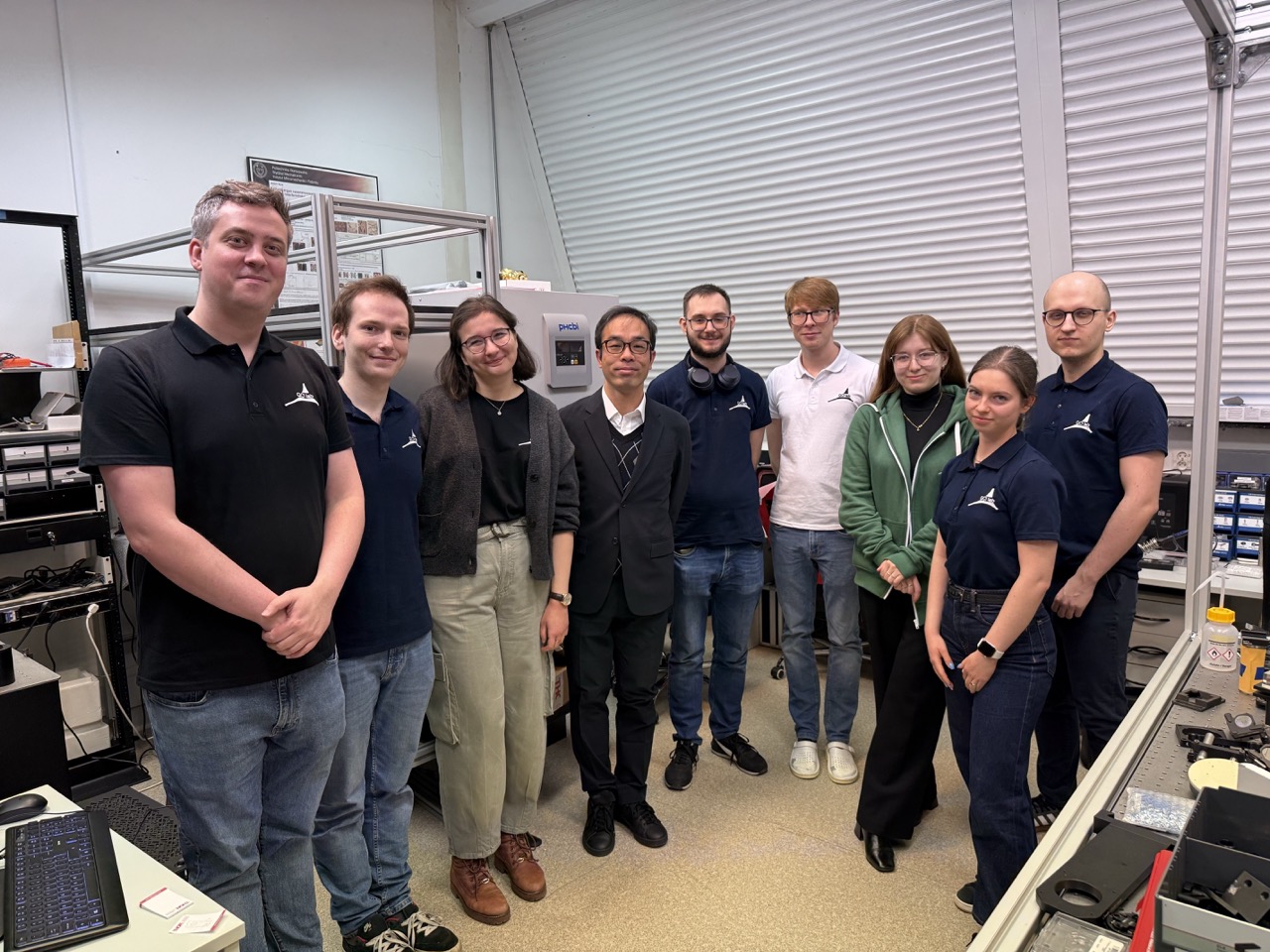
[July 2026] 𝐖𝐞 𝐰𝐞𝐫𝐞 𝐝𝐞𝐥𝐢𝐠𝐡𝐭𝐞𝐝 𝐭𝐨 𝐡𝐨𝐬𝐭 𝐚 𝐯𝐢𝐬𝐢𝐭 𝐟𝐫𝐨𝐦 𝐭𝐡𝐞 𝗦𝗖𝗜𝗟𝗮𝗯 𝗳𝗿𝗼𝗺 Nanjing University of Science and Technology 𝐚𝐭 𝐨𝐮𝐫 𝐟𝐚𝐜𝐢𝐥𝐢𝐭𝐢𝐞𝐬. 🔬✨

The meeting was a fantastic opportunity to exchange knowledge and explore common research directions in advanced microscopy and computational imaging.

We had the pleasure to attend four excellent talks delivered by our guests:
🔸 Linpeng Lu – „Data comparison under auto-alignment”
🔸 Zhuoshi Li – „Fourier Holo-Ptychographic Microscopy (FHPM) from 2D to 3D”
🔸 Shun Zhou – „Intensity diffraction tomography under non-matched illumination condition”
🔸 Jiasong Sun – „Fourier Ptychography-Based Dynamic Quantitative Phase Imaging of Live Cells”

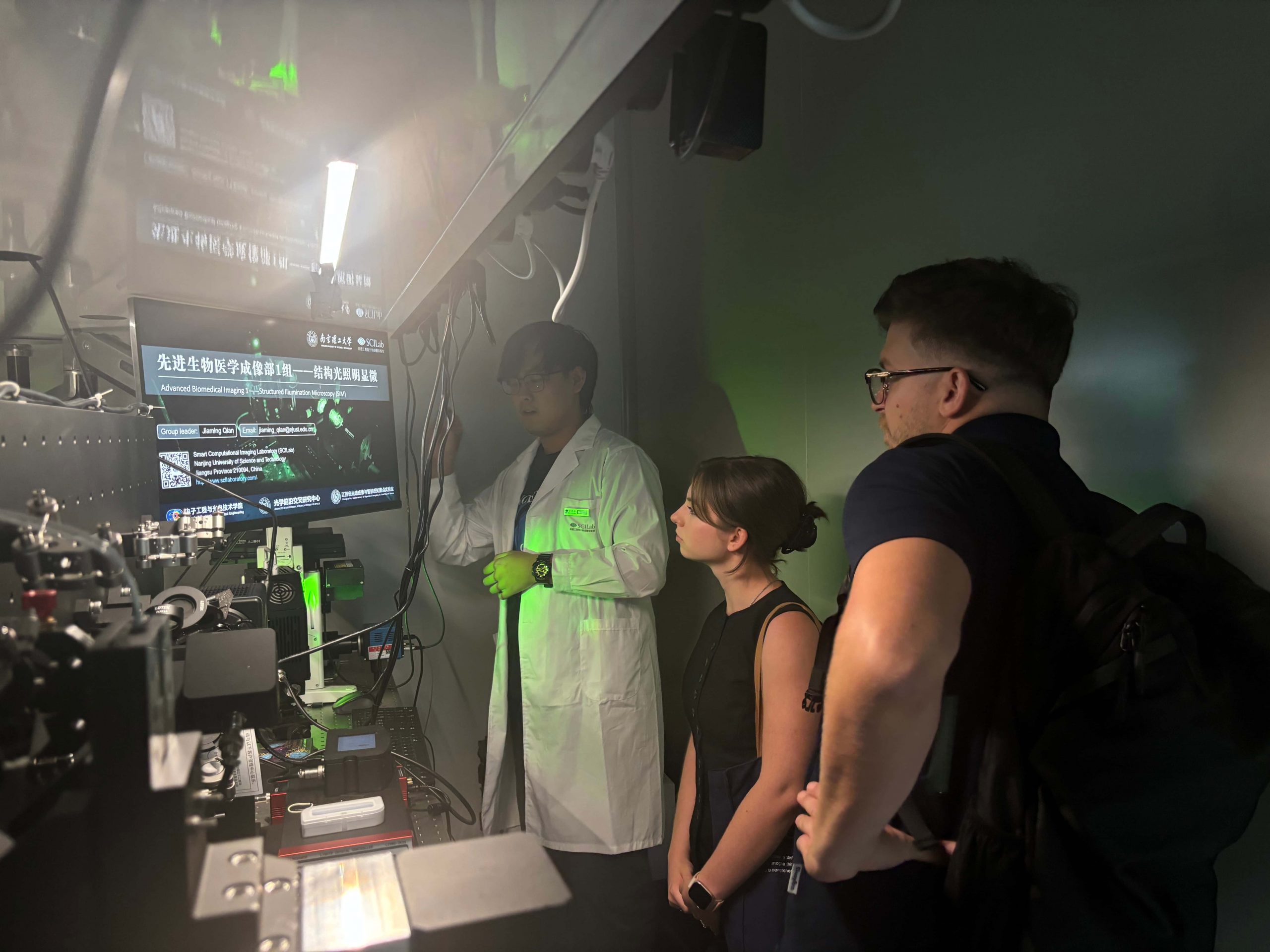
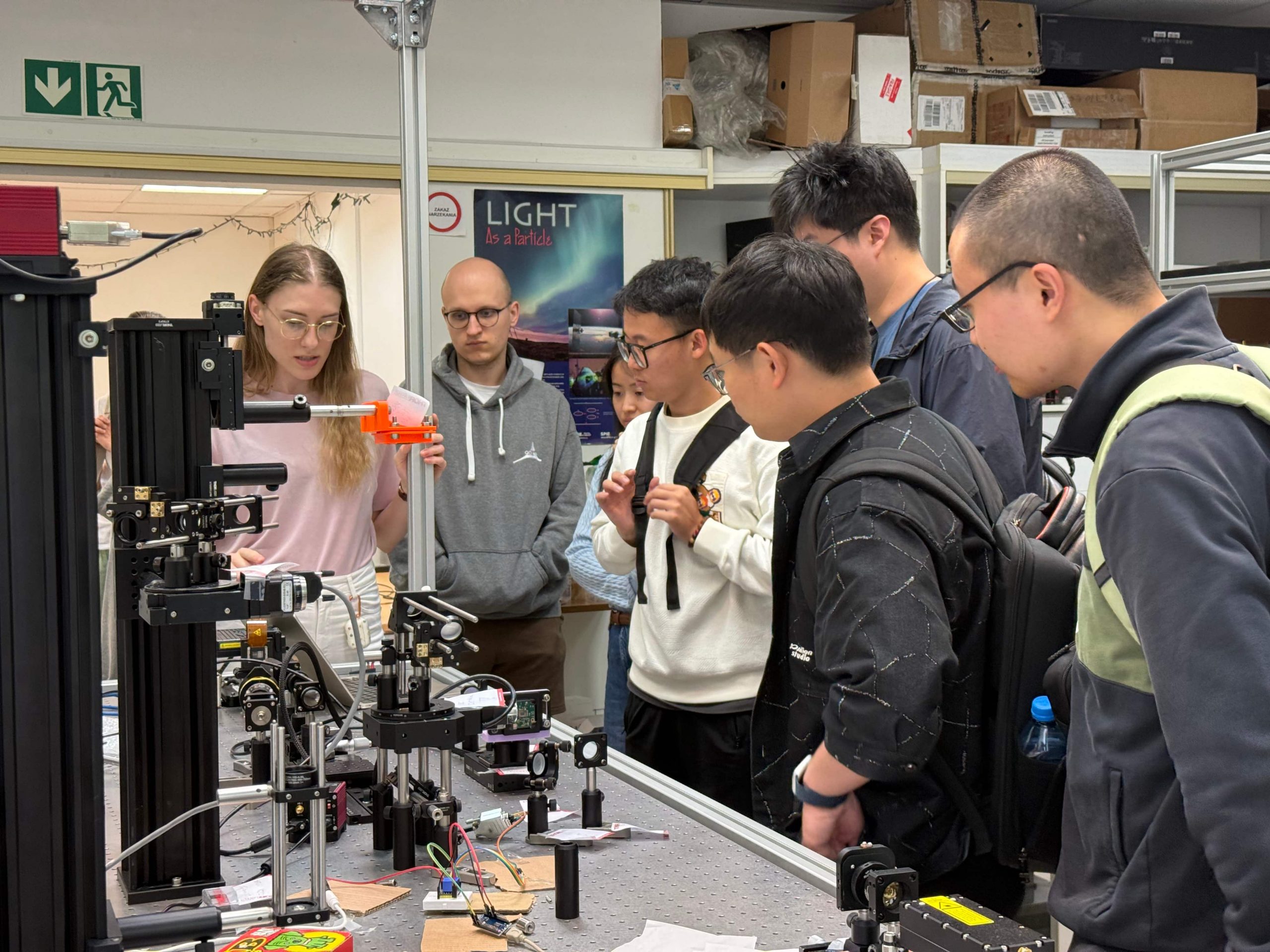
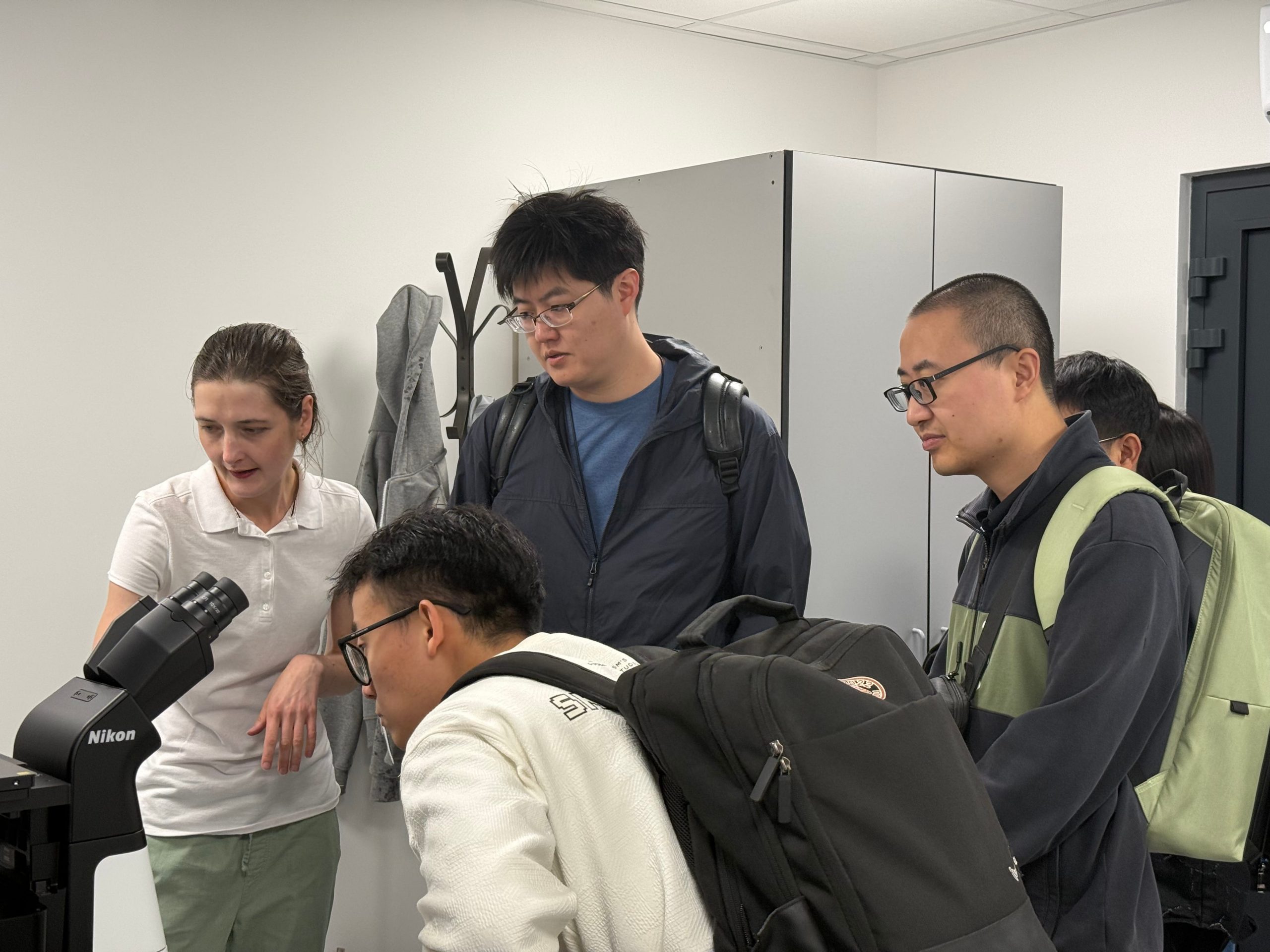
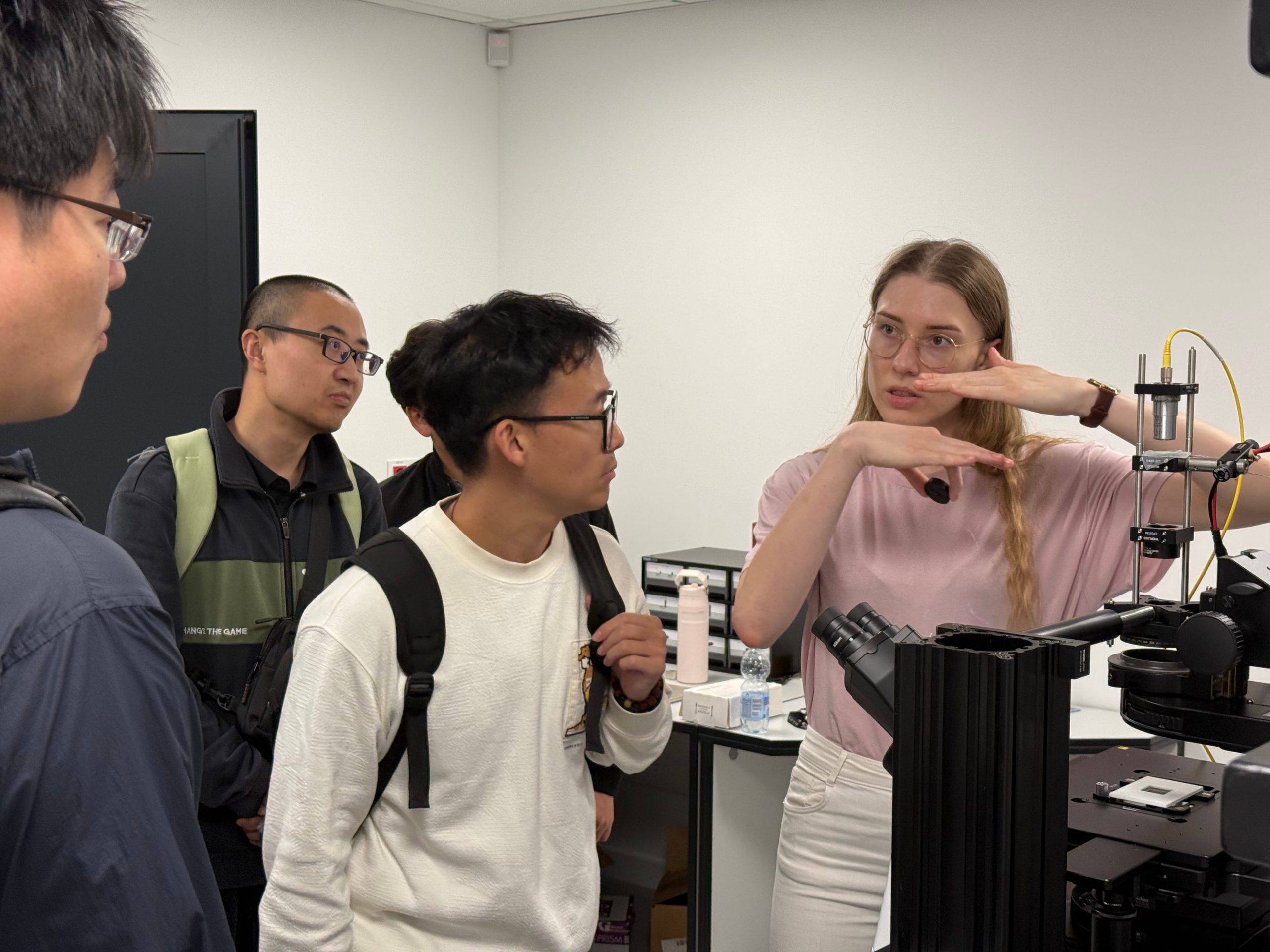
After the talks, we toured the labs, showed our microscopy setups, and talked about ongoing work and recent results.
A big thank you to the NJUST team for the inspiring presentations and great discussions. Hope to continue the exchange soon! 🤝

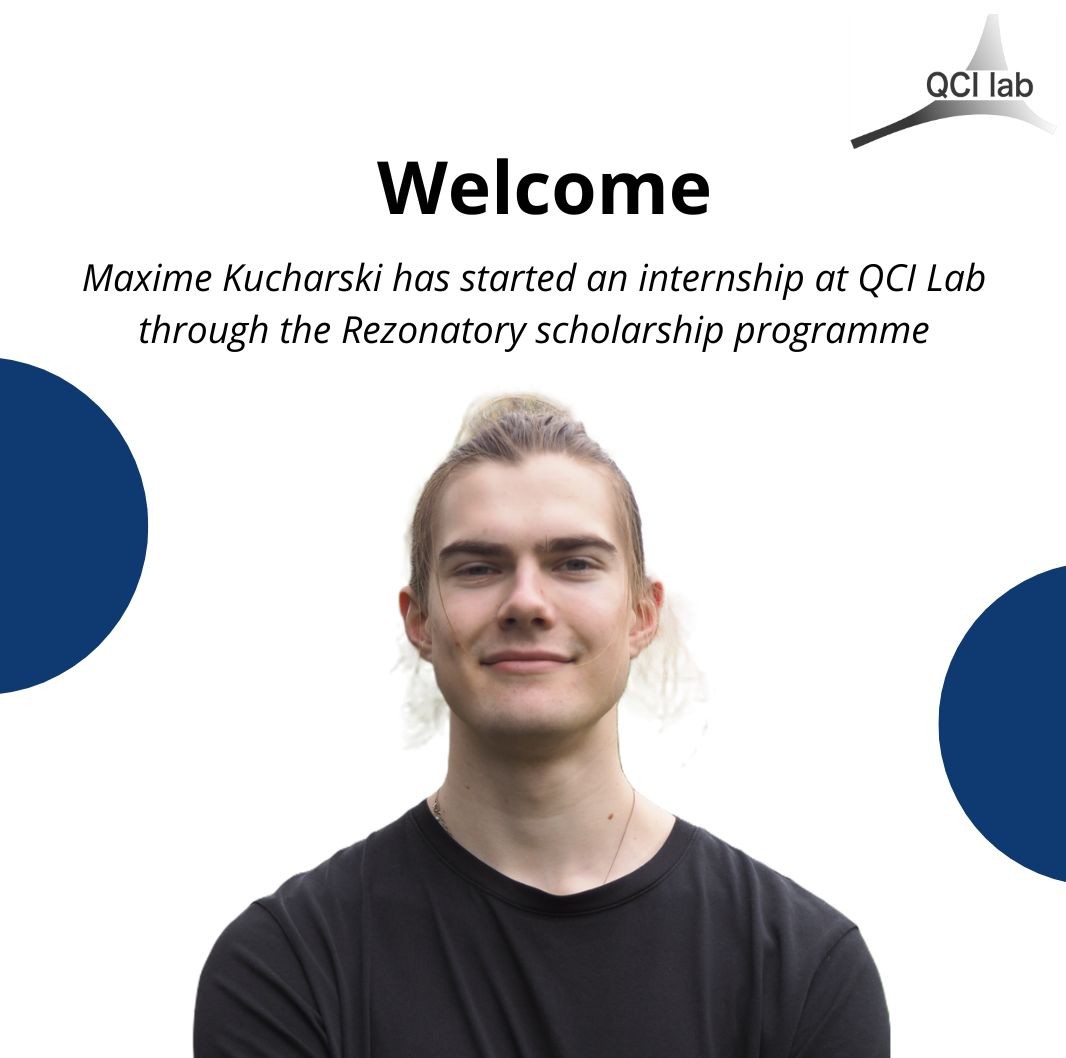
[July 2026] Welcome to QCI! 👋🔬

This summer, we are happy to welcome a new research intern to the QCI Lab as part of the Candela Foundation Rezonatory 2026 scholarship programme.

Maxime Kucharski, a Biomedical Engineering student specialising in Biomedical Optics at Wrocław University of Science and Technology, has joined our team for two months. During his internship, he will study brain and liver slice samples using lensless microscopy and Fourier ptychographic microscopy. Maxime’s internship supervisors are Maciej Trusiak and Mikołaj Rogalski.

We’re looking forward to working together over the coming weeks and wish Maxime an inspiring summer full of learning, new experiences and hands-on research. Welcome to the team! 🚀

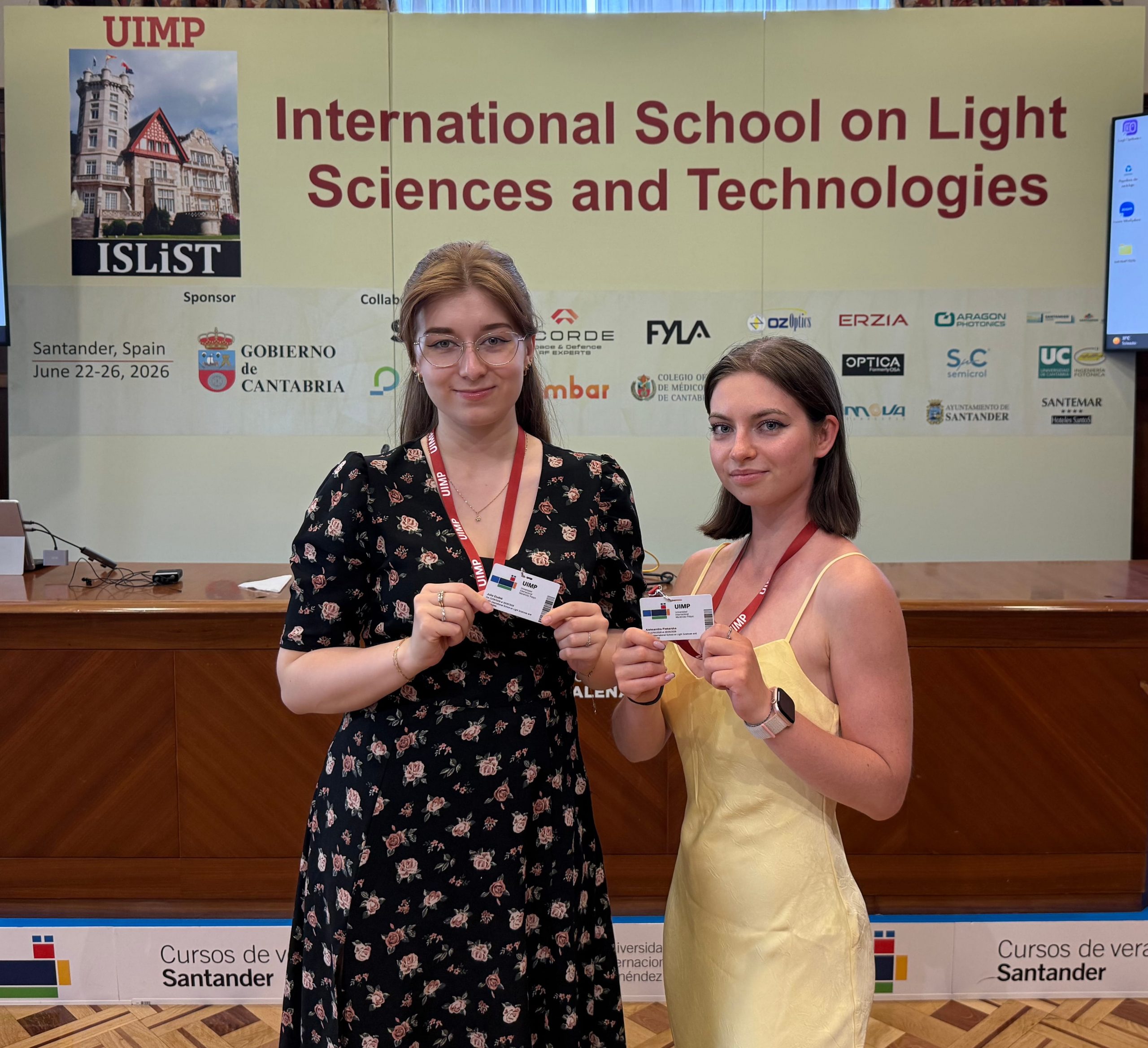
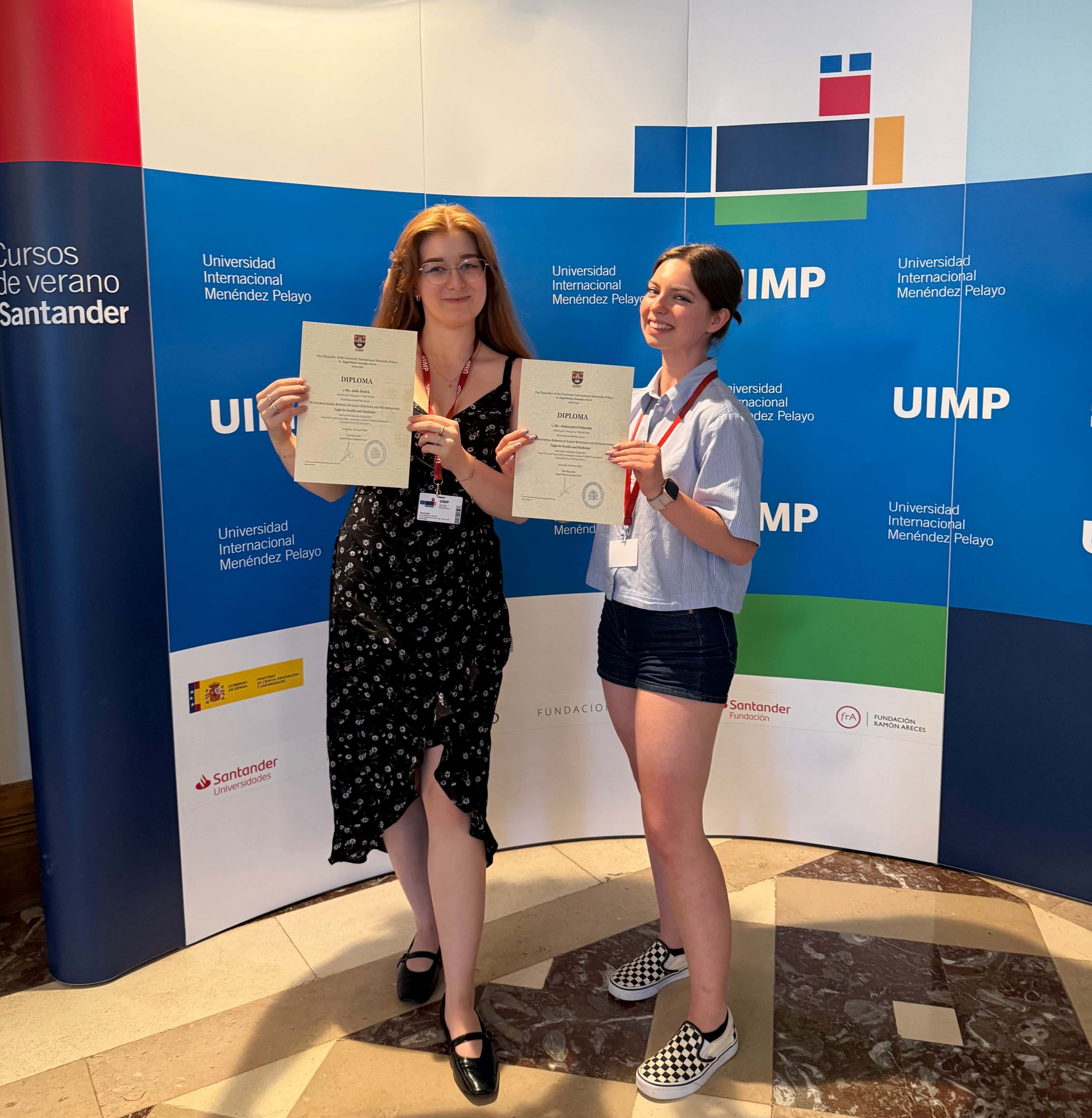
[June 2026] Our PhD students Aleksandra Piekarska and Julia Dudek just returned from the 𝘐𝘟 𝘐𝘯𝘵𝘦𝘳𝘯𝘢𝘵𝘪𝘰𝘯𝘢𝘭 𝘚𝘤𝘩𝘰𝘰𝘭 𝘰𝘯 𝘓𝘪𝘨𝘩𝘵 𝘚𝘤𝘪𝘦𝘯𝘤𝘦𝘴 𝘢𝘯𝘥 𝘛𝘦𝘤𝘩𝘯𝘰𝘭𝘰𝘨𝘪𝘦𝘴 (ISLIST 2026), hosted by the Universidad Internacional Menéndez Pelayo.

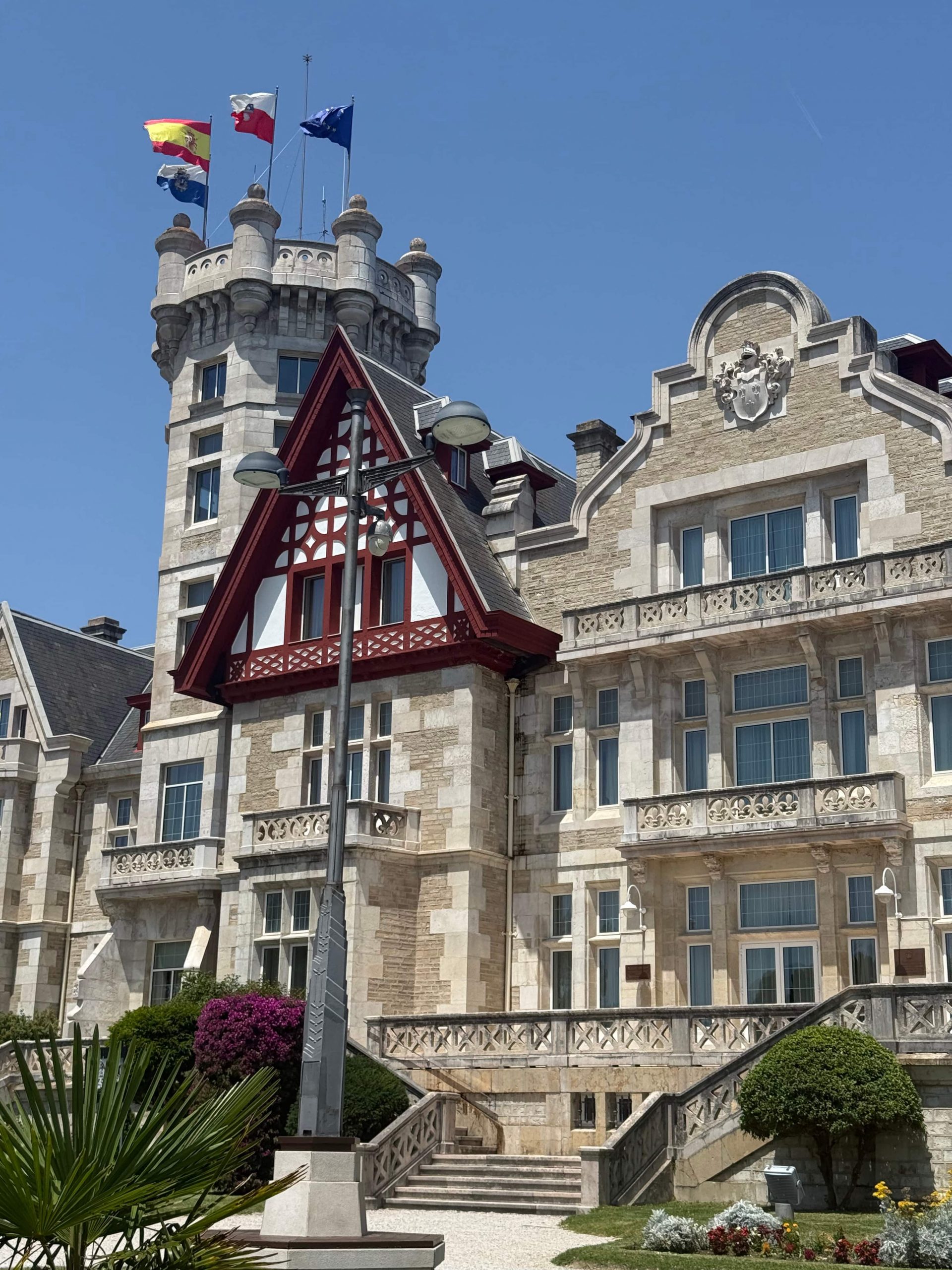
Held at the magnificent Royal Palace of La Magdalena in Santander, Spain, this year’s school (June 22–26) was fully dedicated to “𝐋𝐢𝐠𝐡𝐭 𝐢𝐧 𝐇𝐞𝐚𝐥𝐭𝐡 𝐚𝐧𝐝 𝐌𝐞𝐝𝐢𝐜𝐢𝐧𝐞.” It was a great opportunity to deepen their knowledge in this field and to connect with fellow researchers from all over the world, sparking new international friendships. 🌍🤝

We are proud that both Aleksandra and Julia were awarded the ISLiST 2026 Student Grants to participate. A huge thank you to the organizers for their generosity and for putting together such a top-tier scientific program.

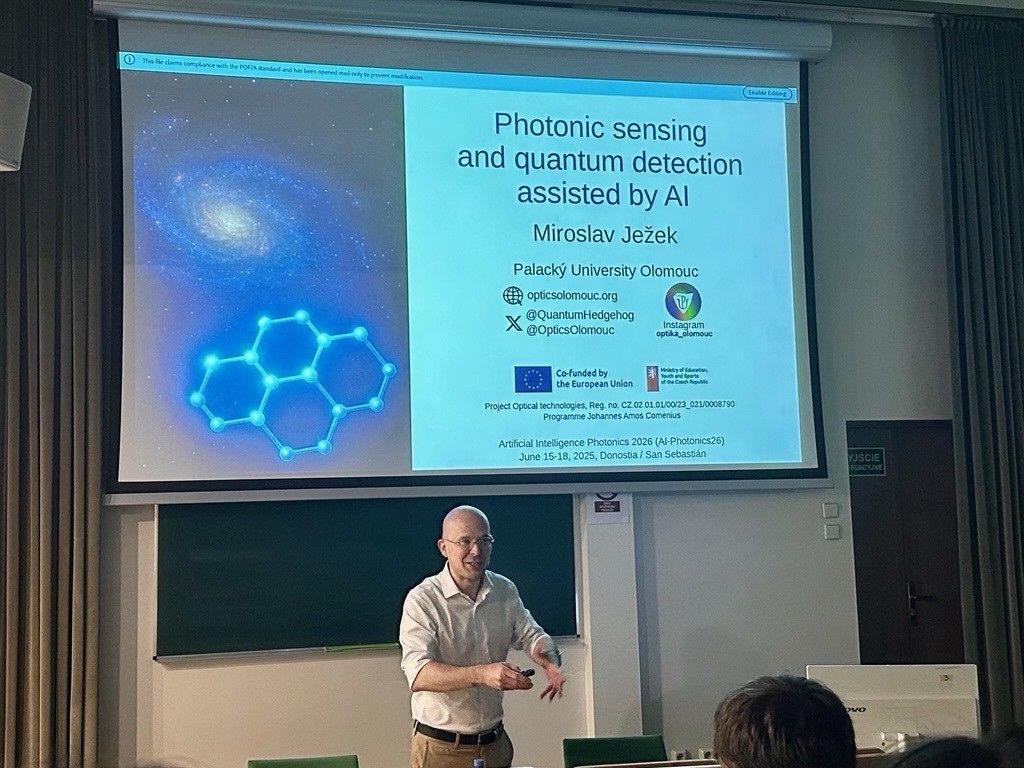
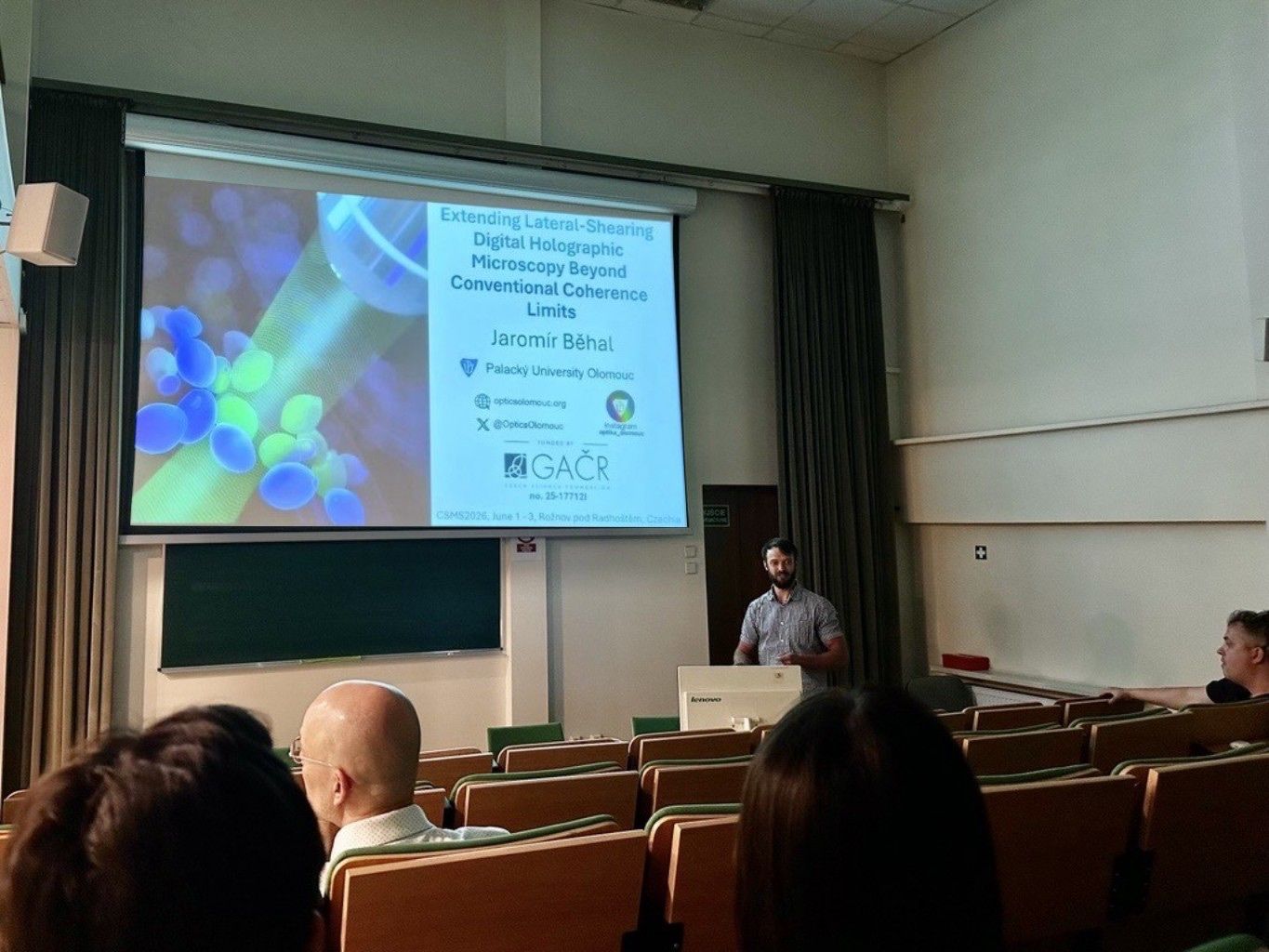
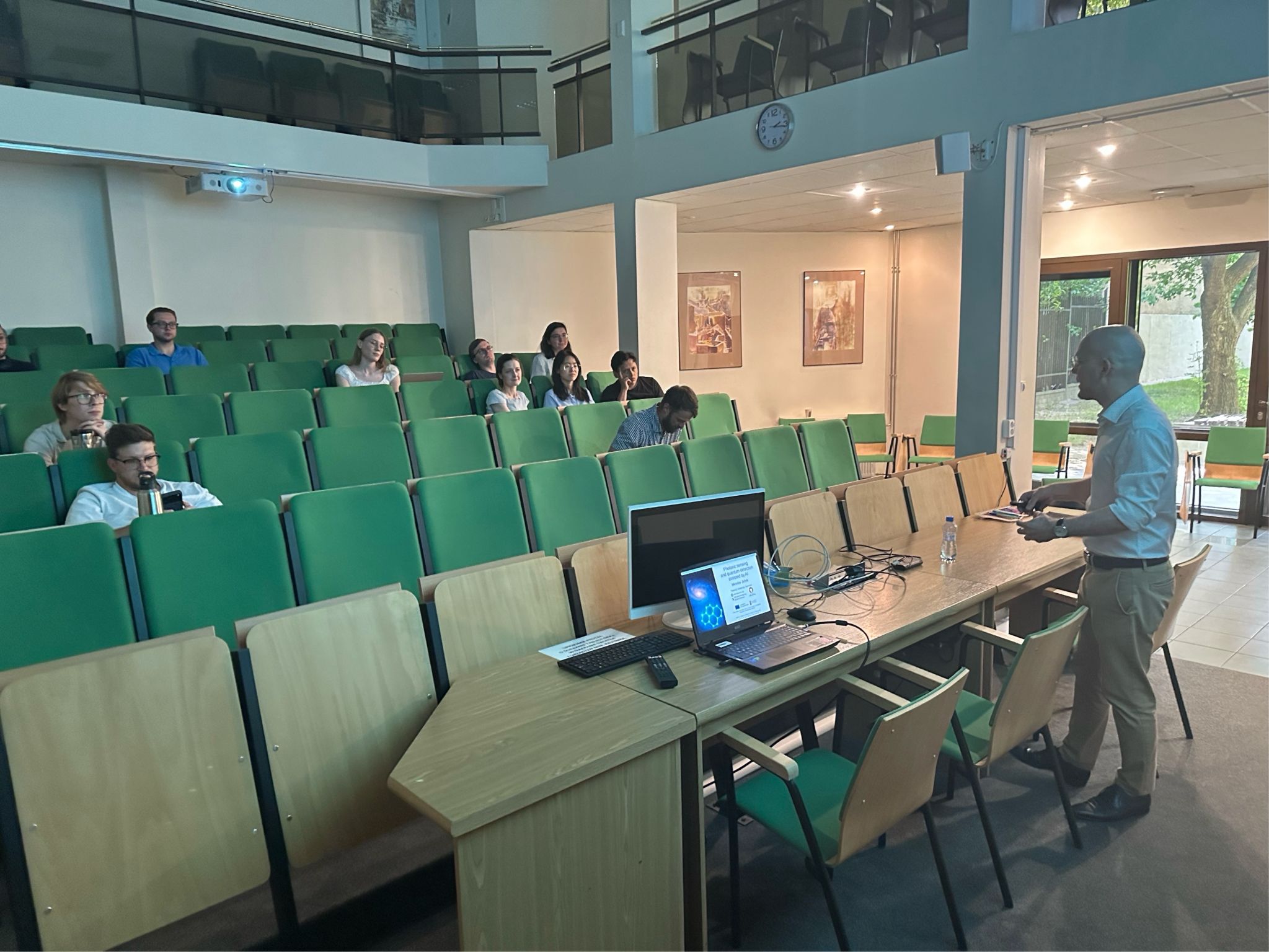
[June 2026] 𝐖𝐞 𝐰𝐞𝐫𝐞 𝐯𝐞𝐫𝐲 𝐩𝐥𝐞𝐚𝐬𝐞𝐝 𝐭𝐨 𝐡𝐨𝐬𝐭 𝐏𝐫𝐨𝐟. Miroslav Ježek 𝐚𝐧𝐝 𝐃𝐫. 𝐉𝐚𝐫𝐨𝐦í𝐫 𝐁ě𝐡𝐚𝐥 𝐟𝐫𝐨𝐦 Palacký University Olomouc 𝐚𝐭 𝐨𝐮𝐫 𝐥𝐚𝐛𝐨𝐫𝐚𝐭𝐨𝐫𝐲. 💫

During their visit, they delivered two engaging seminars. Prof. Miroslav Ježek gave a talk entitled 𝘗𝘩𝘰𝘵𝘰𝘯𝘪𝘤 𝘴𝘦𝘯𝘴𝘪𝘯𝘨 𝘢𝘯𝘥 𝘲𝘶𝘢𝘯𝘵𝘶𝘮 𝘥𝘦𝘵𝘦𝘤𝘵𝘪𝘰𝘯 𝘢𝘴𝘴𝘪𝘴𝘵𝘦𝘥 𝘣𝘺 𝘈𝘐, while Dr. Jaromír Běhal presented 𝘌𝘹𝘵𝘦𝘯𝘥𝘪𝘯𝘨 𝘓𝘢𝘵𝘦𝘳𝘢𝘭-𝘚𝘩𝘦𝘢𝘳𝘪𝘯𝘨 𝘋𝘪𝘨𝘪𝘵𝘢𝘭 𝘏𝘰𝘭𝘰𝘨𝘳𝘢𝘱𝘩𝘪𝘤 𝘔𝘪𝘤𝘳𝘰𝘴𝘤𝘰𝘱𝘺 𝘉𝘦𝘺𝘰𝘯𝘥 𝘊𝘰𝘯𝘷𝘦𝘯𝘵𝘪𝘰𝘯𝘢𝘭 𝘊𝘰𝘩𝘦𝘳𝘦𝘯𝘤𝘦 𝘓𝘪𝘮𝘪𝘵𝘴, sharing exciting insights into their latest research.

Our guests also joined a tour of our laboratories, where we had the opportunity to present our experimental setups, discuss ongoing projects, and exchange experiences. It was a great opportunity for inspiring conversations and exploring potential future collaborations.

Thank you, Jaromír and Miroslav, for visiting us – we truly enjoyed having you here and look forward to meeting again!

The seminar was organised at the Department of Mechatronics, Warsaw University of Technology.

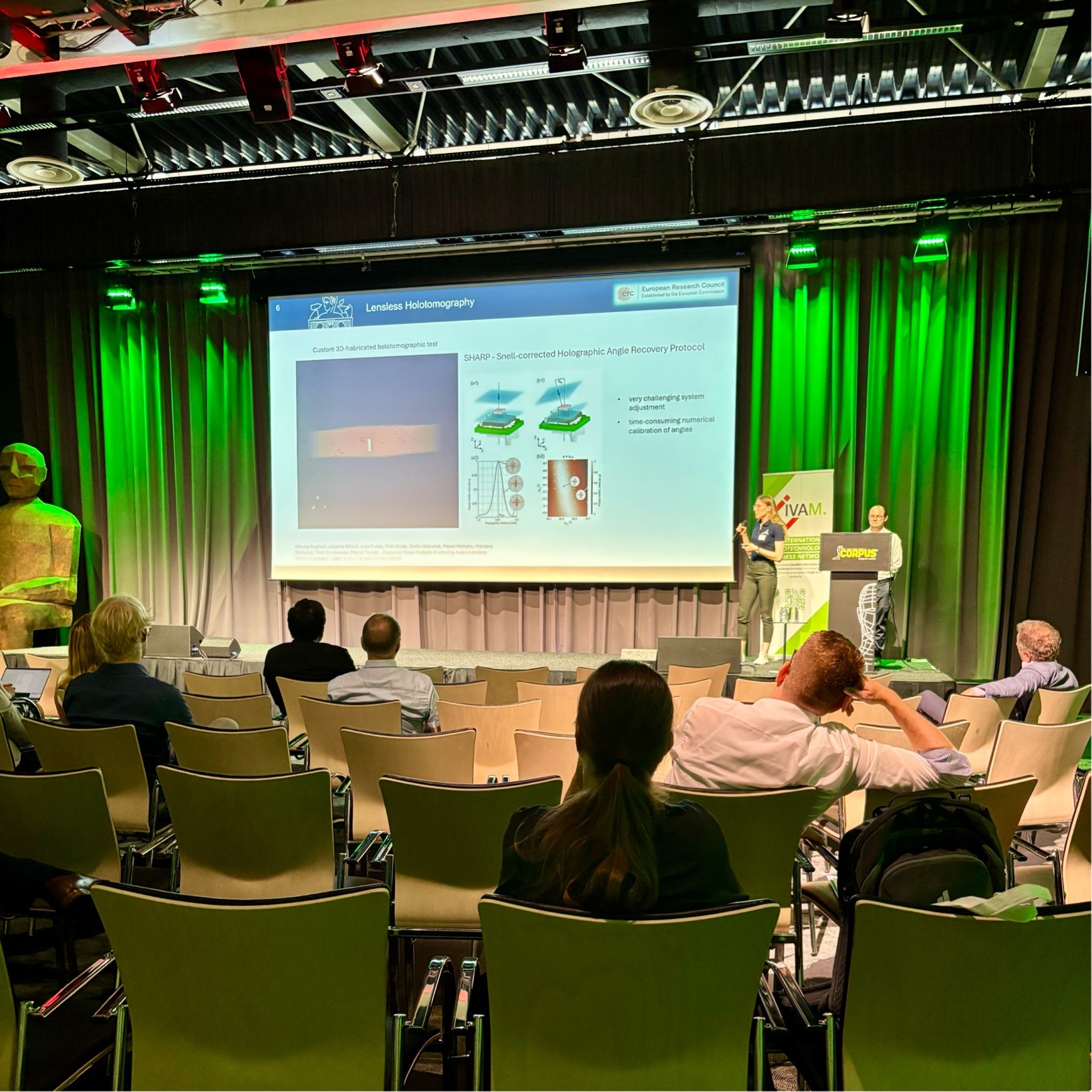
[June 2026] QCI Lab recently participated in the IVAM Microtechnology Network 𝐇𝐢𝐠𝐡𝐭𝐞𝐜𝐡 𝐒𝐮𝐦𝐦𝐢𝐭 in Leiden, Netherlands.

During the event, Emilia Wdowiak represented our team and, at the invitation of SmarAct Group, delivered a presentation titled “Breaking the Resolution-FOV Trade-Off Using Lensless Holotomography.”

The summit provided a valuable platform to share our current research, discuss advancements in imaging technology, and connect with other professionals in the high-tech sector.

We would like to thank Smaract for the invitation and the opportunity to contribute to the event. We also extend our appreciation to Emilia for her presentation and for representing QCI Lab.

Funding
This research work is supported by the European Research Council (ERC) through the NaNoLens project.

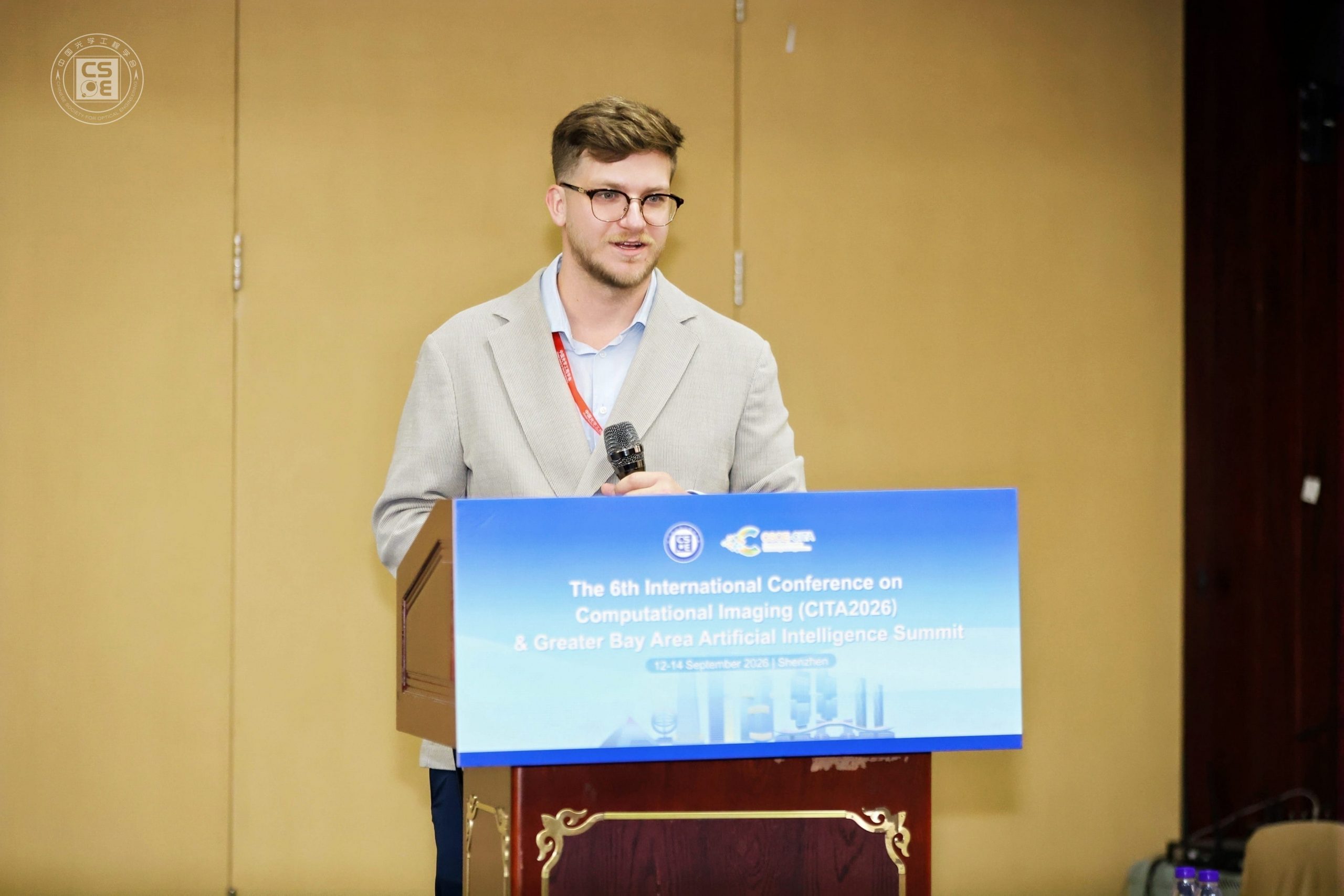
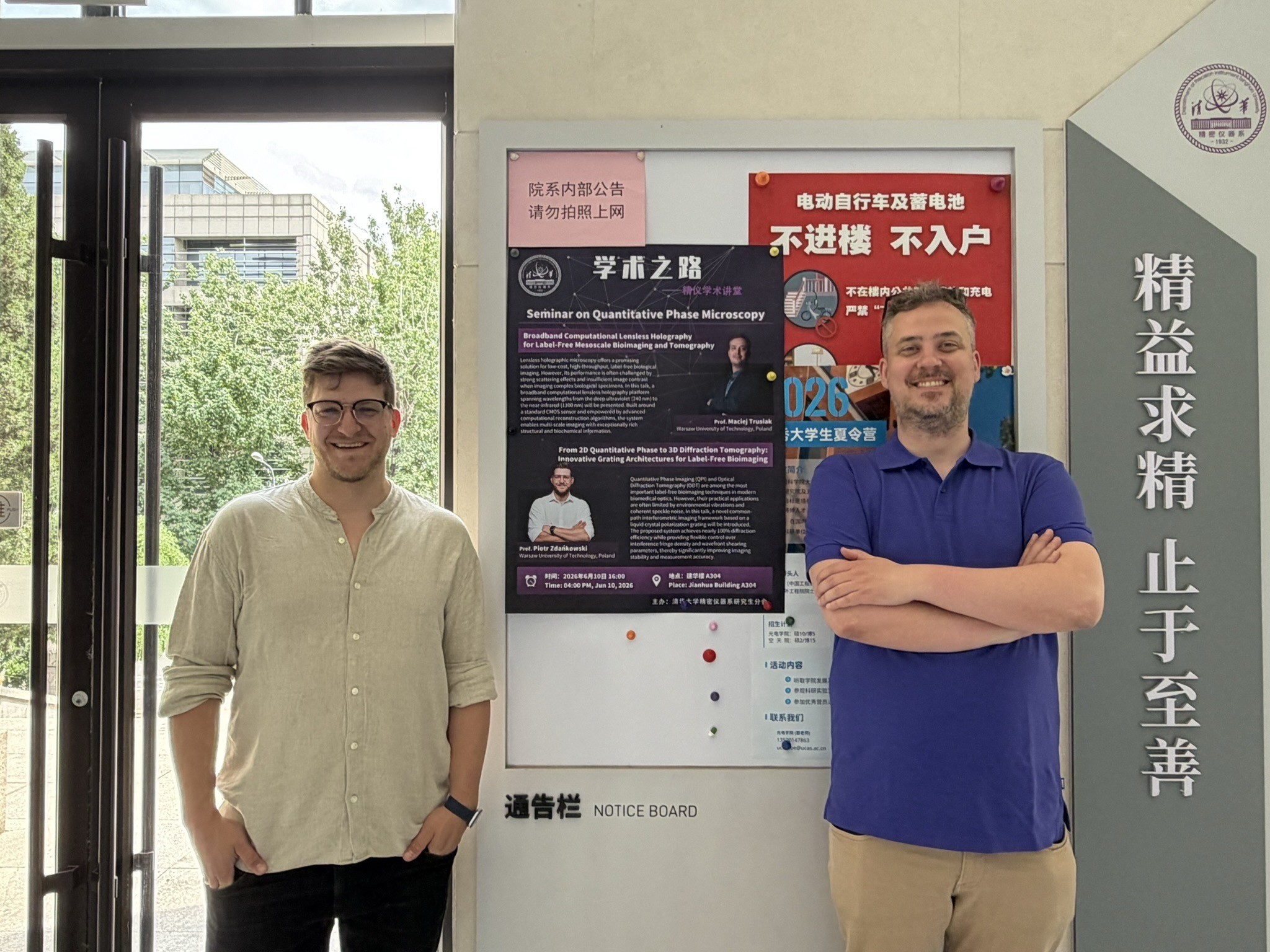
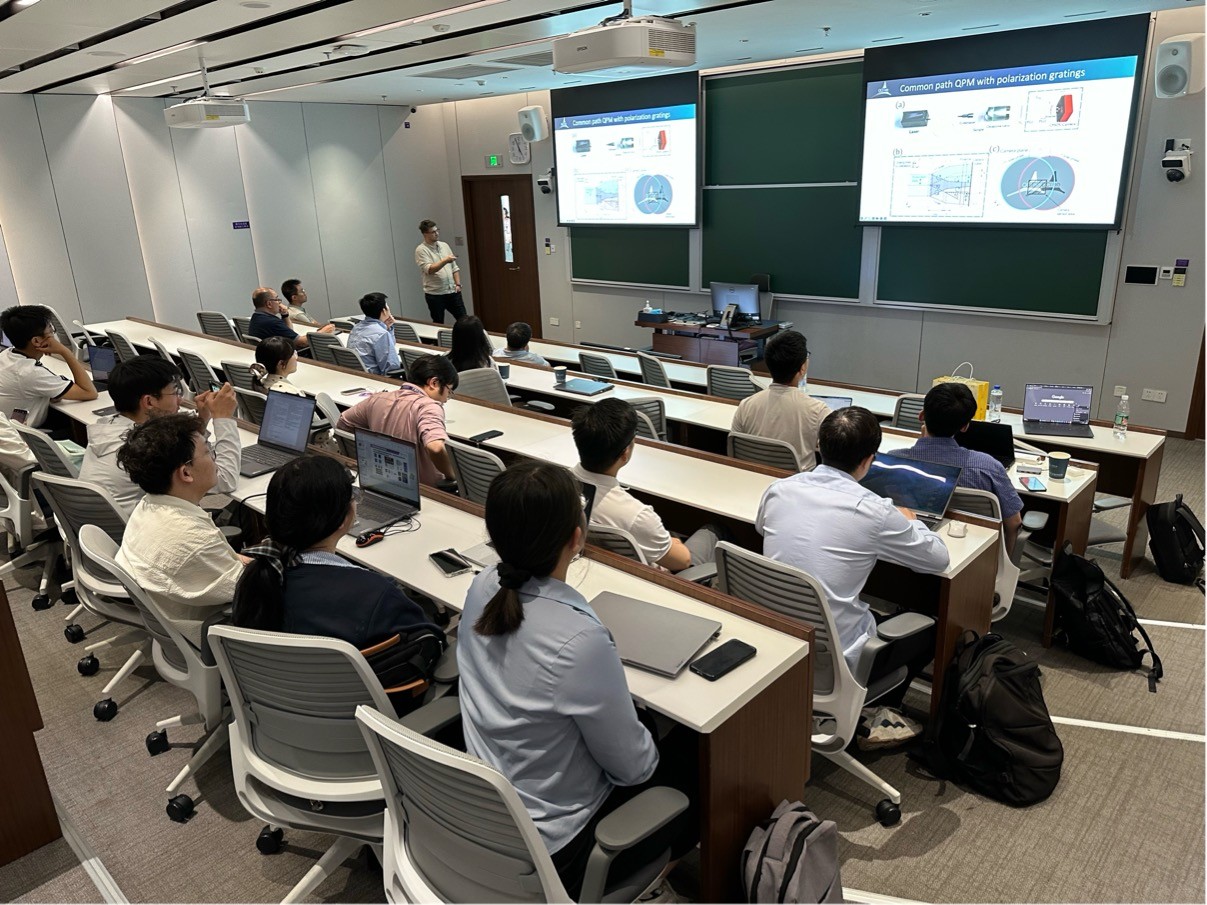
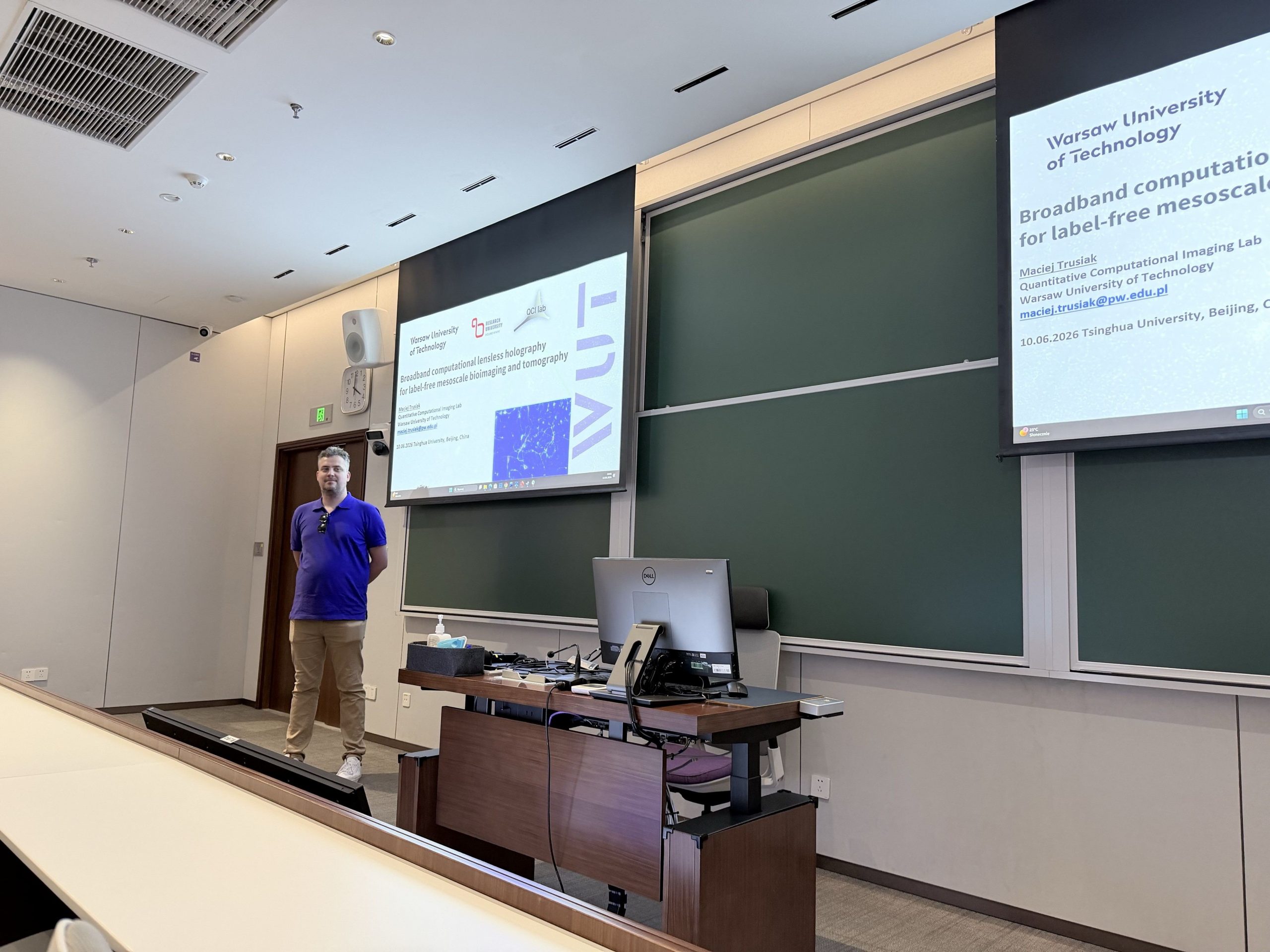
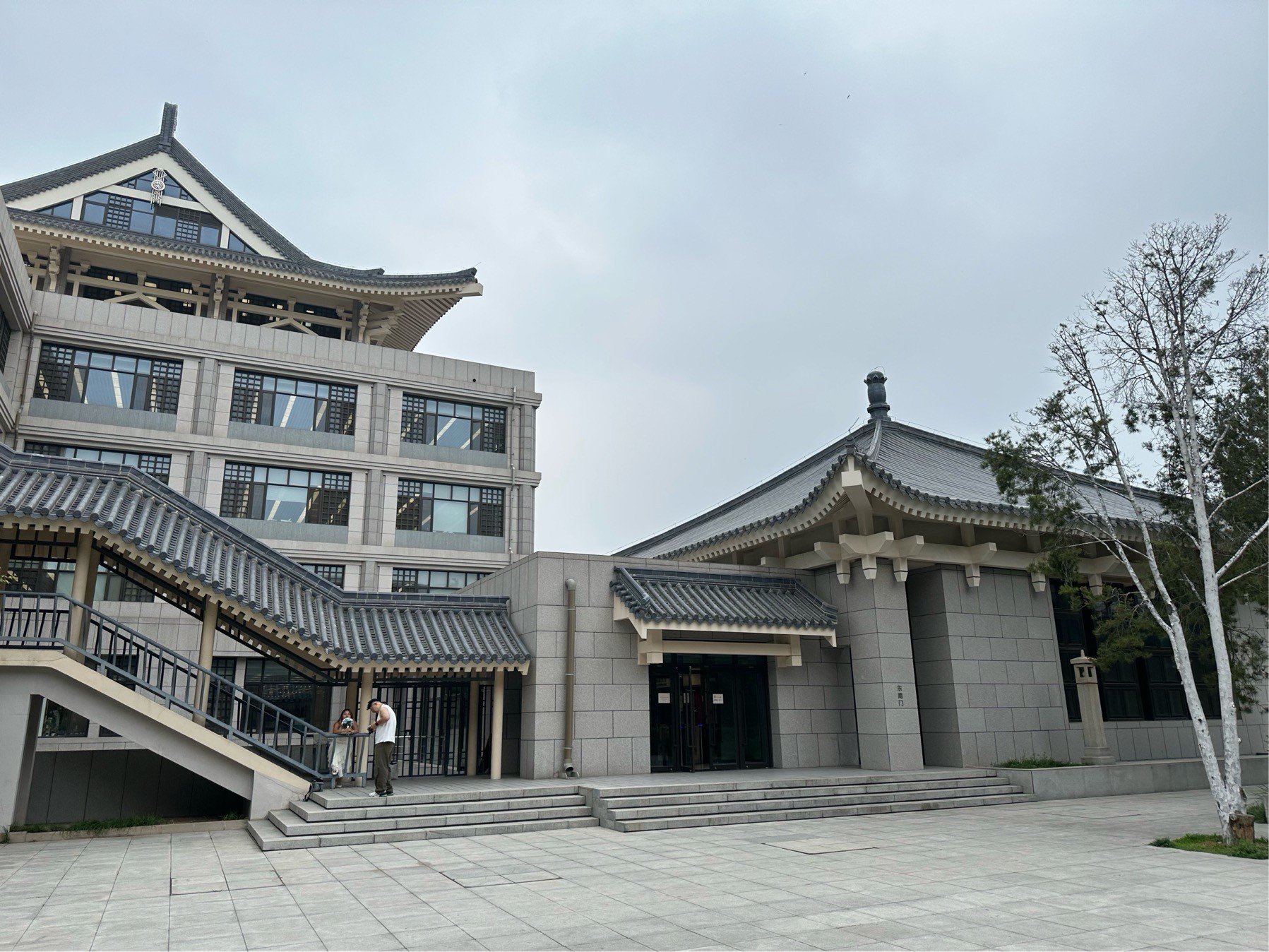
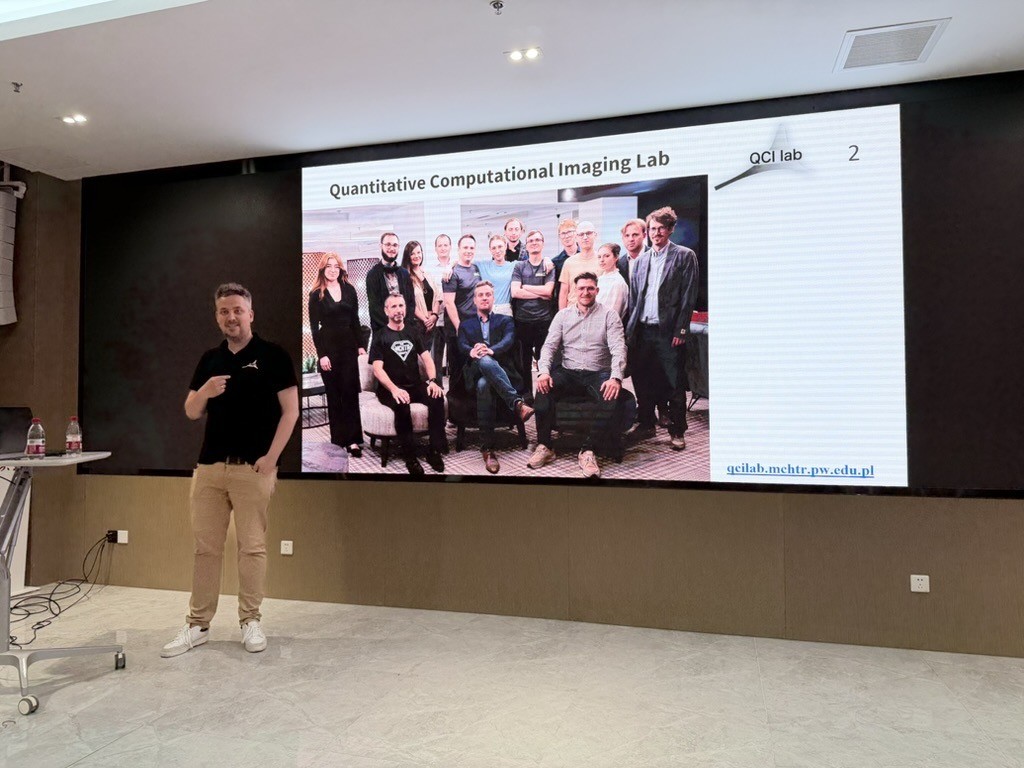
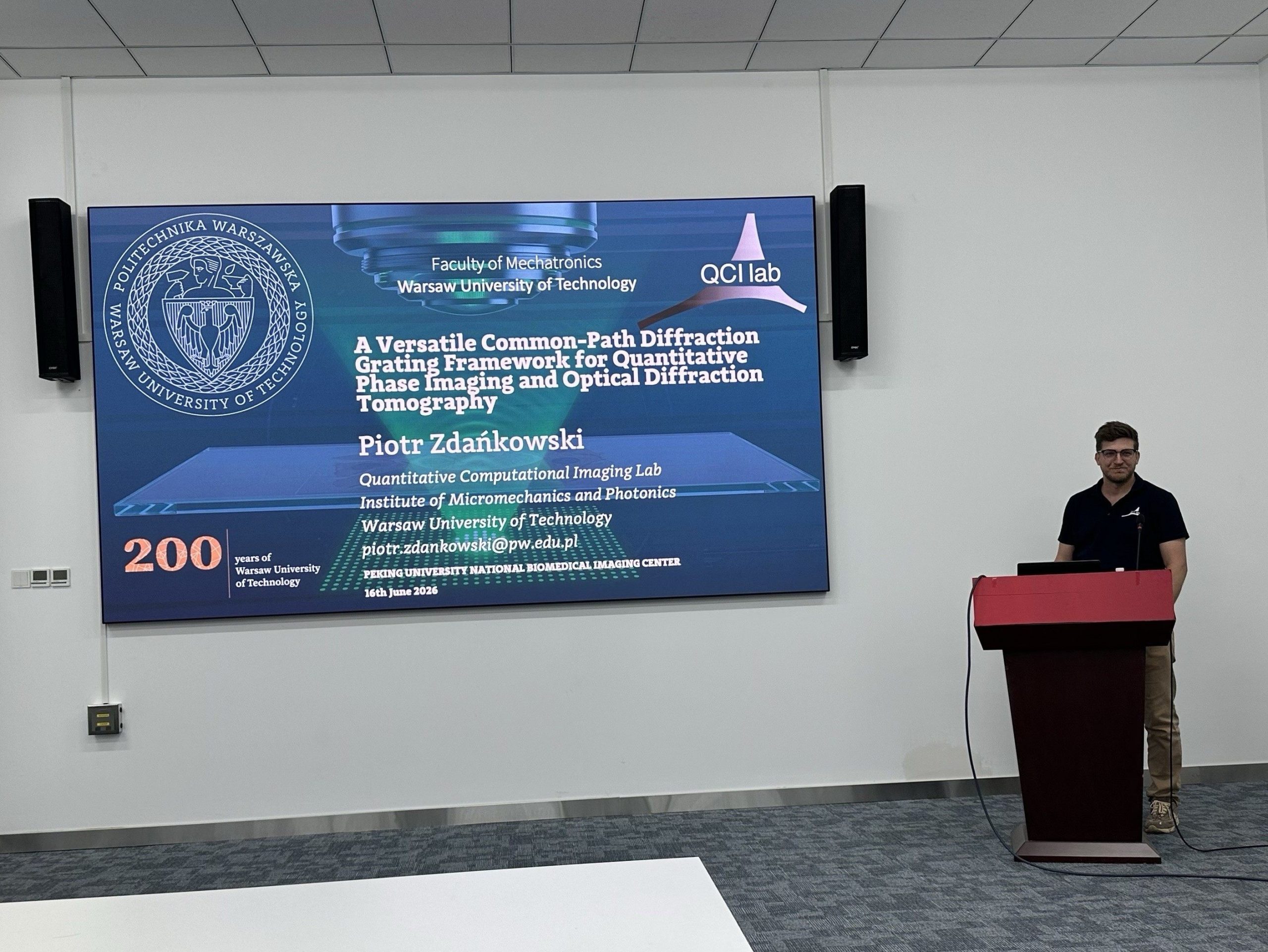
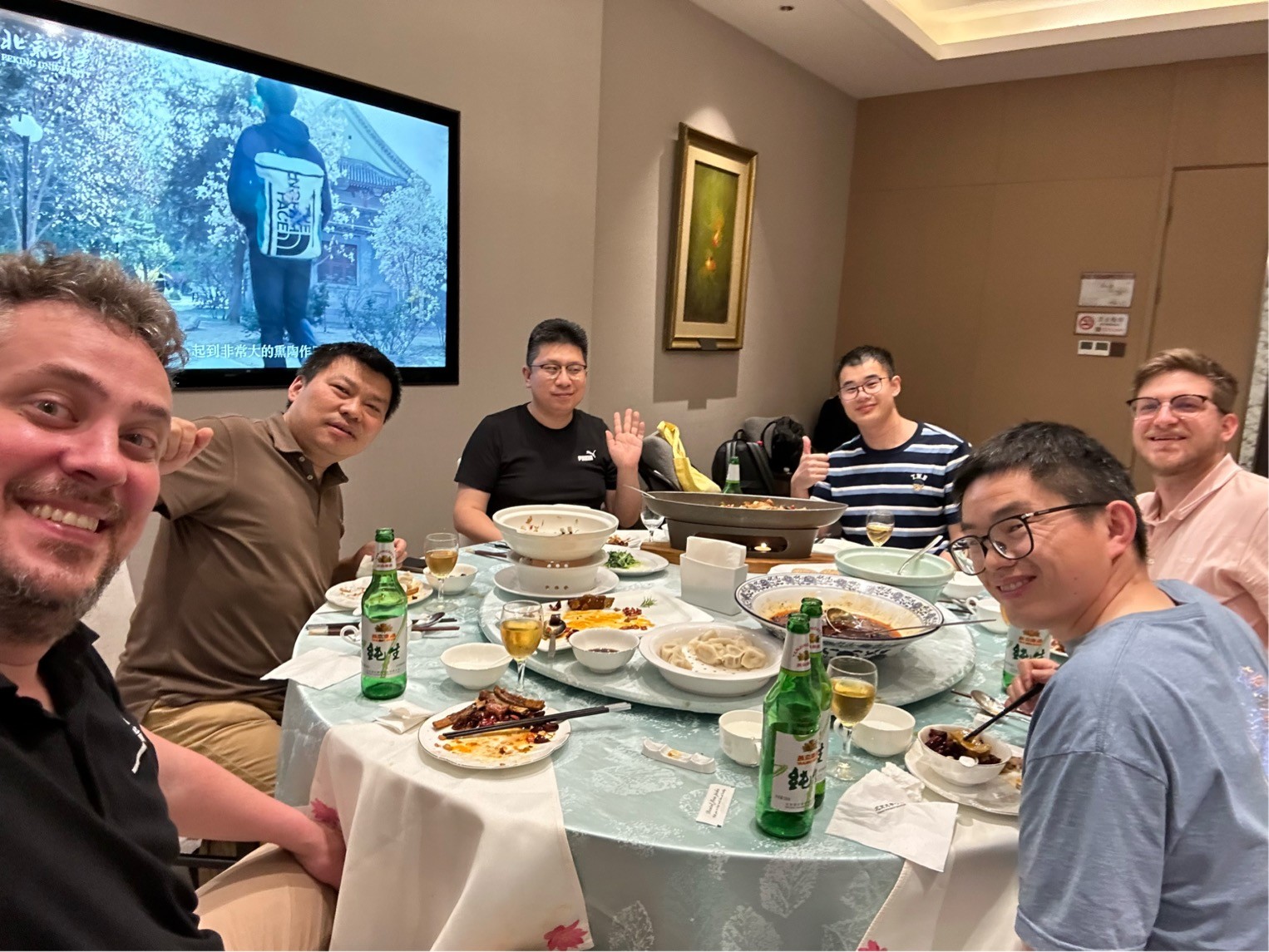
[June 2026] We were honoured to visit Tsinghua University and Peking University, two of China’s leading research institutions, where Maciej Trusiak and Piotr Zdańkowski were invited to deliver research seminars.

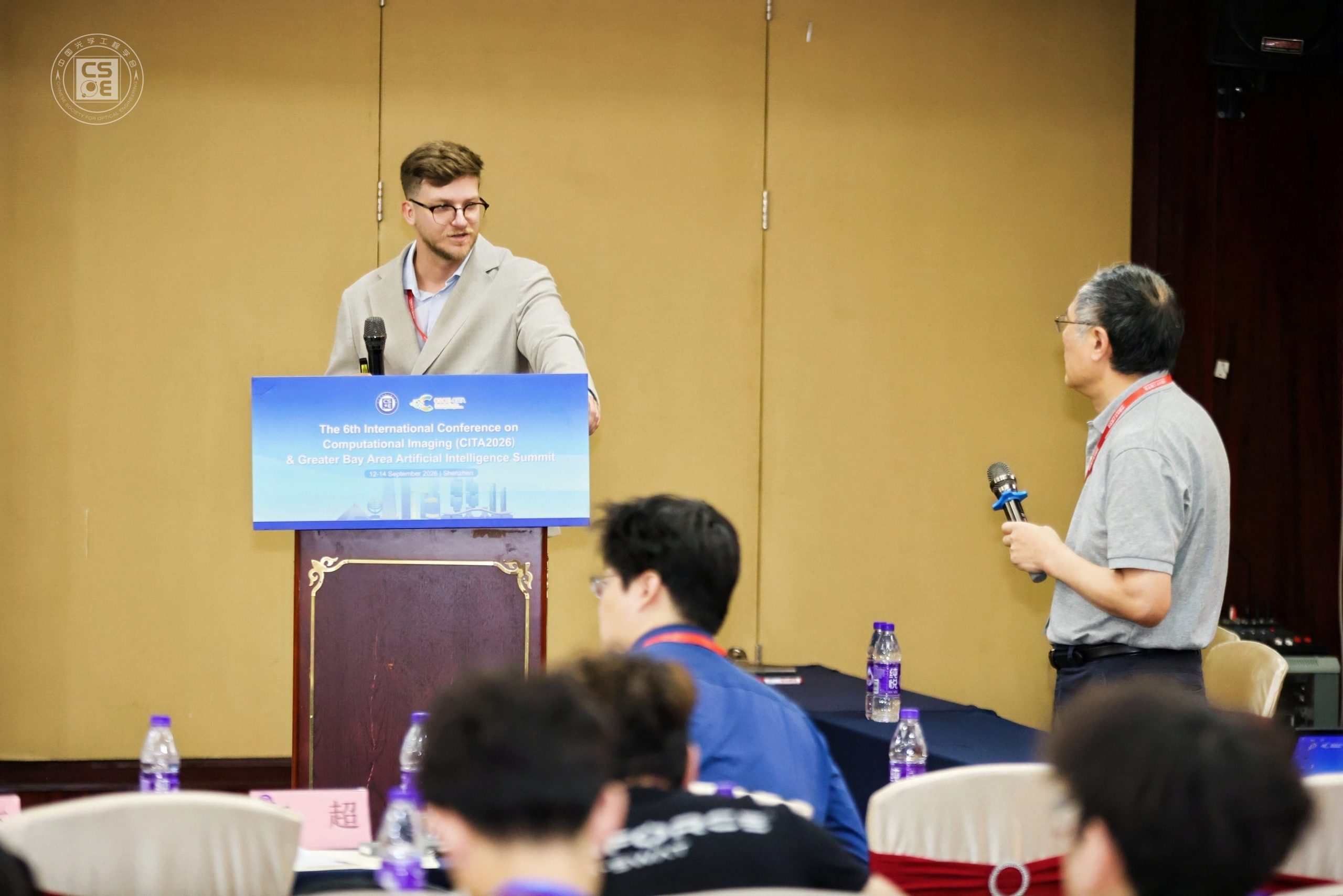
During the visits, Maciej and Piotr delivered seminars presenting our advances in computational imaging. Maciej discussed broadband lensless holography for mesoscale microscopy and tomography, while Piotr presented a grating-based framework for optical diffraction tomography and label-free bioimaging.

We would like to thank Prof. Liangcai Cao from Tsinghua and Prof. Chen Liangyi from Peking for their warm welcome and hospitality. Thank you also to Prof. Peng Xi for the tour of their impressive laboratories. We are grateful to the hosts for the stimulating discussions, inspiring scientific atmosphere and opportunities to explore new directions for collaboration. We look forward to continuing these interactions and developing future joint research initiatives.

Funding
This work of Piotr Zdańkowski is supported by the NCN National Science Centre through the Sheng project. The National Centre for Research and Development supports the work of Maciej Trusiak.

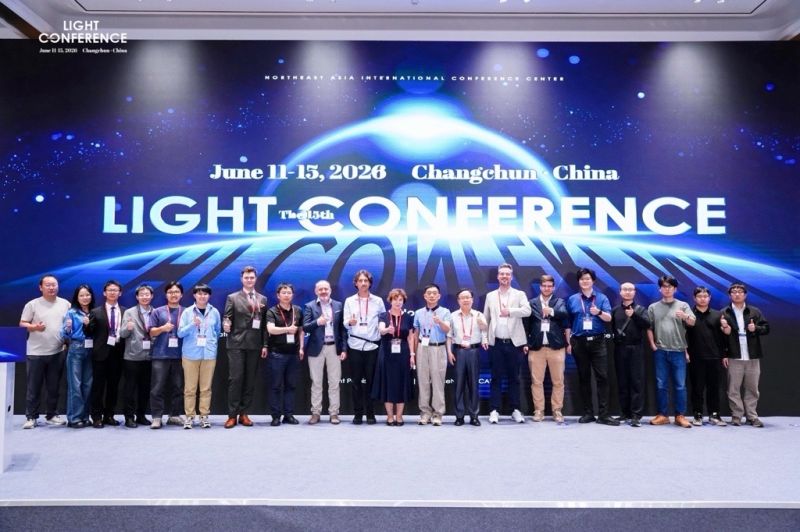
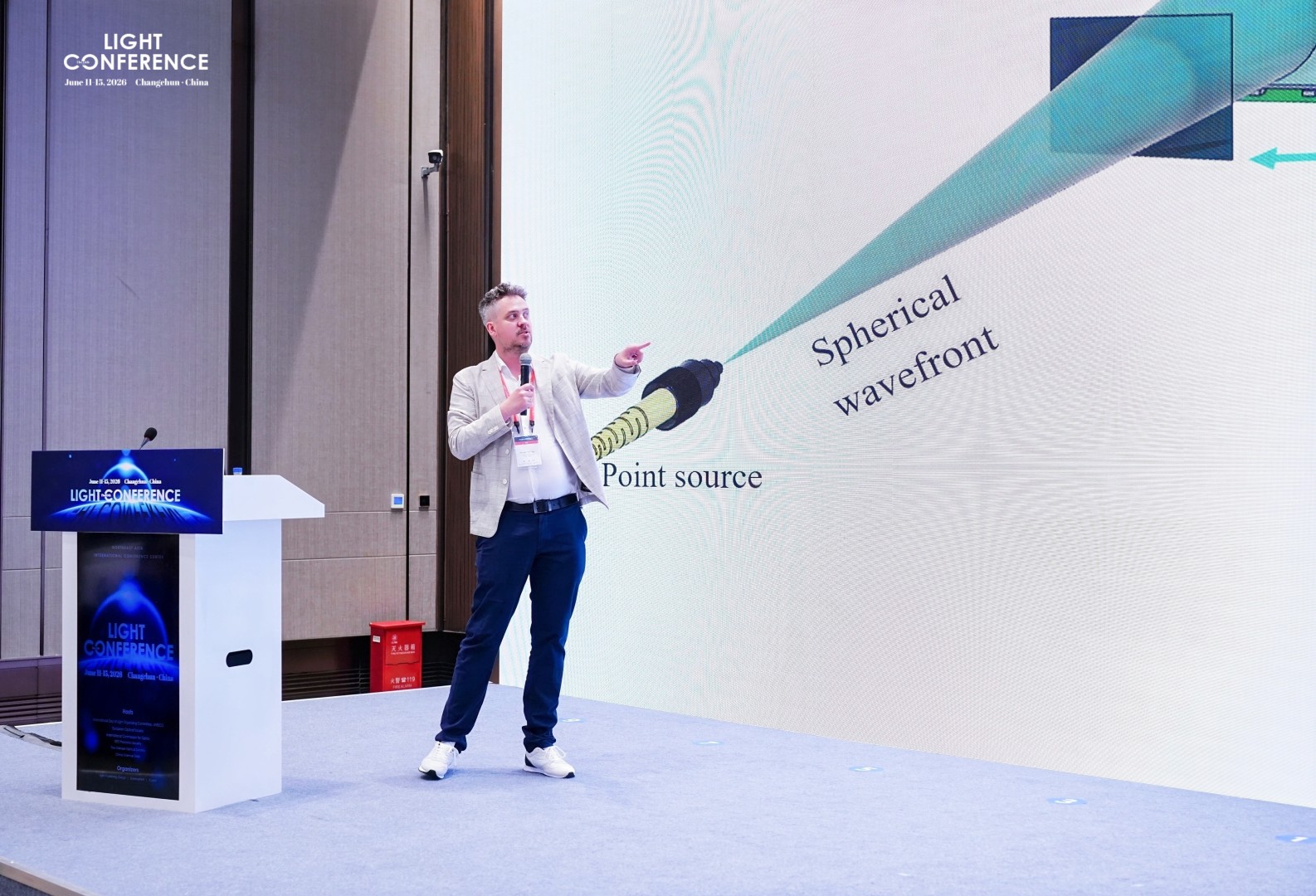
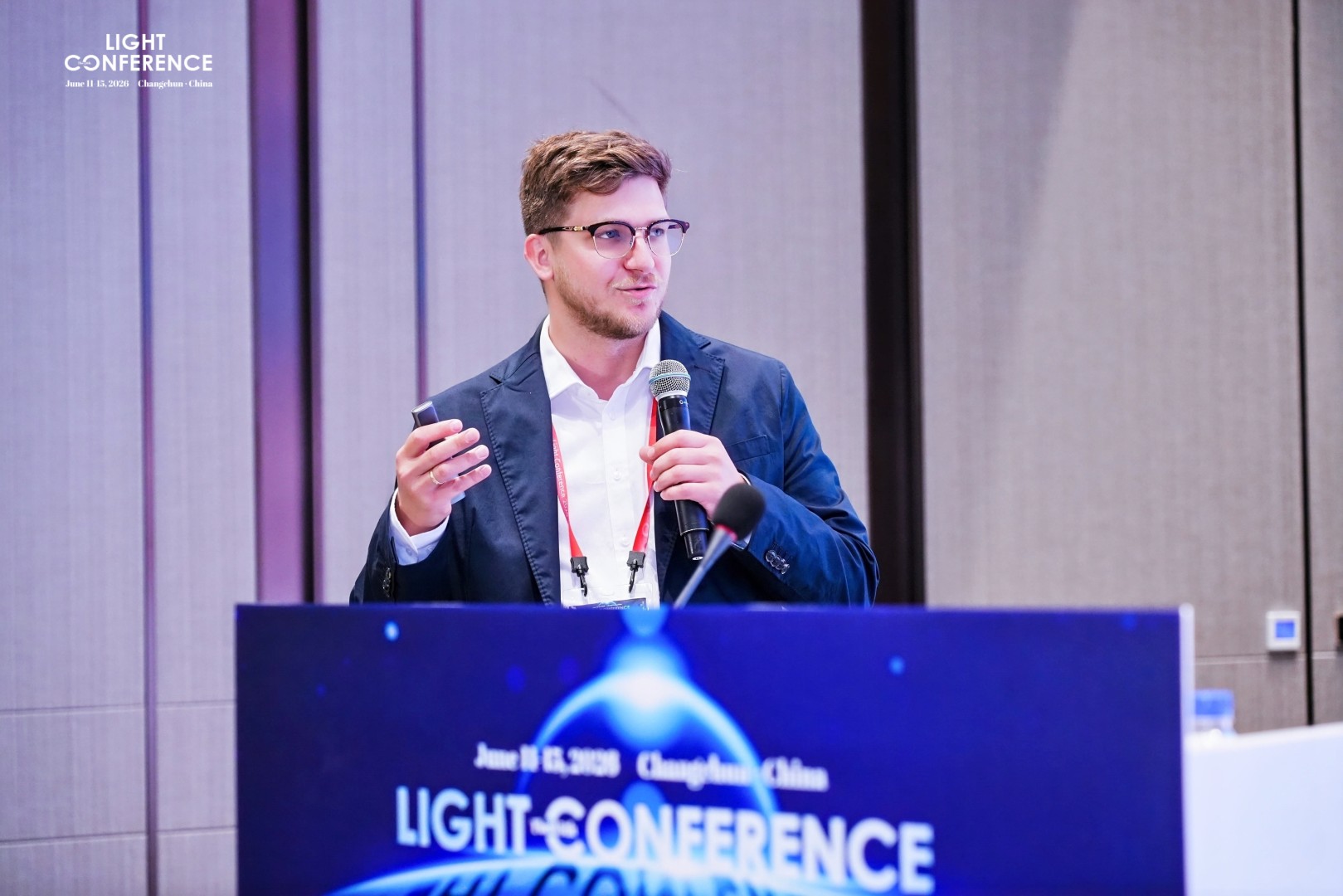
[June 2026] A great week for QCI Lab at the 𝐒𝐢𝐧𝐨-𝐏𝐨𝐥𝐢𝐬𝐡 𝐏𝐡𝐨𝐭𝐨𝐧𝐢𝐜𝐬 𝐅𝐨𝐫𝐮𝐦 at the 𝐋𝐢𝐠𝐡𝐭 𝐂𝐨𝐧𝐟𝐞𝐫𝐞𝐧𝐜𝐞 𝟐𝟎𝟐𝟔 ✨, organised by Light: Science & Applications in Changchun, China.

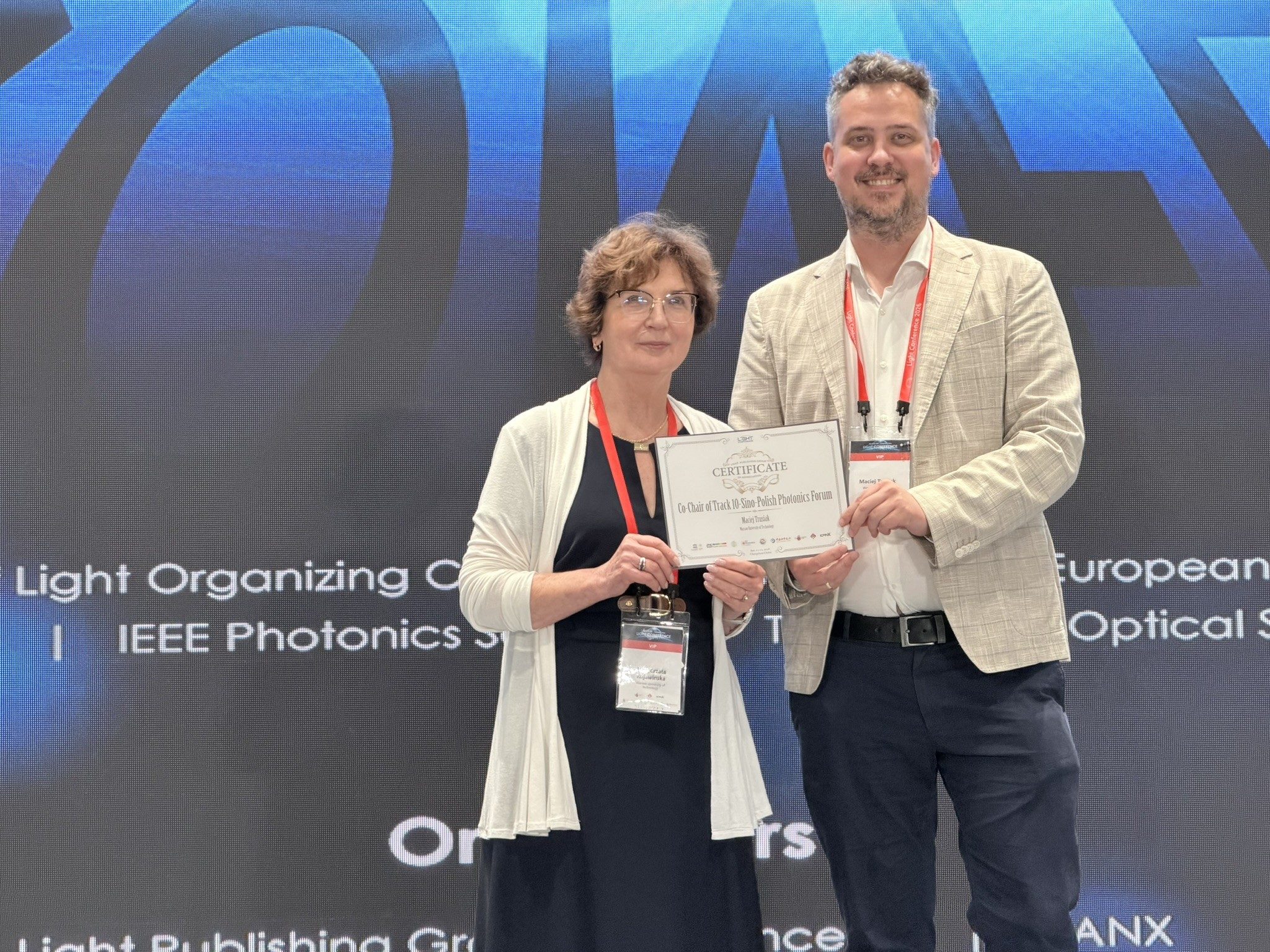
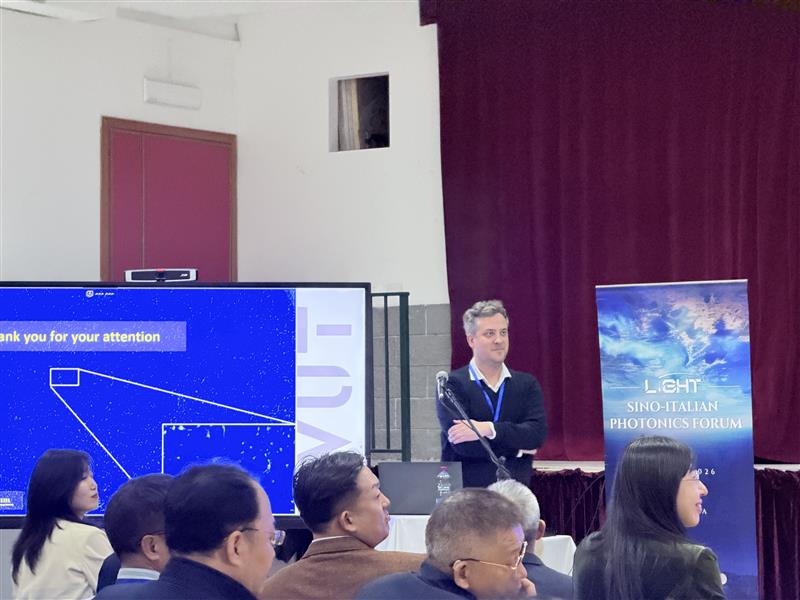
A particular highlight for our group was Maciej Trusiak serving as Chair of the Forum, helping to facilitate the exchange between the Polish and Chinese photonics communities. He also chaired one of the meeting’s sessions.
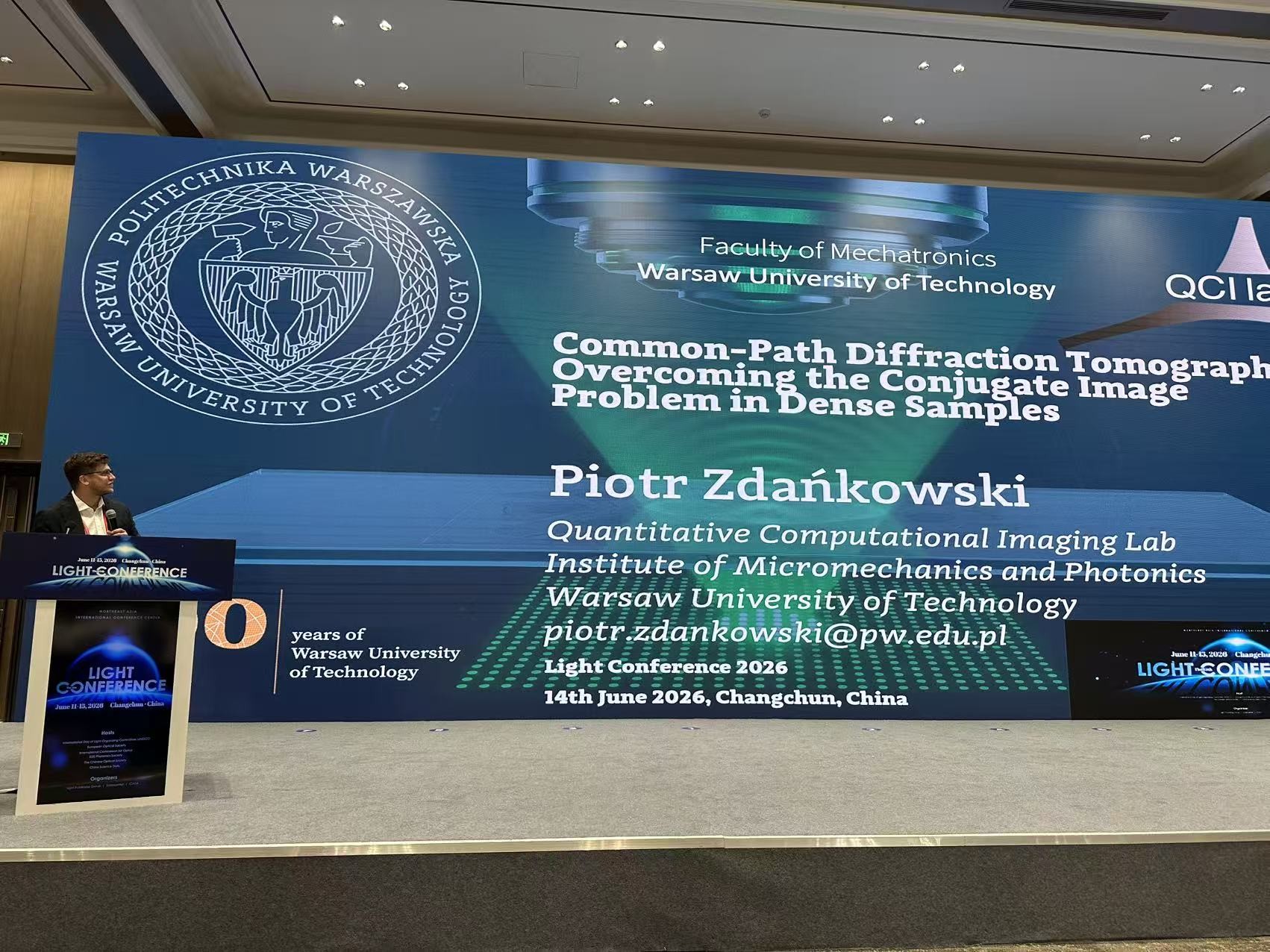
Our group was pleased to contribute two invited talks. Piotr Zdańkowski presented our latest developments in Common-Path Diffraction Tomography for imaging dense samples, while Maciej Trusiak discussed broadband lensless computational microscopy for label-free high-content bioimaging.
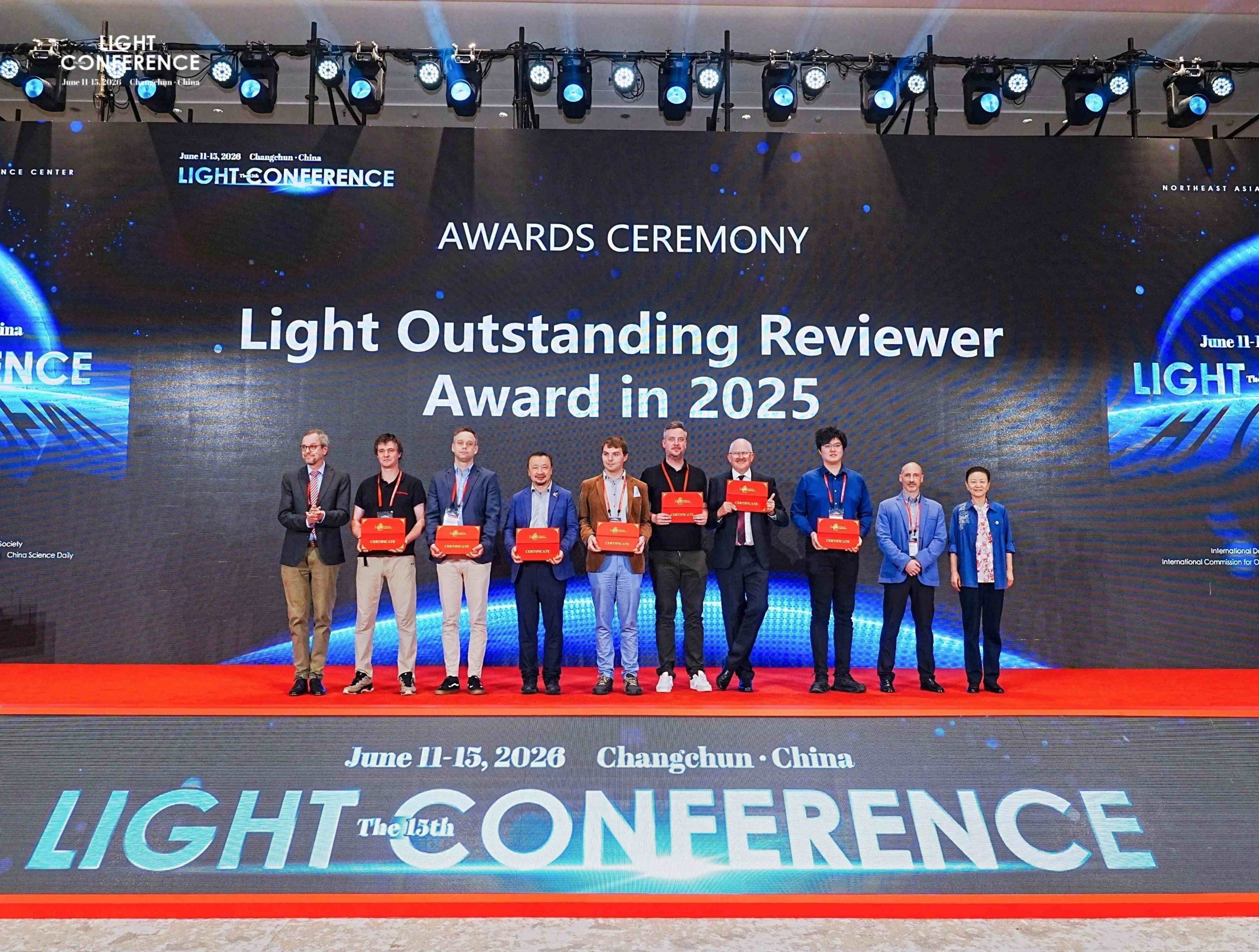
We are also delighted to share that Maciej received the 𝐋𝐢𝐠𝐡𝐭 𝐎𝐮𝐭𝐬𝐭𝐚𝐧𝐝𝐢𝐧𝐠 𝐑𝐞𝐯𝐢𝐞𝐰𝐞𝐫 𝐀𝐰𝐚𝐫𝐝 𝟐𝟎𝟐𝟓, recognising his contributions to the Light community.

Beyond the presentations and sessions, the Conference was a fantastic opportunity to exchange ideas, discuss emerging trends in photonics, and strengthen international collaborations. We would like to express our appreciation to the organisers for their invitation, warm hospitality, and for creating such an inspiring environment for scientific discussion. Thank you for delivering a superb event! We are already looking forward to the next edition of the Forum, which will be hosted in Poland next year.

Funding
This work of Piotr Zdańkowski is supported by the NCN National Science Centre through the Sheng project. European Research Council (ERC) supports this work of Maciej Trusiak through the NaNoLens project.

Photo credit: Light Conference 2026 organisers.

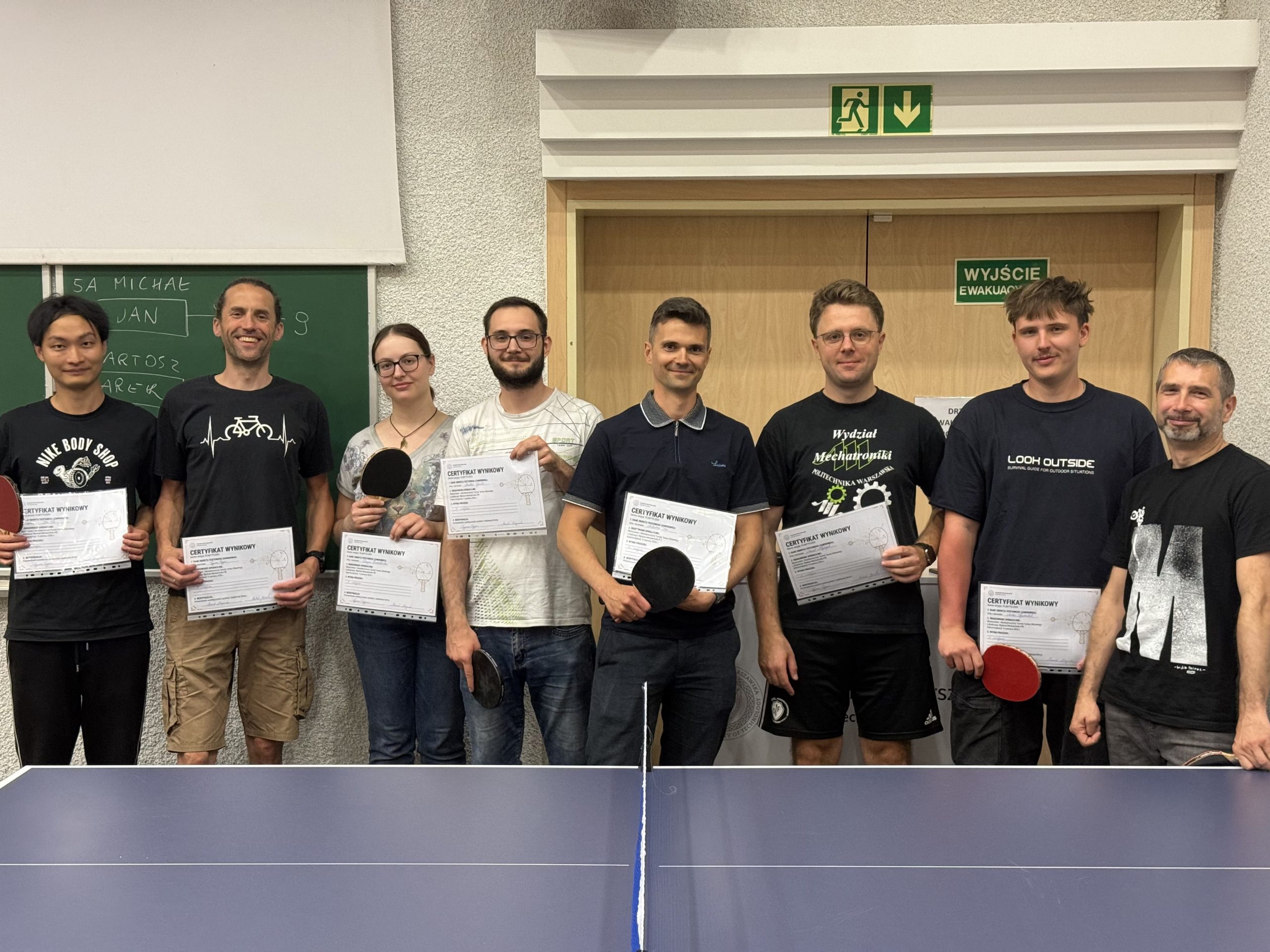
[June 2026] A brief break from science 🏓

Three members of our research group – Michał Józwik, Piotr Arcab, and Bartosz Górski – took part in the 1st Mechatronics Table Tennis Tournament at the Faculty of Mechatronics.
We came close to the podium this time, but we’ll be putting in some extra practice before the next edition! 🎖️

Thanks to the organizers for a great event and congratulations to all participants.

[June 2026]
🇵🇱
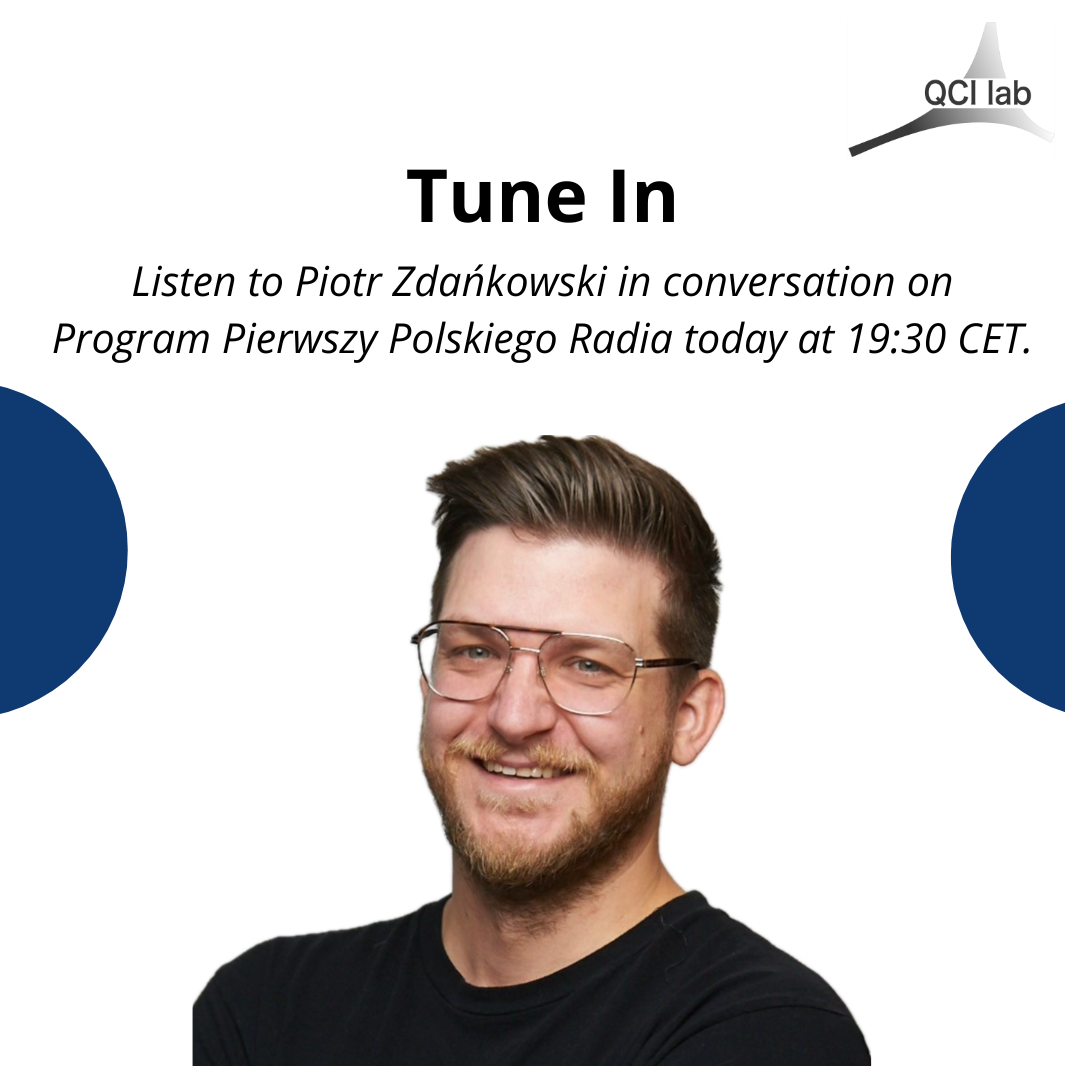
Piotr Zdańkowski będzie gościem Programu Pierwszego Polskiego Radia w pasmie 𝘌𝘶𝘳𝘦𝘬𝘢, w ramach audycji 𝘓𝘶𝘥𝘻𝘪𝘦 𝘕𝘢𝘶𝘬𝘪.
Rozmowa zostanie wyemitowana dziś około godziny 𝟏𝟗:𝟑𝟎. Serdecznie zachęcamy do słuchania!

🇬🇧
Piotr Zdańkowski will be a guest on Program Pierwszy Polskie Radio in the 𝘌𝘶𝘳𝘦𝘬𝘢 series, as part of the 𝘓𝘶𝘥𝘻𝘪𝘦 𝘕𝘢𝘶𝘬𝘪 segment.
The conversation will be aired at approximately 𝟏𝟗:𝟑𝟎 CET, and we encourage our Polish-speaking audience to tune in and listen!

[June 2026] The Institute of Micromechanics and Photonics at the Faculty of Mechatronics, Warsaw University of Technology, is seeking candidates to join the research project “Multiphoton multimodal nanoscopy using SPAD array detectors and adaptive optics”, carried out under the First Team programme of the Foundation for Polish Science, co-financed by the European Union under the European Funds for Smart Economy 2021–2027 (FENG).

Principal Investigator: Piotr Zdańkowski

The project aims to develop a unique multiphoton microscopy platform integrating SPAD array detectors, adaptive optics, and advanced computational methods for high-resolution biological imaging. The research combines photonics, microscopy, instrumentation, software development, and advanced data analysis. We are currently recruiting for the following positions:

  1. PhD Student / PhD Candidate–Student Scholarship Position


Scope of tasks:

  • Experimental work: participation in the construction, calibration, and alignment of the innovative multiphoton microscope system.
  • Acquisition and processing of imaging data.
  • Cooperation with biological partners.
  • Documentation of results (reports, plots, preparation of materials for presentations/publications).
  • Developing and testing acquisition software, and implementing image analysis algorithms and localization methods.


Application Deadline:
30 June 2026, 23:59 (Europe/Warsaw)
Further information about the positions is available at the following link:


  1. PhD Student – Student Scholarship Position


Scope of tasks:

  • Numerical work: development and testing of advanced software for single-molecule localization and algorithms for active correction of optical aberrations
  • Implementation of modern data analysis algorithms for the microscopy system.
  • Processing and analysis of temporal and spatial fluorescence signals acquired from experiments on biological samples.
  • Documentation of results (reports, plots, preparation of materials for presentations/publications).
  • Developing and testing acquisition software and implementing image analysis algorithms and localization methods.


Application Deadline:
30 June 2026, 23:59 (Europe/Warsaw)
Further information about the positions is available at the following link:

 3. Student Scholarship Position


Scope of tasks:

  • participation in experimental or numerical work related to the development of the system, with the possibility to expand responsibilities as experience grows,
  • documentation of results (reports, plots, materials for presentations/publications).


Application Deadline:
15 June 2026
Further information about the positions is available at the following link:


For details, contact Piotr Zdańkowski piotr.zdankowski@pw.edu.pl

[May, 2026] A new episode of the #pokolenieNCN series has just been released, in which Maciej Trusiak talks about research on lensless microscopy.

Our work in the field led, among other things, to setting a world record for the thickness of a measured sample. We encourage our Polish-speaking audience to watch the interview!

You’ll find the link below — we encourage you to give it a listen 🎧

https://www.ncn.gov.pl/aktualnosci/2026-05-27-pokolenie-ncn-maciej-trusiak

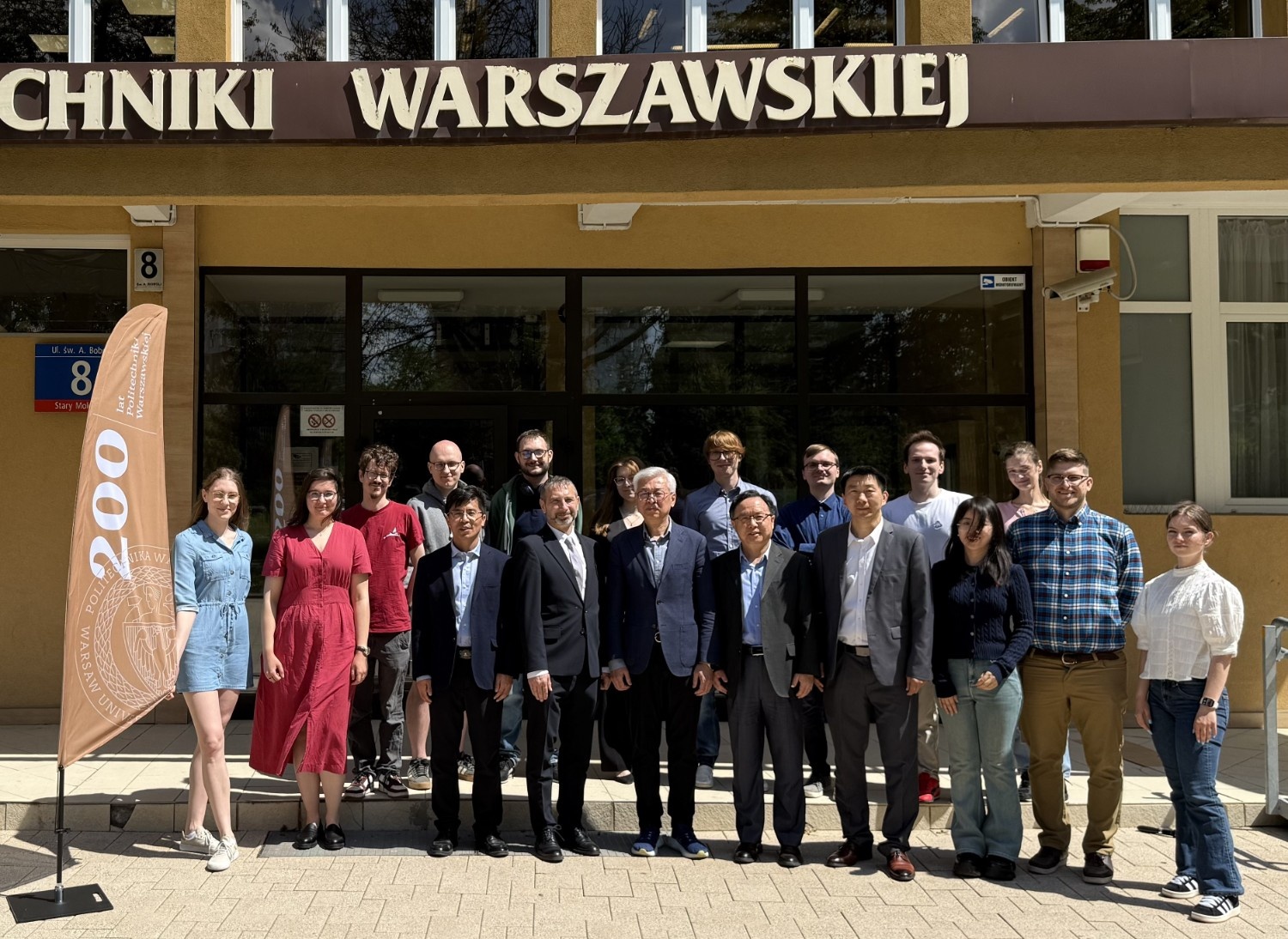
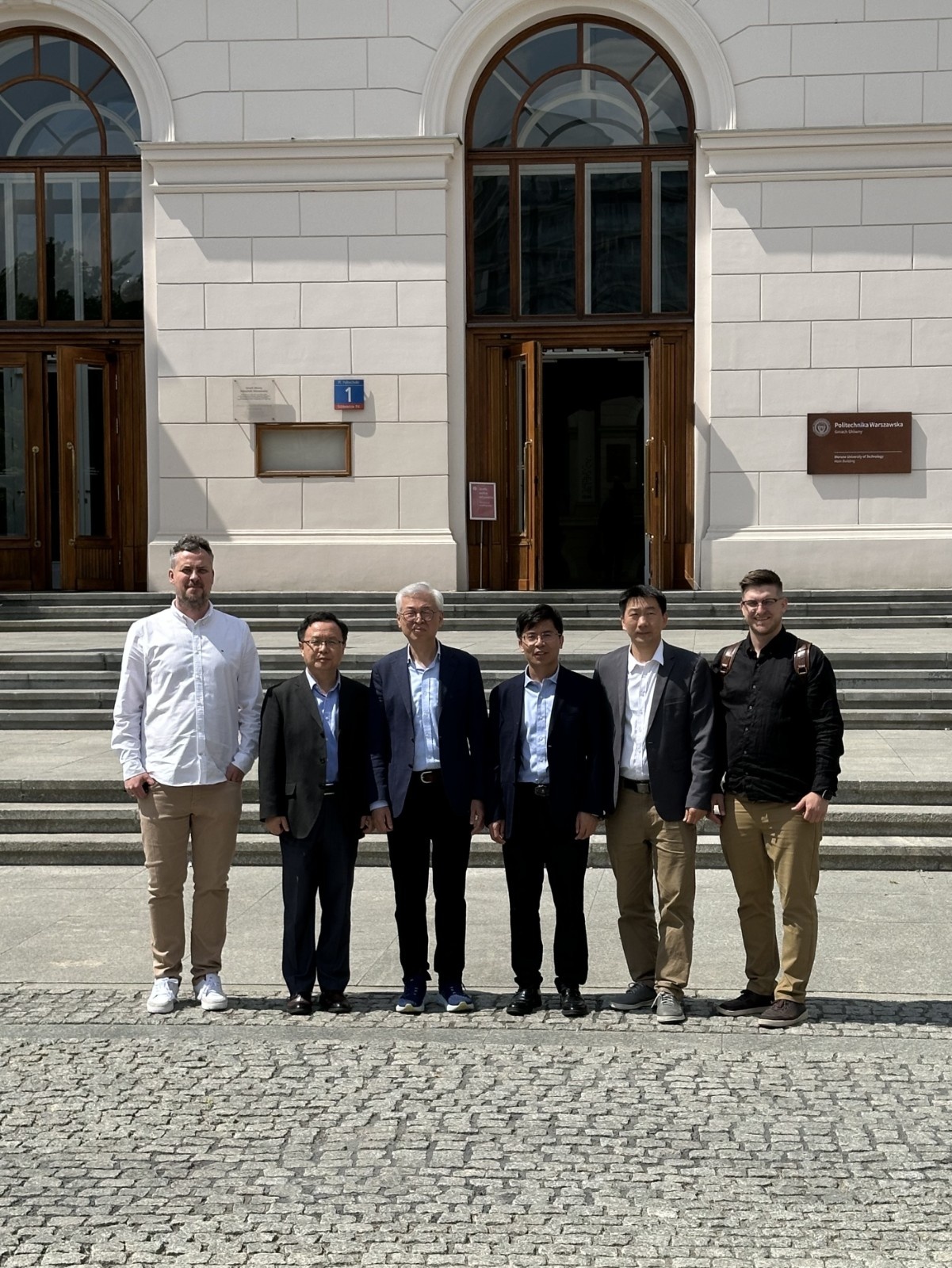
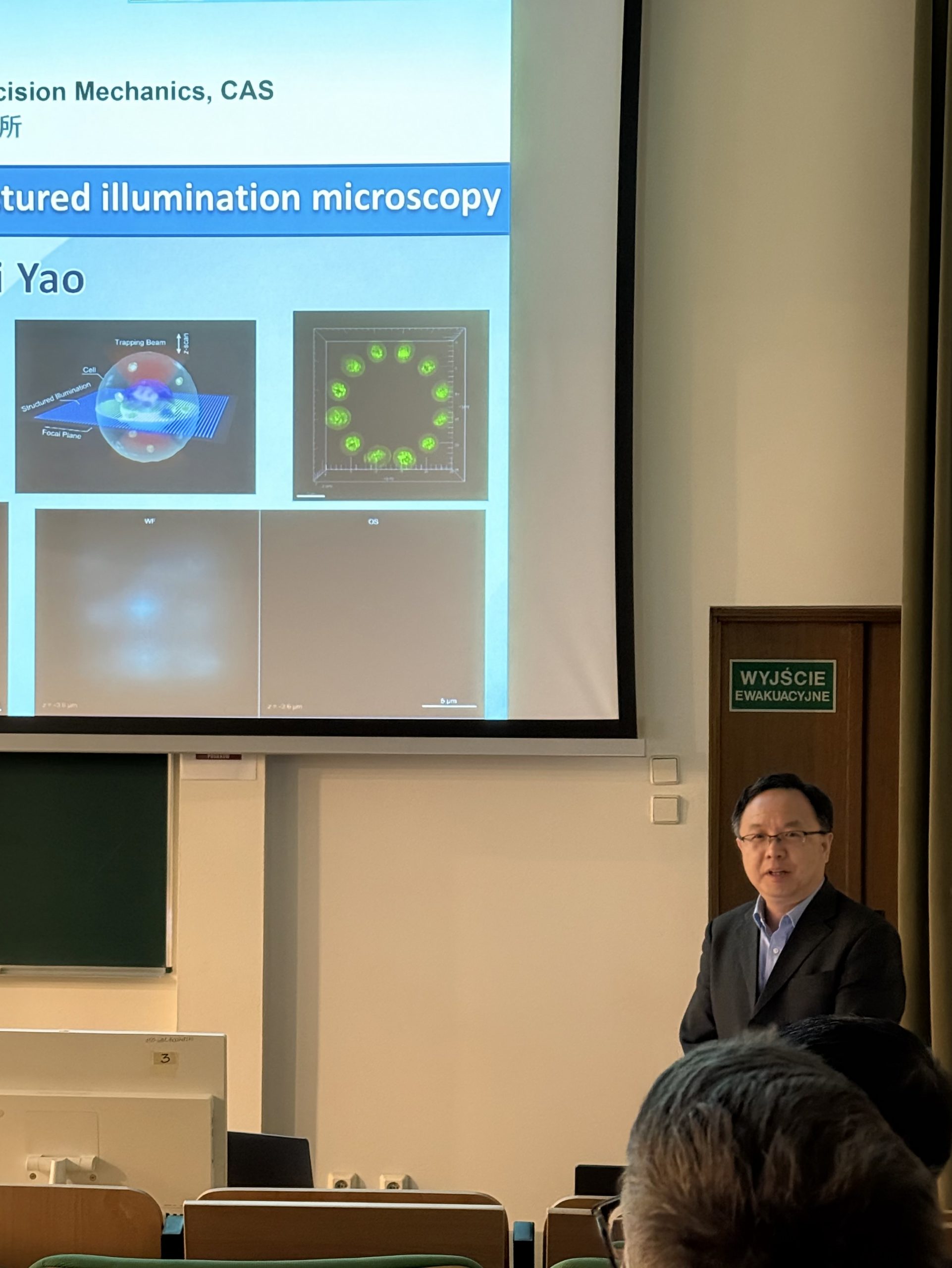
[May, 2026] We were honoured to welcome a delegation from the Xi’an Institute of Optics and Precision Mechanics (XIOPM), Chinese Academy of Sciences. 💫

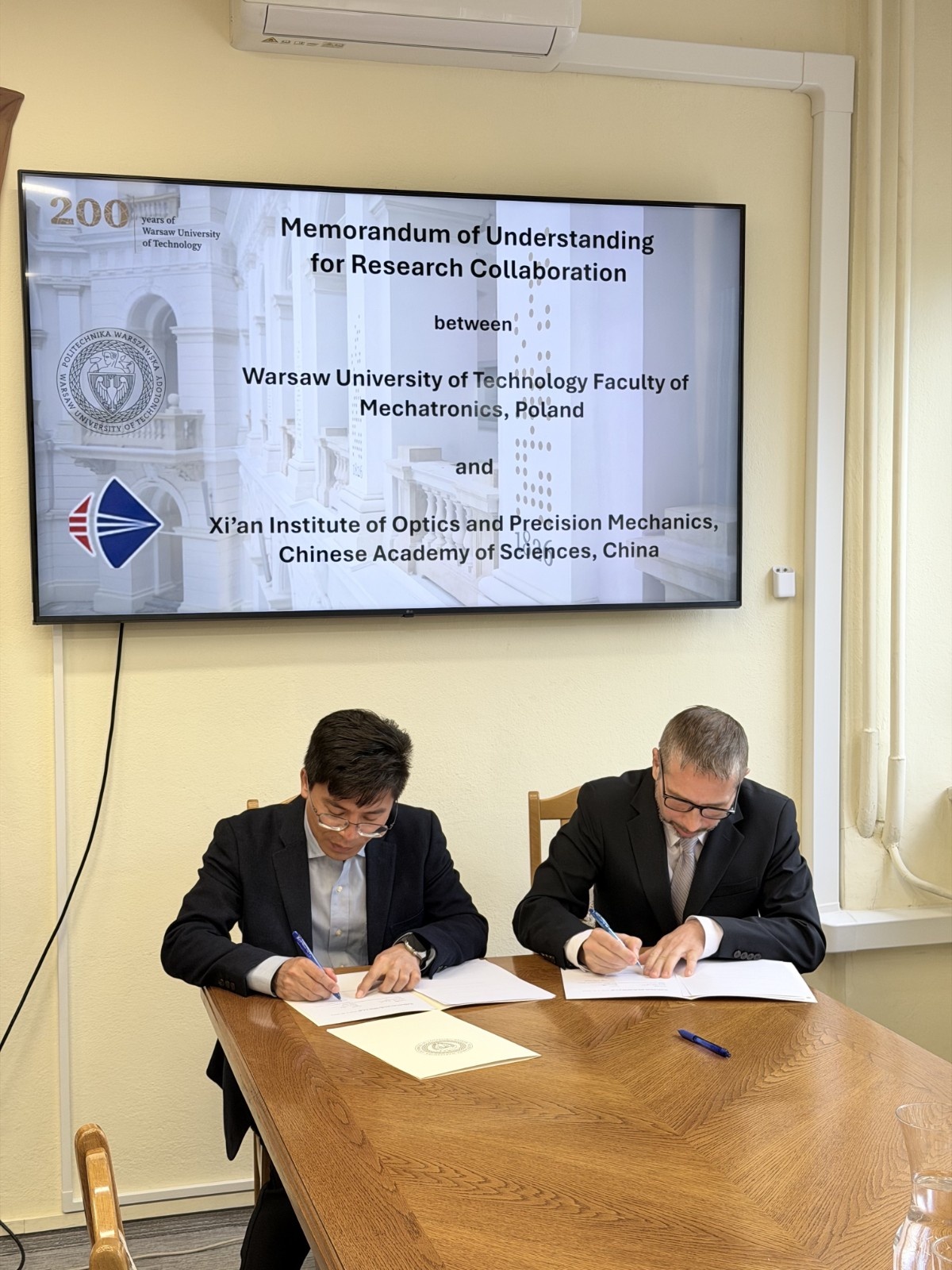
The visit, hosted at the invitation of our PI, Maciej Trusiak, was an opportunity to strengthen scientific ties and discuss future joint activities between XIOPM and the Faculty of Mechatronics, Warsaw University of Technology. It also marked the signing of a Memorandum of Understanding for Research Collaboration between the two institutions.

We had the pleasure to listen to two inspiring talks delivered by our guests:
🔸 Prof. Baoli Yao presented “Optical tweezers assisted structured illumination microscopy”.
🔸 Prof. Yuxi Fu gave a talk on “MIR femtosecond laser for attosecond science”.

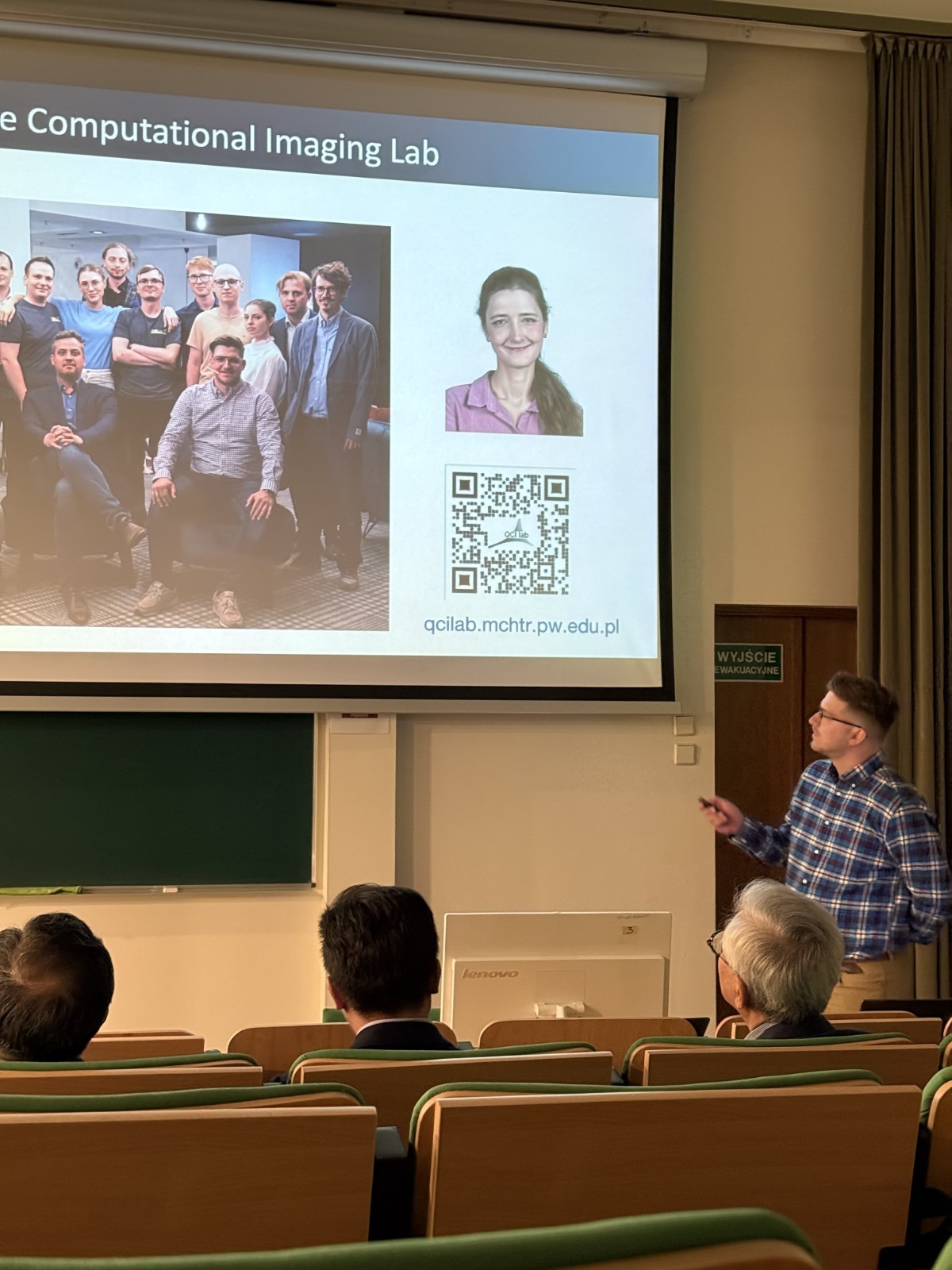
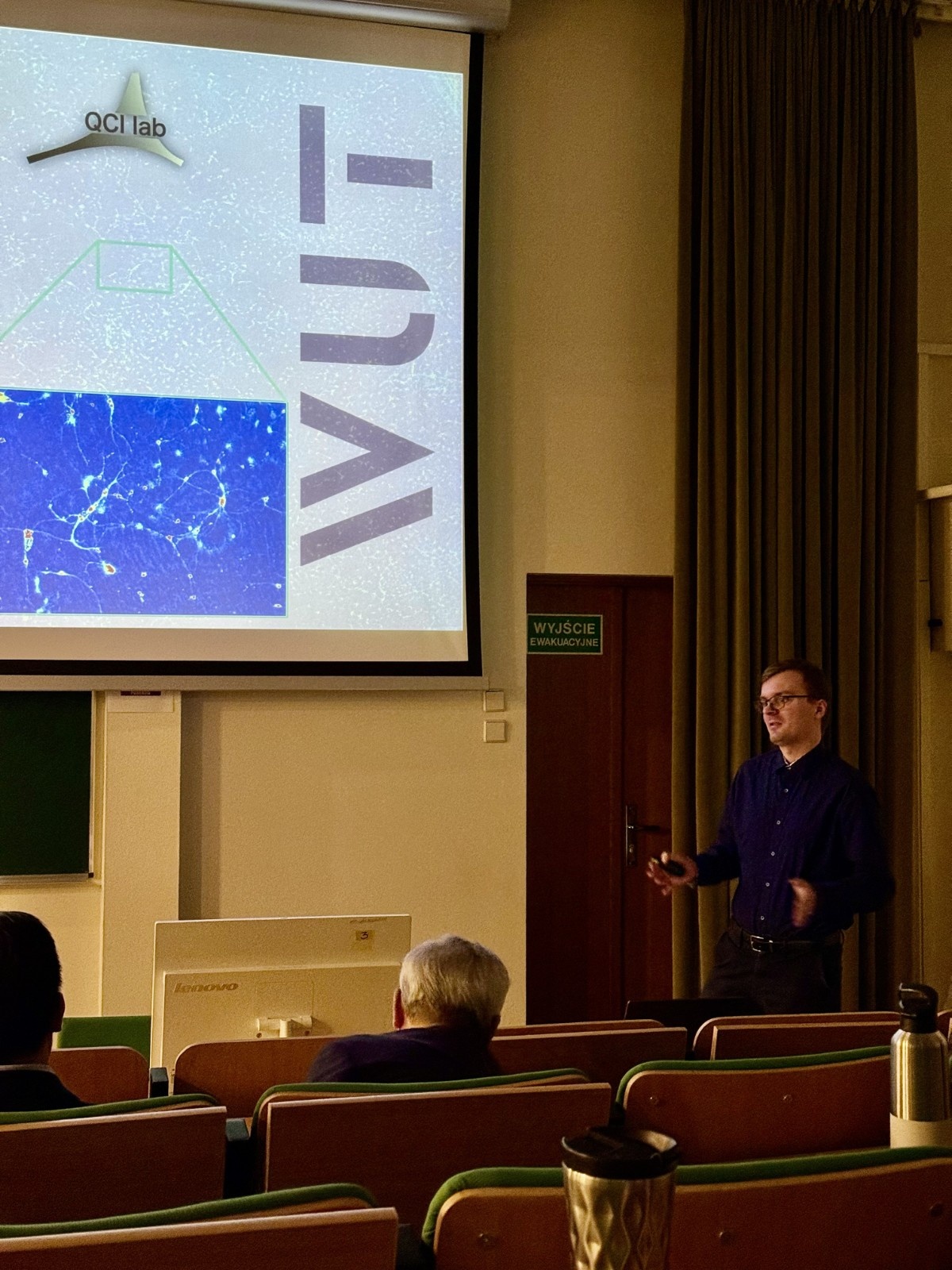
During the seminar, researchers from the Institute of Micromechanics and Photonics also presented selected research topics developed in our laboratories. Representatives of QCI Lab contributed as well:
🔹 Piotr Zdankowski presented quantitative phase imaging methods developed in our lab, including FPM and ODT.
🔹 Mikołaj Rogalski introduced our work on lensless microscopy.

After the talks, we had an opportunity to show our guests around the laboratories, present the microscopy setups we are developing, and discuss recent results and ongoing projects.

It was a great pleasure and honour to meet the XIOPM delegation and exchange ideas on advanced photonics and imaging. We are grateful for the inspiring discussions and look forward to future interactions.

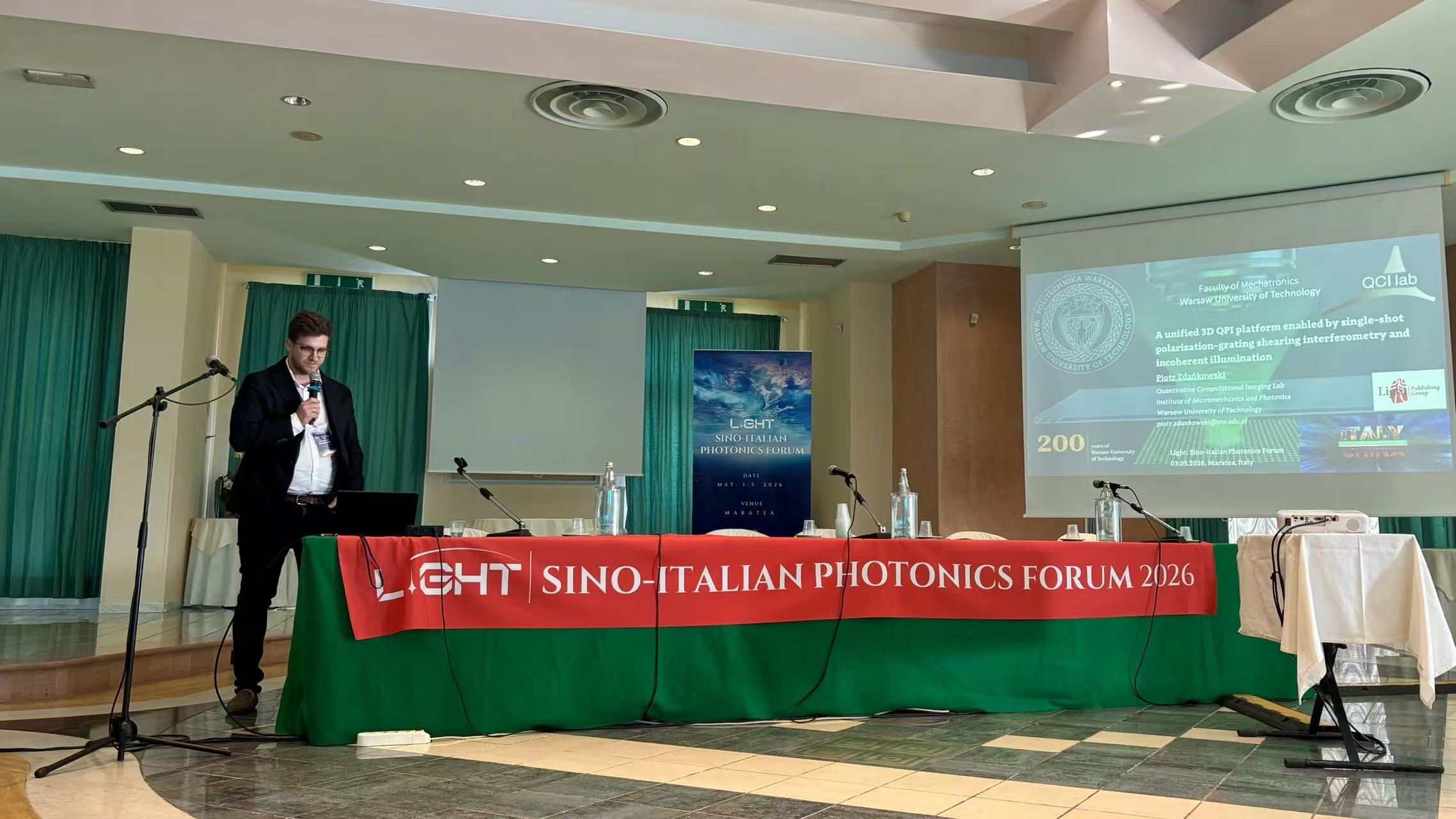
[May 2026] Another inspiring conference in Italy and another great opportunity to represent our research group QCI lab.

This week, Maciej, Piotr, and Linpeng participated in the 𝐋𝐈𝐆𝐇𝐓: 𝐒𝐢𝐧𝐨-𝐈𝐭𝐚𝐥𝐢𝐚𝐧 𝐏𝐡𝐨𝐭𝐨𝐧𝐢𝐜𝐬 𝐅𝐨𝐫𝐮𝐦 𝟐𝟎𝟐𝟔 in Maratea, where they delivered three invited talks:

  • “A unified 3D QPI platform enabled by single-shot polarization-grating shearing interferometry and incoherent illumination” – Piotr Zdańkowski
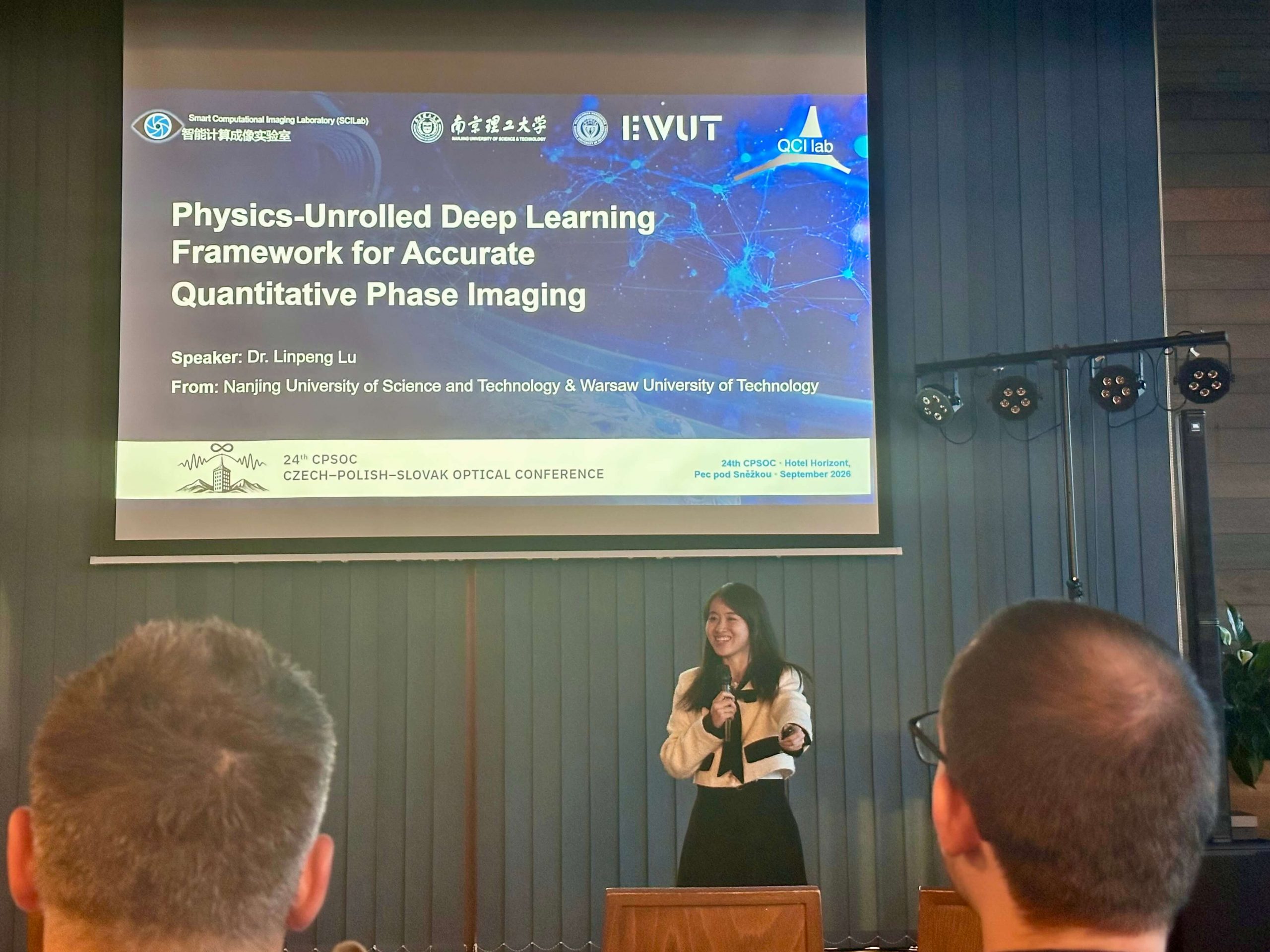
  • “PDL-TIQPI: A Physics-Unrolled Deep Learning Framework for Accurate Quantitative Phase Imaging under Partial Coherence” – Linpeng Lu
  • “Computational lensless holographic microscopy and tomography from deep-UV to near-IR on a standard sensor” – Maciej Trusiak

Maciej also served as a chair for the Optical Imaging and AI Integration Session 3.

We thank the organizers for the invitation and for creating such a valuable space for scientific discussion. It was a great opportunity to share our recent research, exchange ideas with the photonics community. 

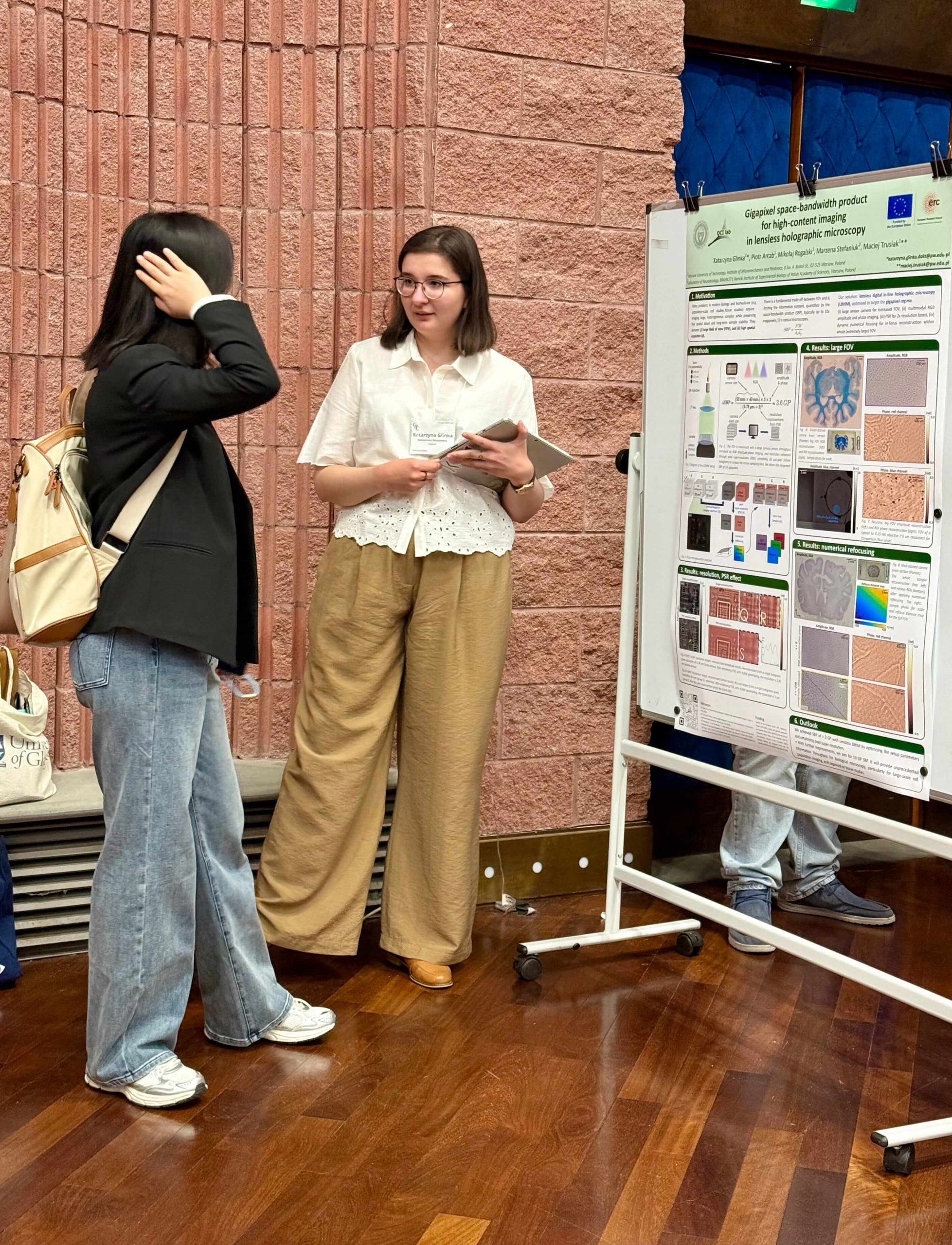
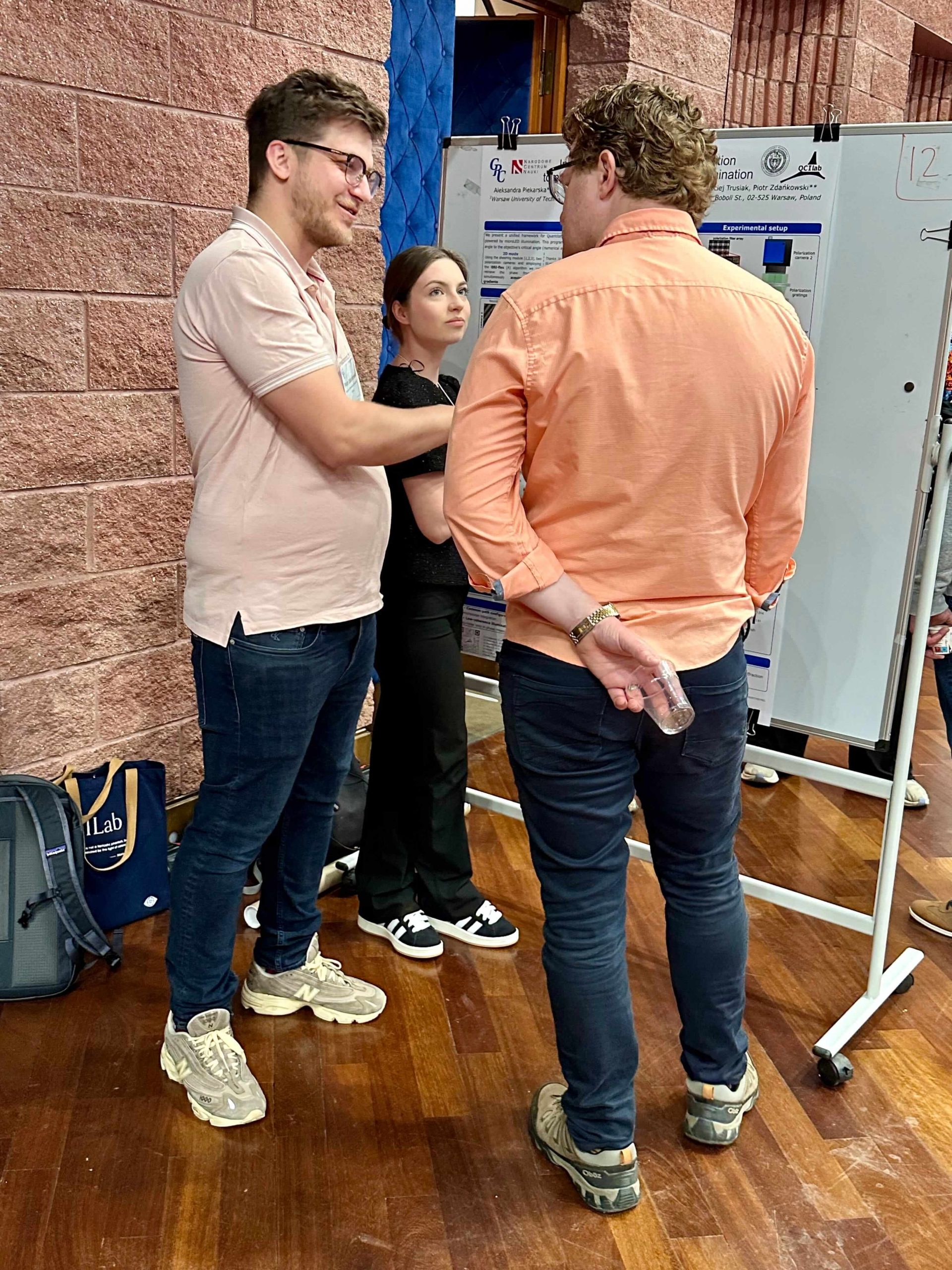
[April 2026]  Gordon Research Conference (GRC) Image Science in Tuscany – what an inspiring week! 🔬

Our team had the pleasure of participating in this unique and discussion-driven meeting, sharing our latest research and engaging with the image science community.

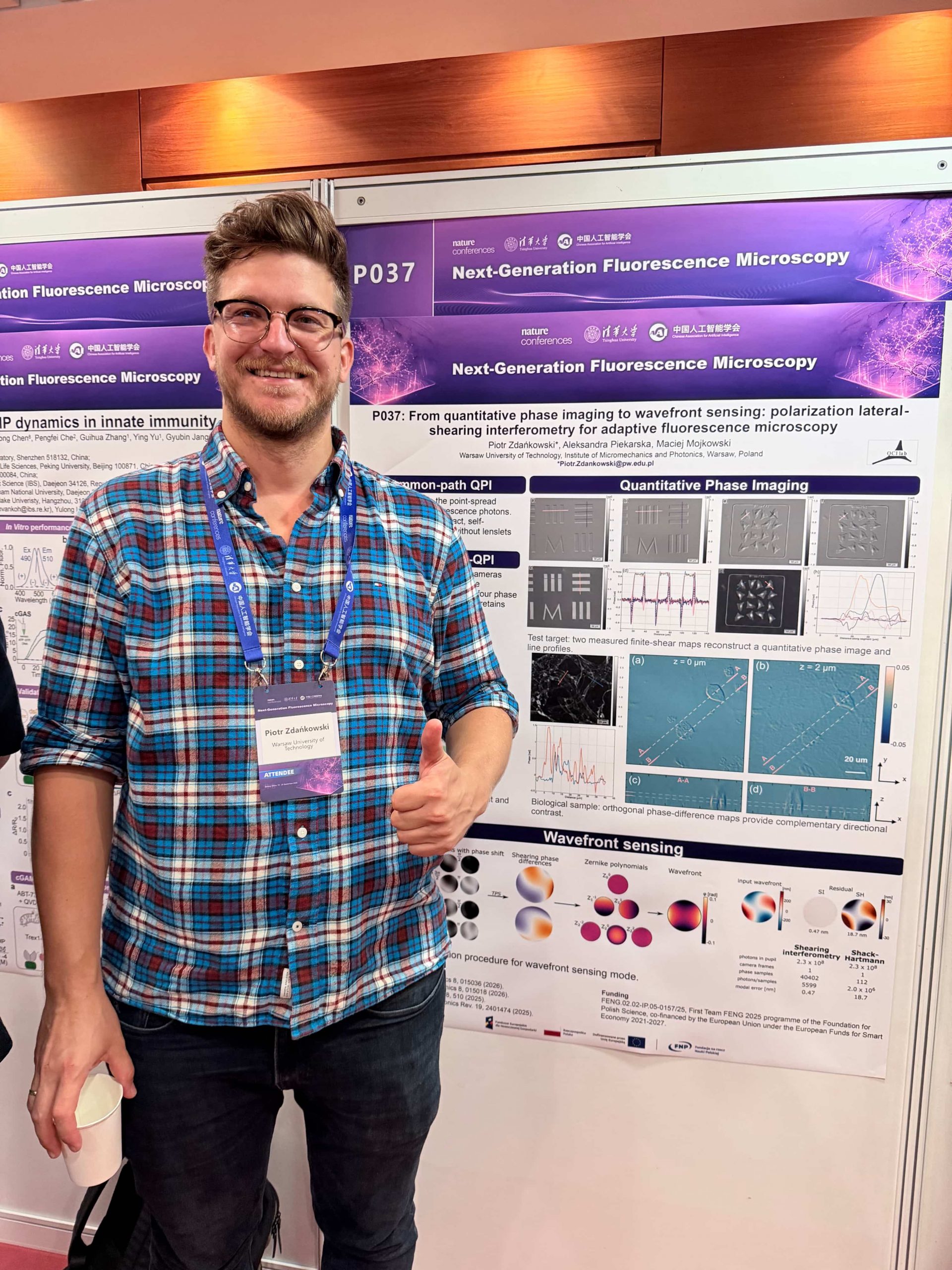
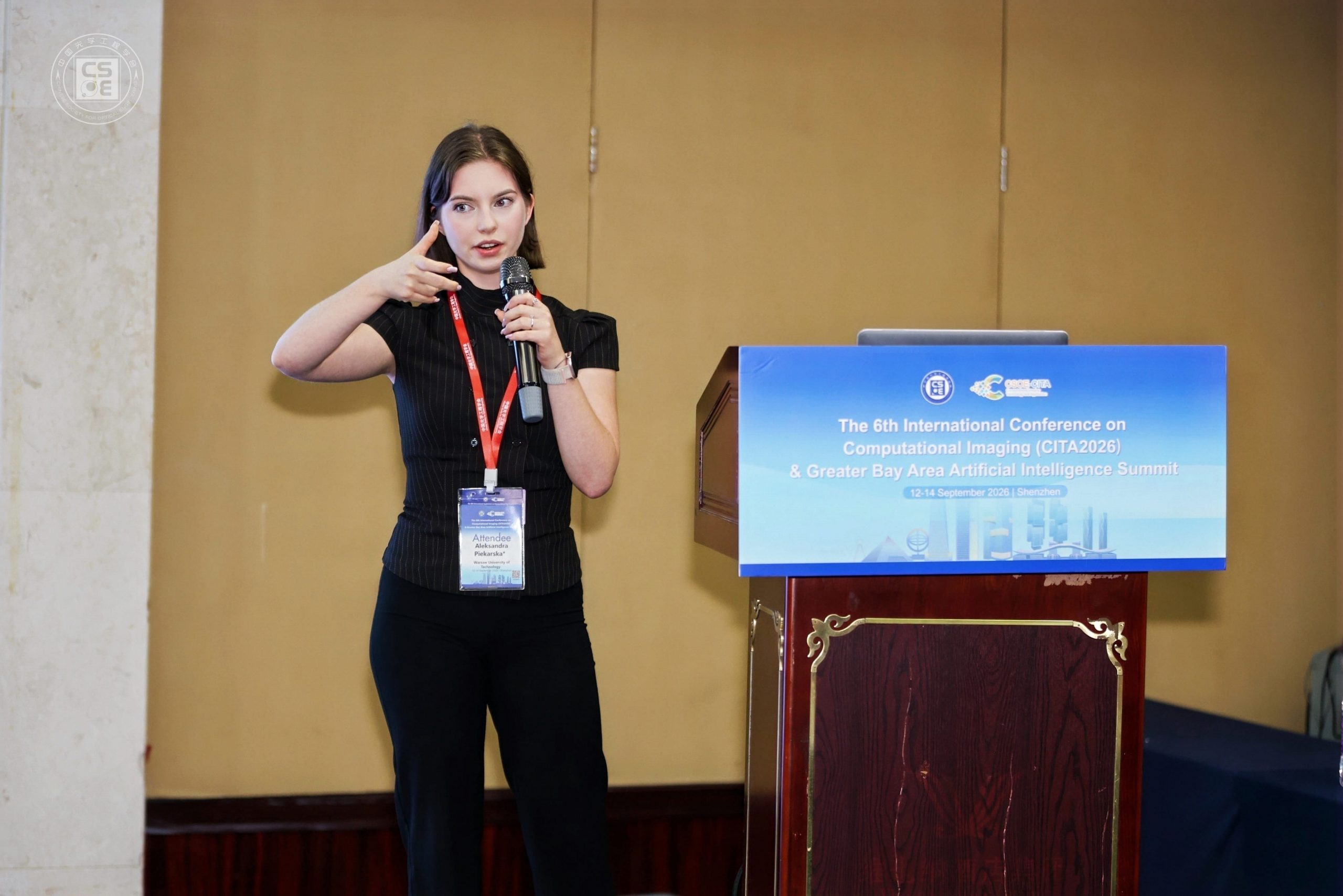
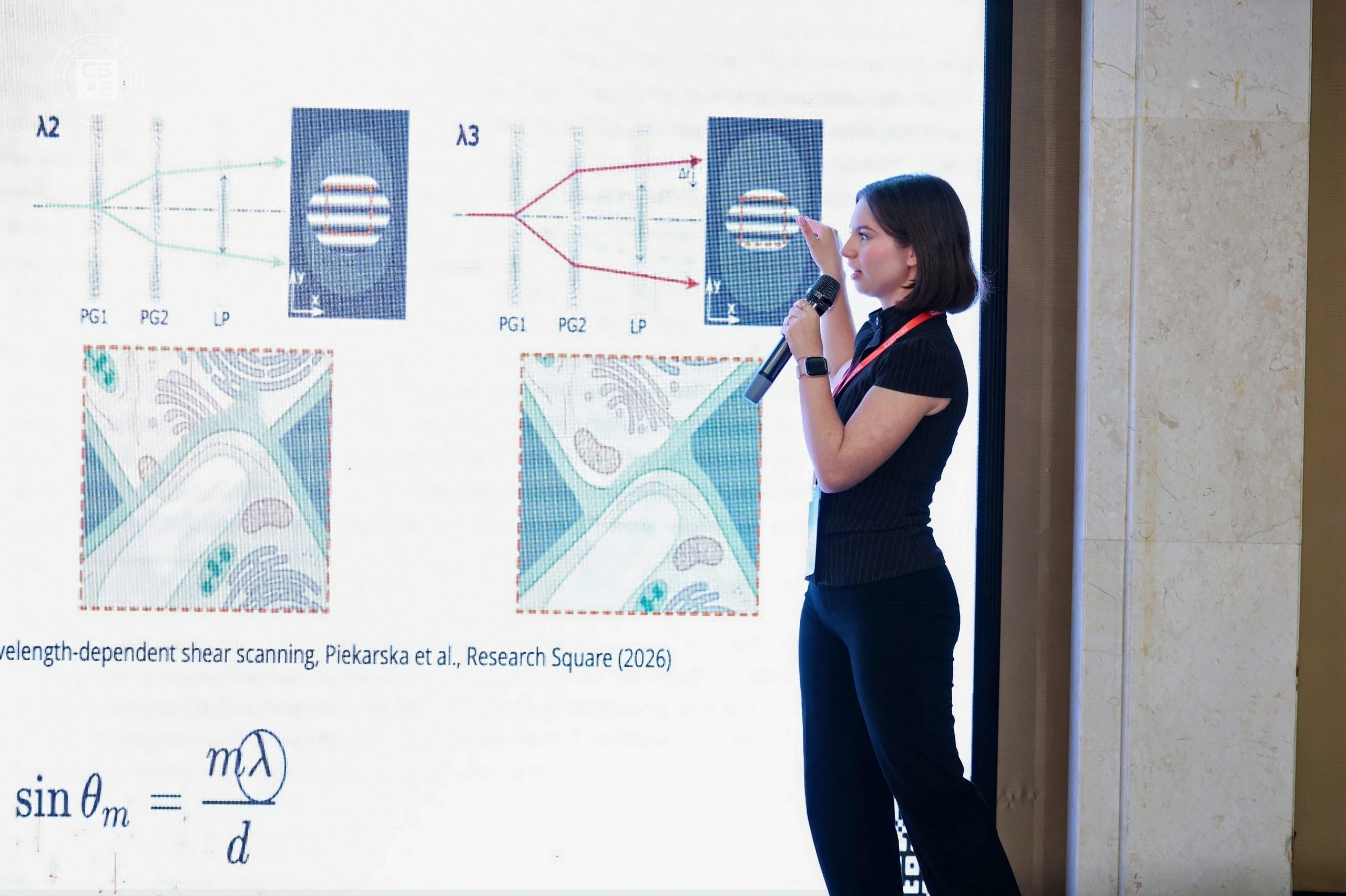
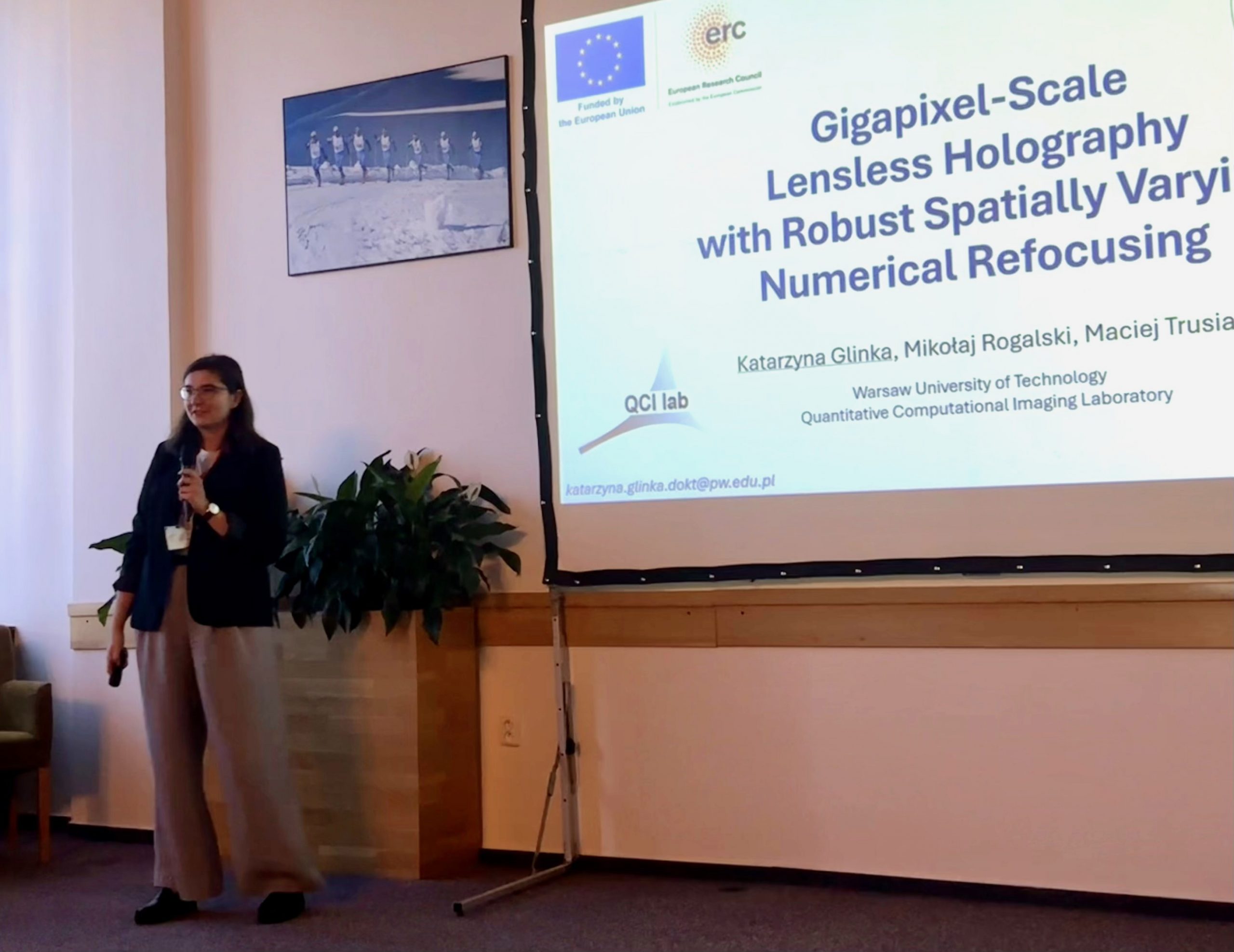
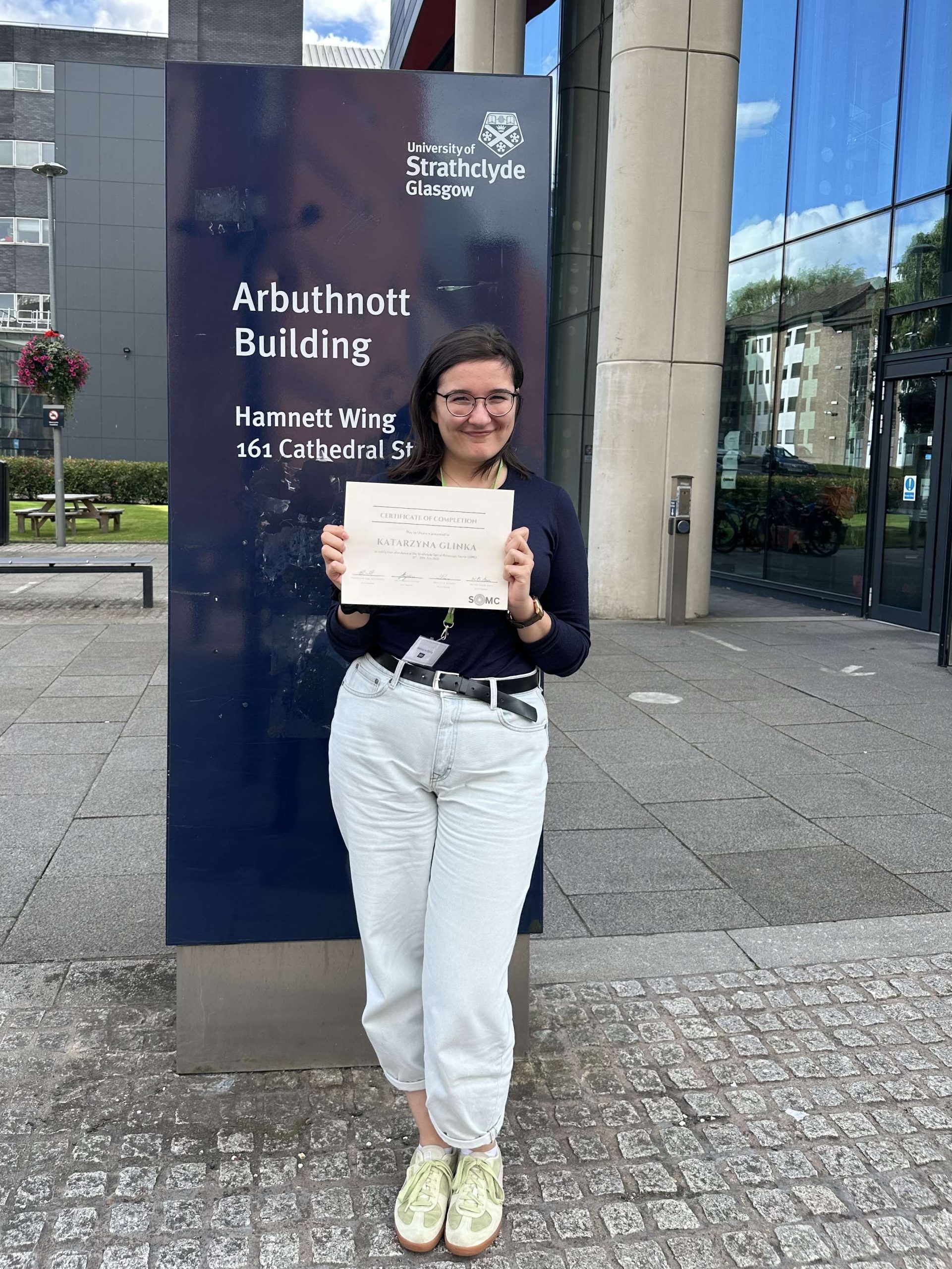
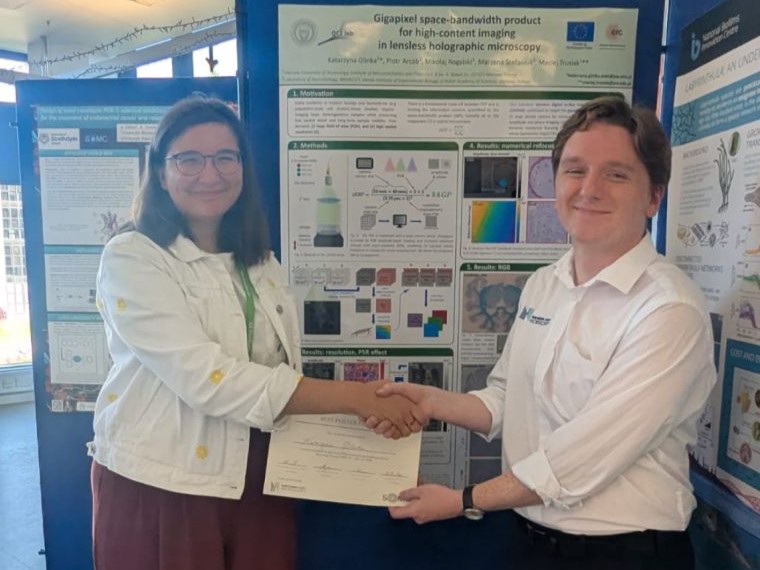
Katarzyna Glinka presented her poster on Gigapixel space-bandwidth product for high-content imaging in lensless holographic microscopy, and Aleksandra Piekarska shared her work on Incoherent lateral shearing diffraction tomography based on microLED illumination.

Our PhD students also presented their work at the pre-conference seminar (GRS Image Science), before being joined for GRC by the rest of the QCI Lab team: Maciej Trusiak and Piotr Zdańkowski. Both events sparked valuable conversations and insightful feedback.

Beyond the presentations, GRC created an exceptional space for in-depth discussions, meaningful scientific exchange, and networking opportunities. We’re grateful for all the conversations, questions, and ideas that will undoubtedly impact our future work. A big thank you to the organisers for maintaining such a high-quality and interactive format, and to everyone who stopped by our posters – it was a pleasure to connect!

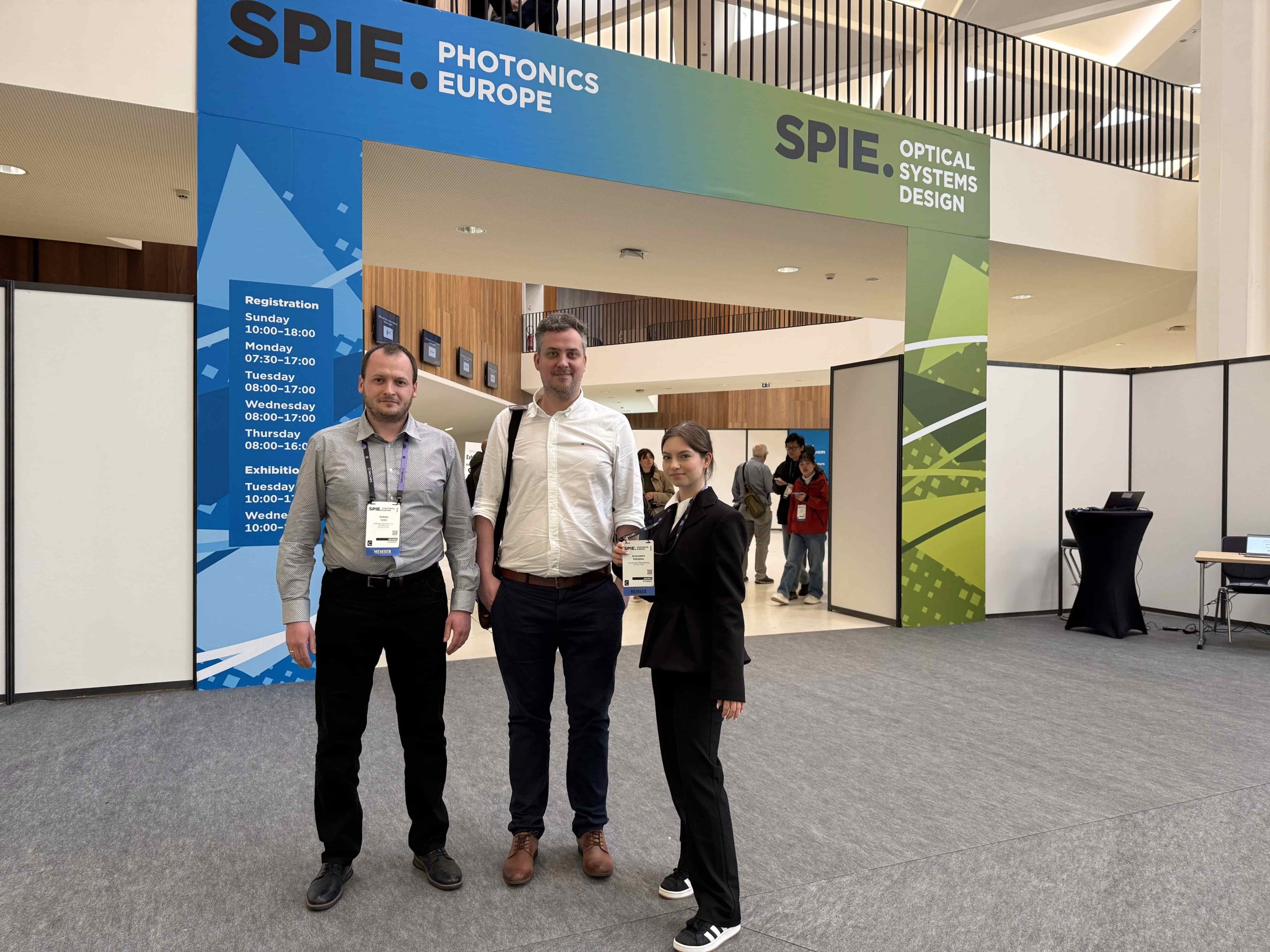
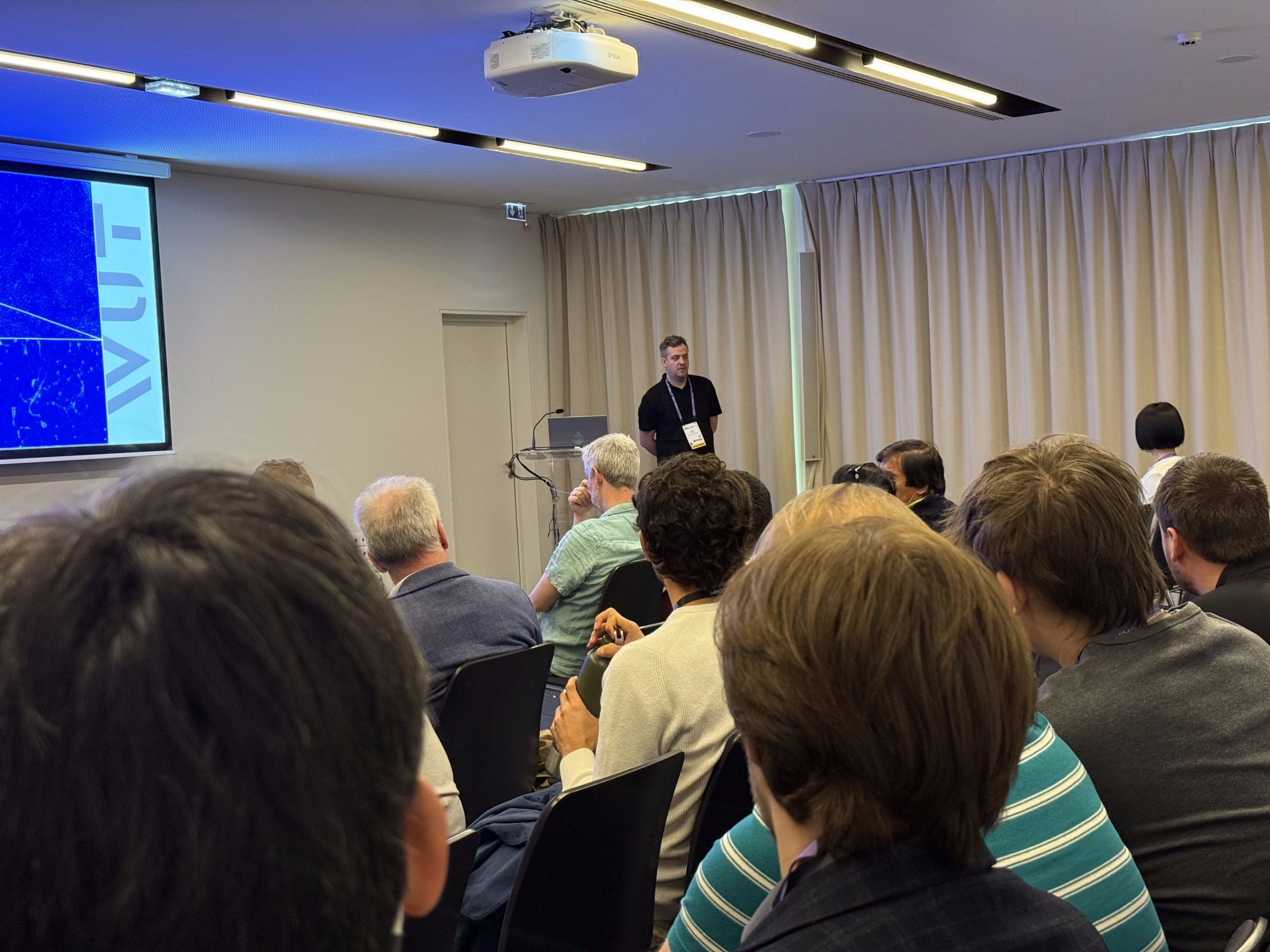
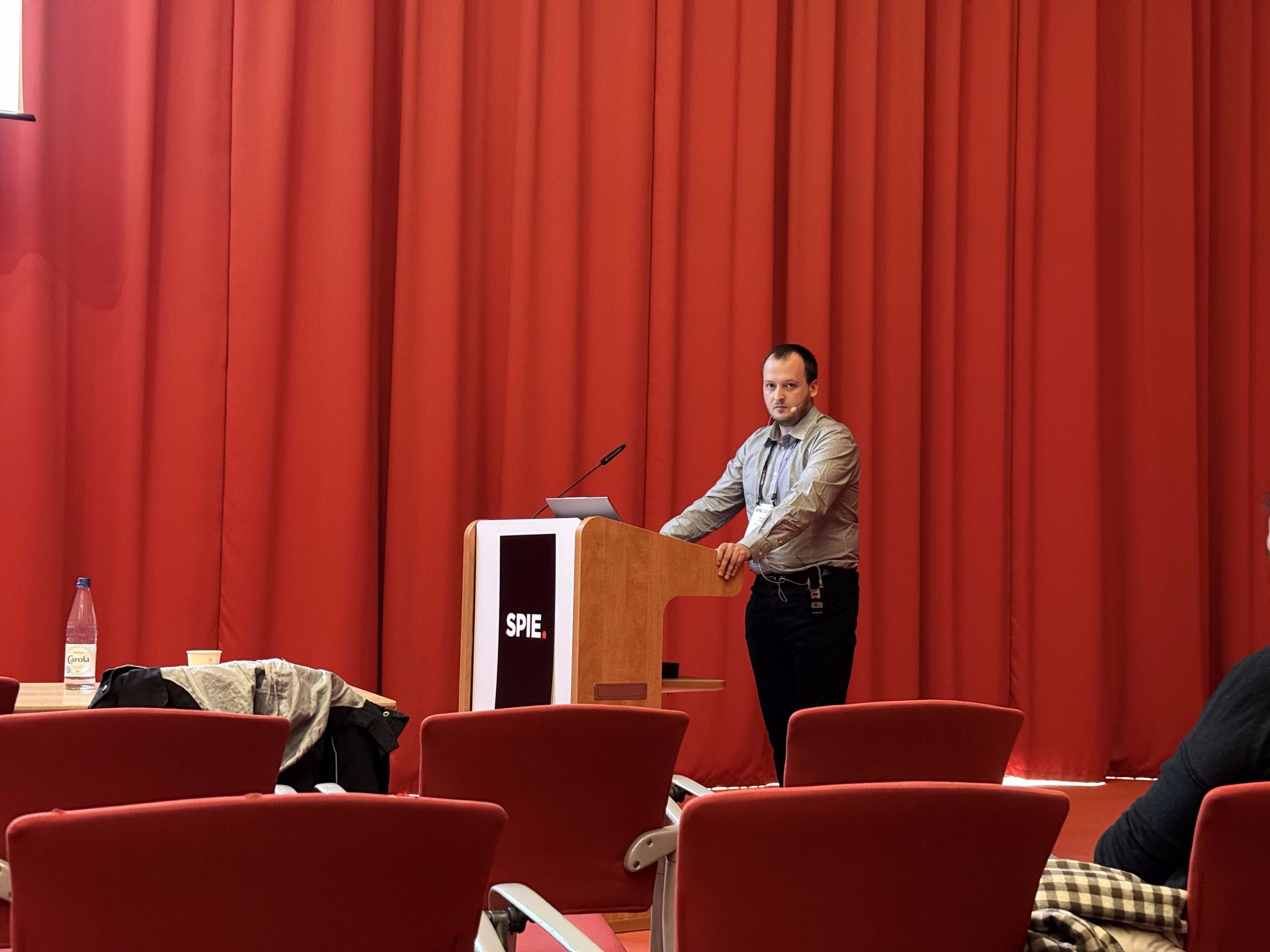
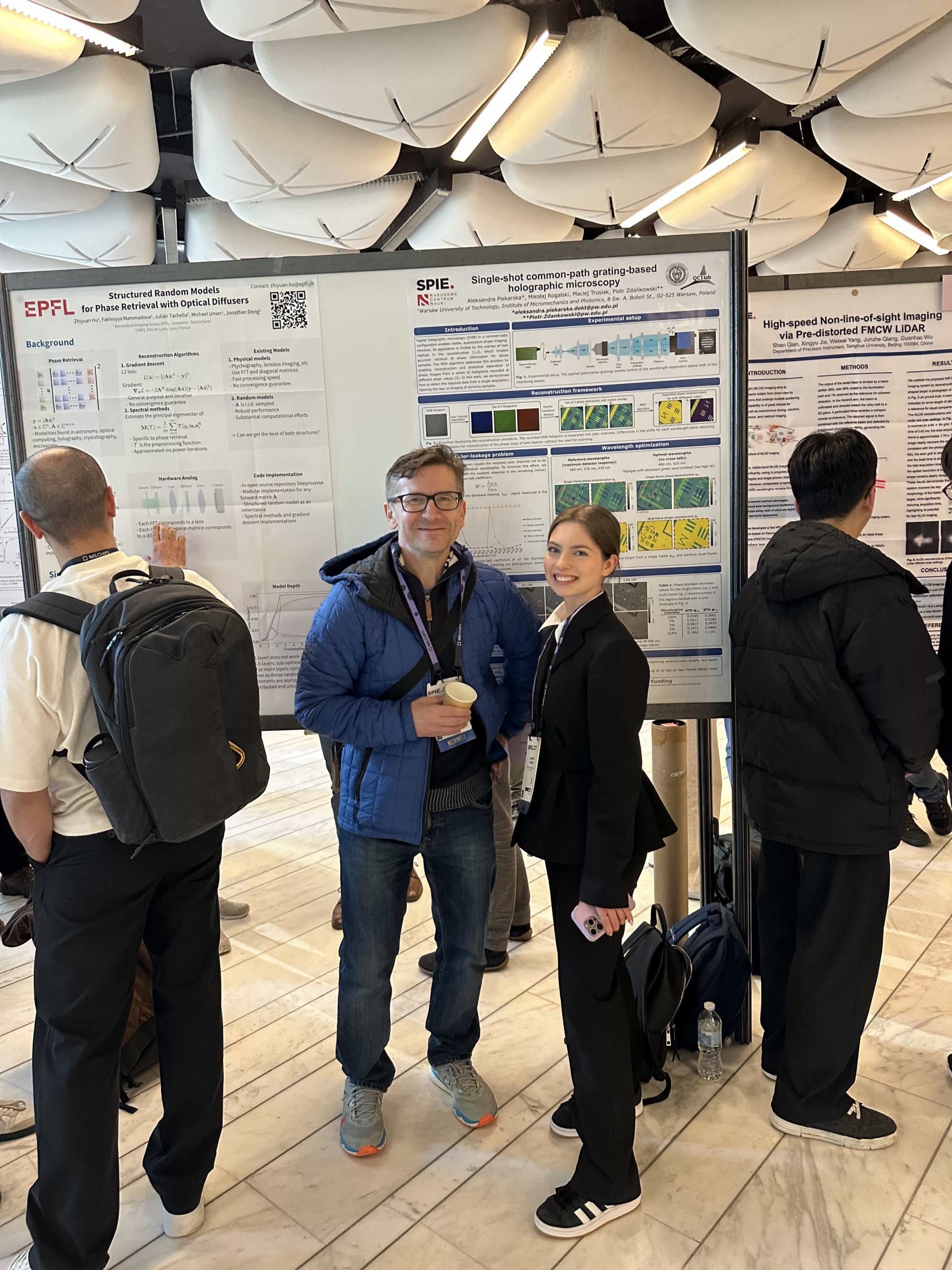
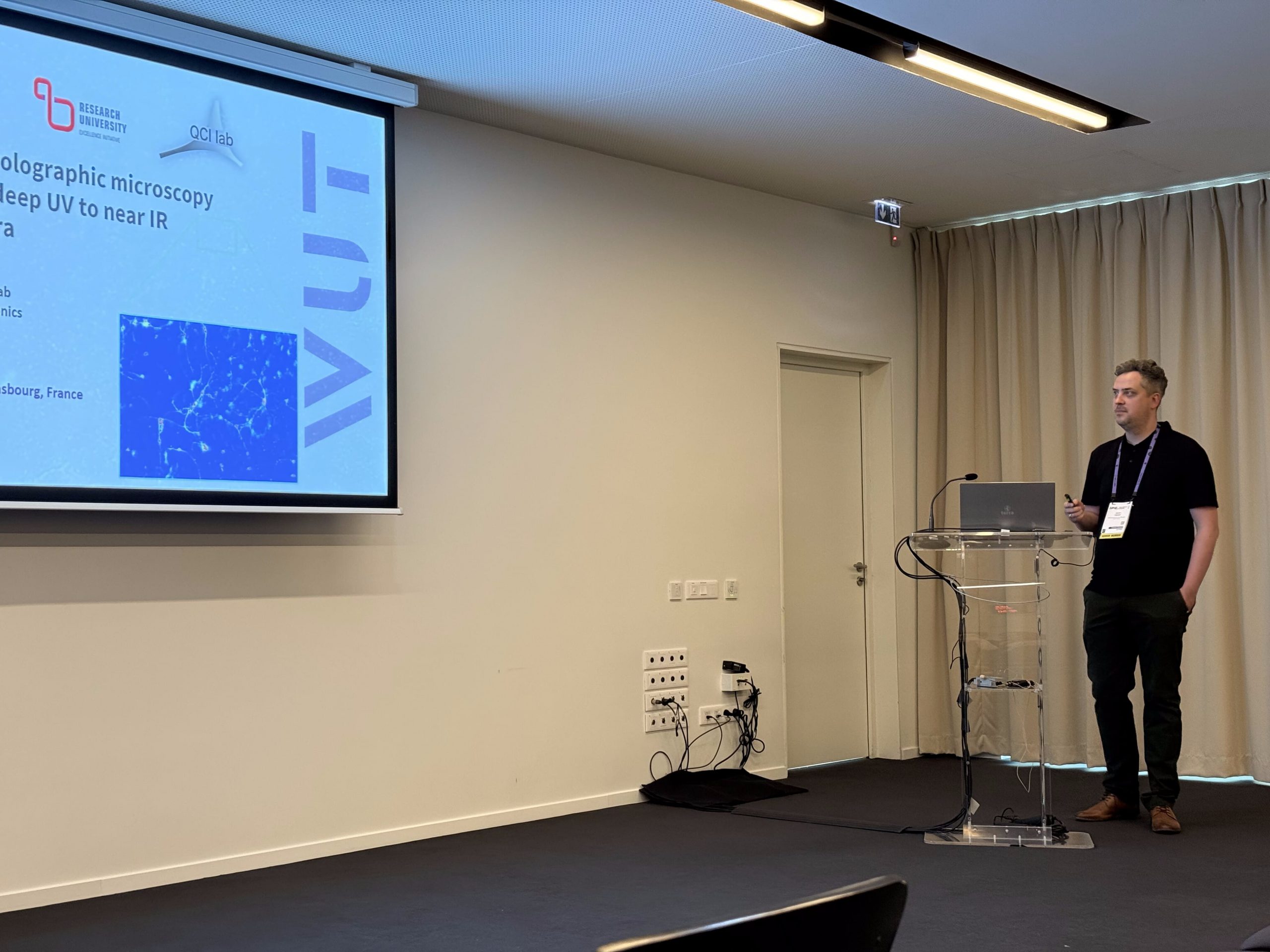
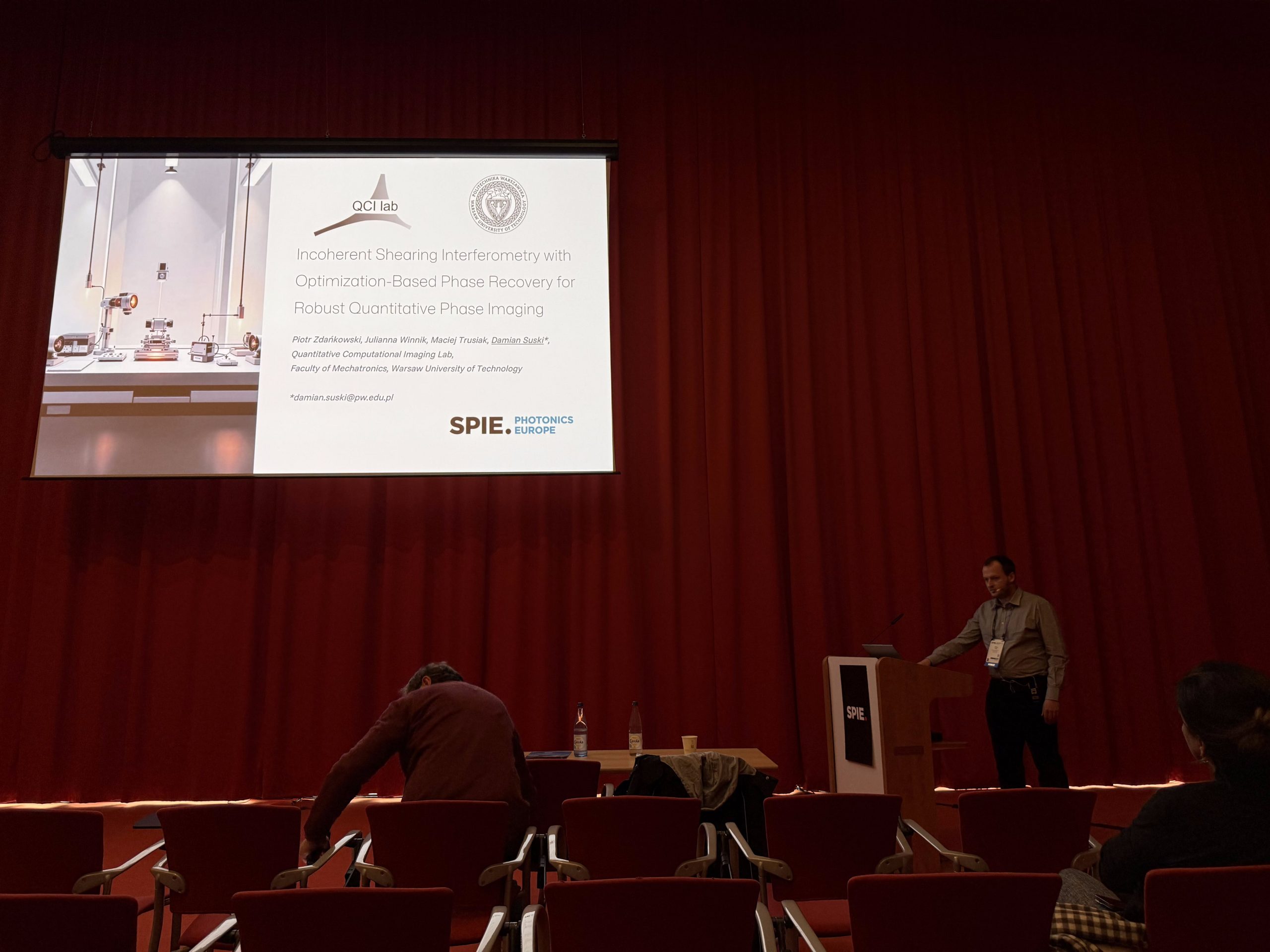
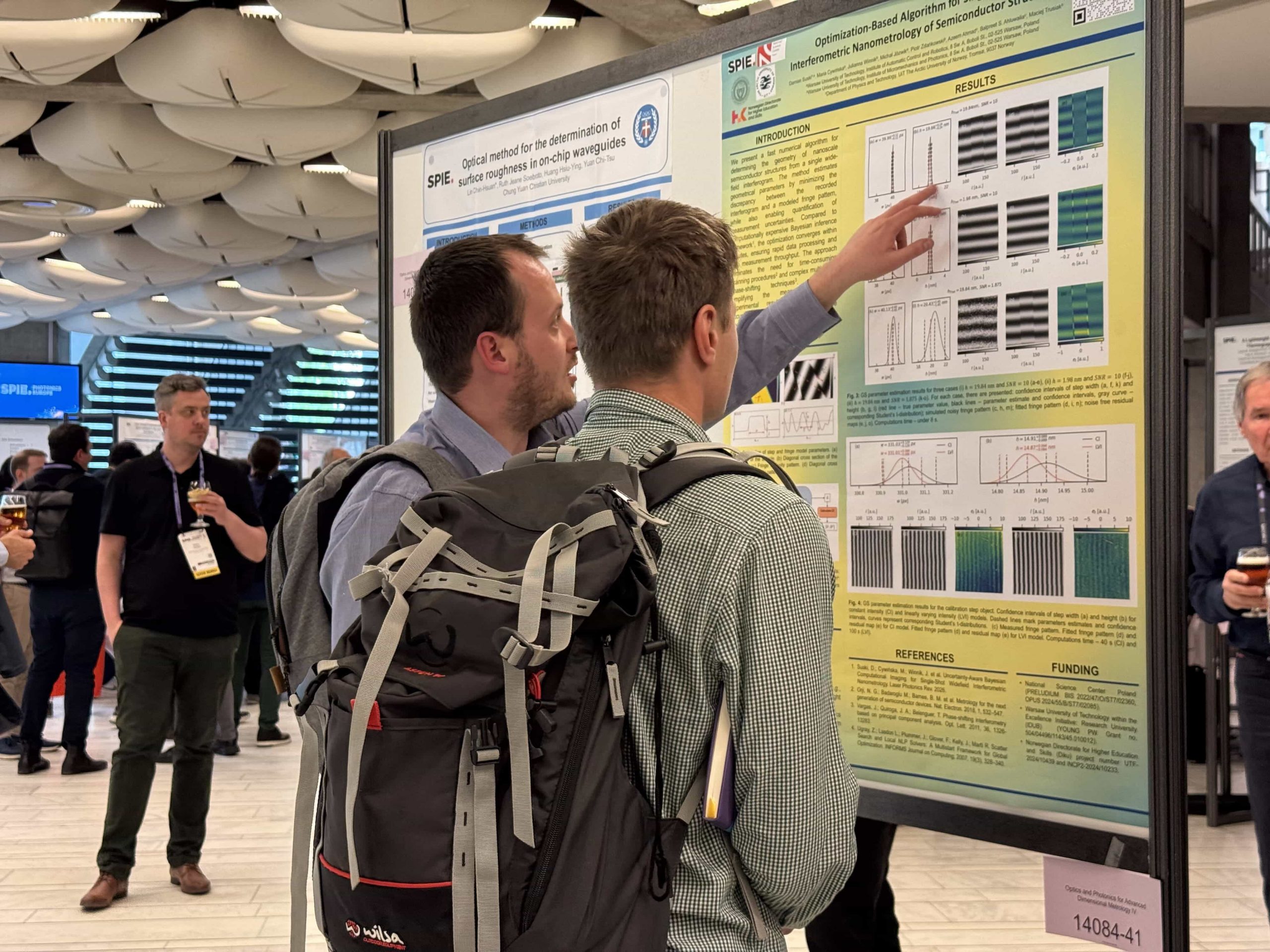
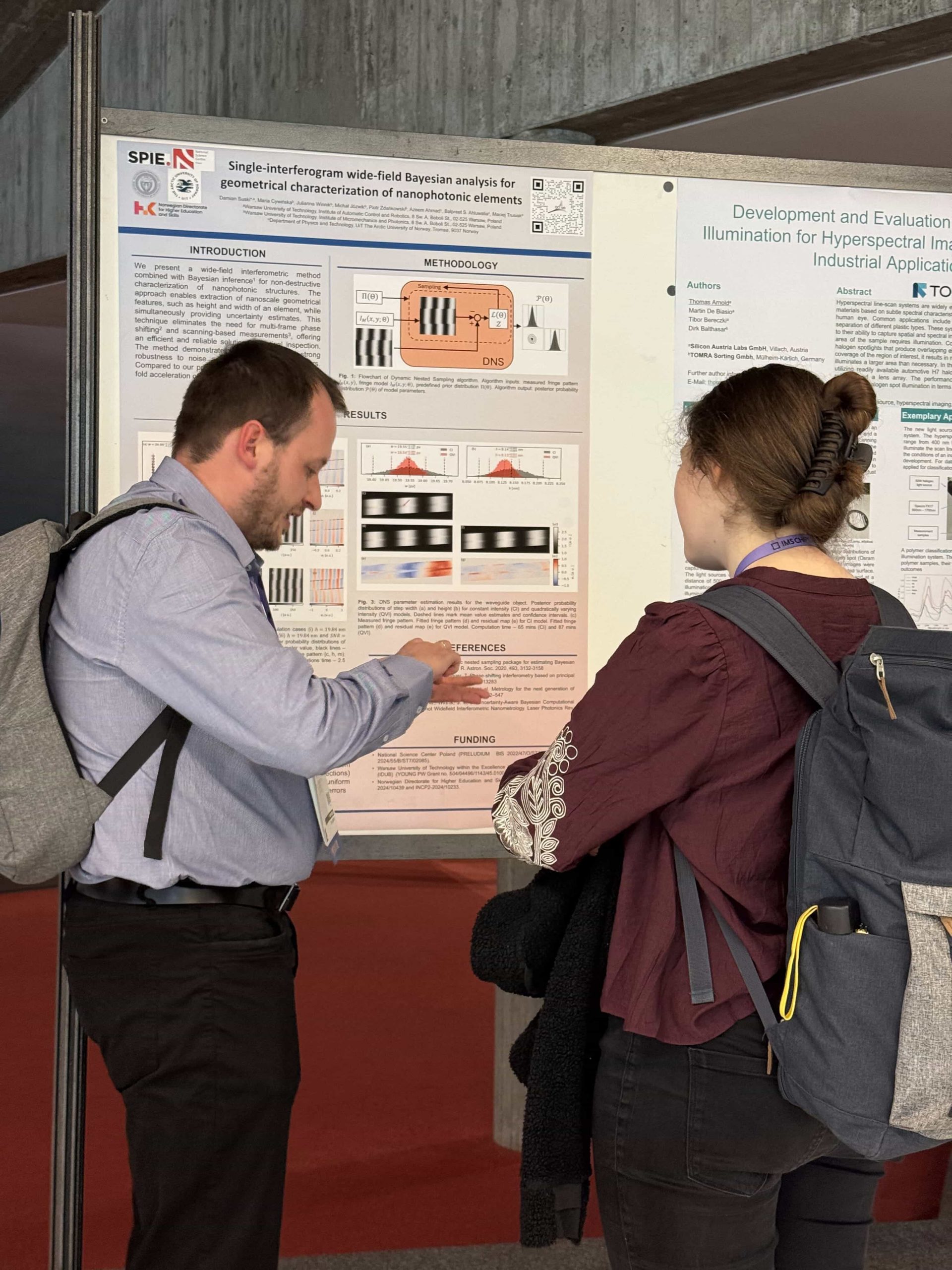
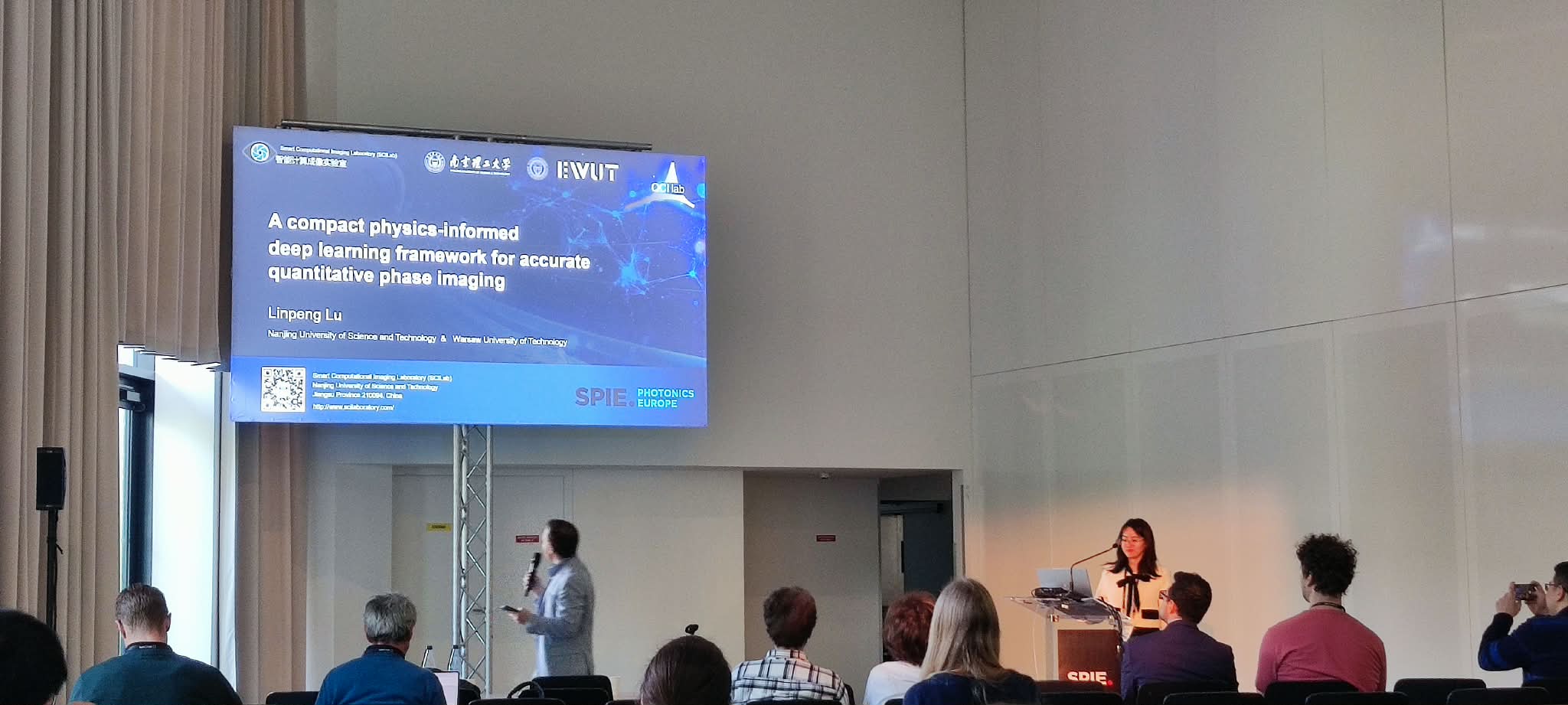
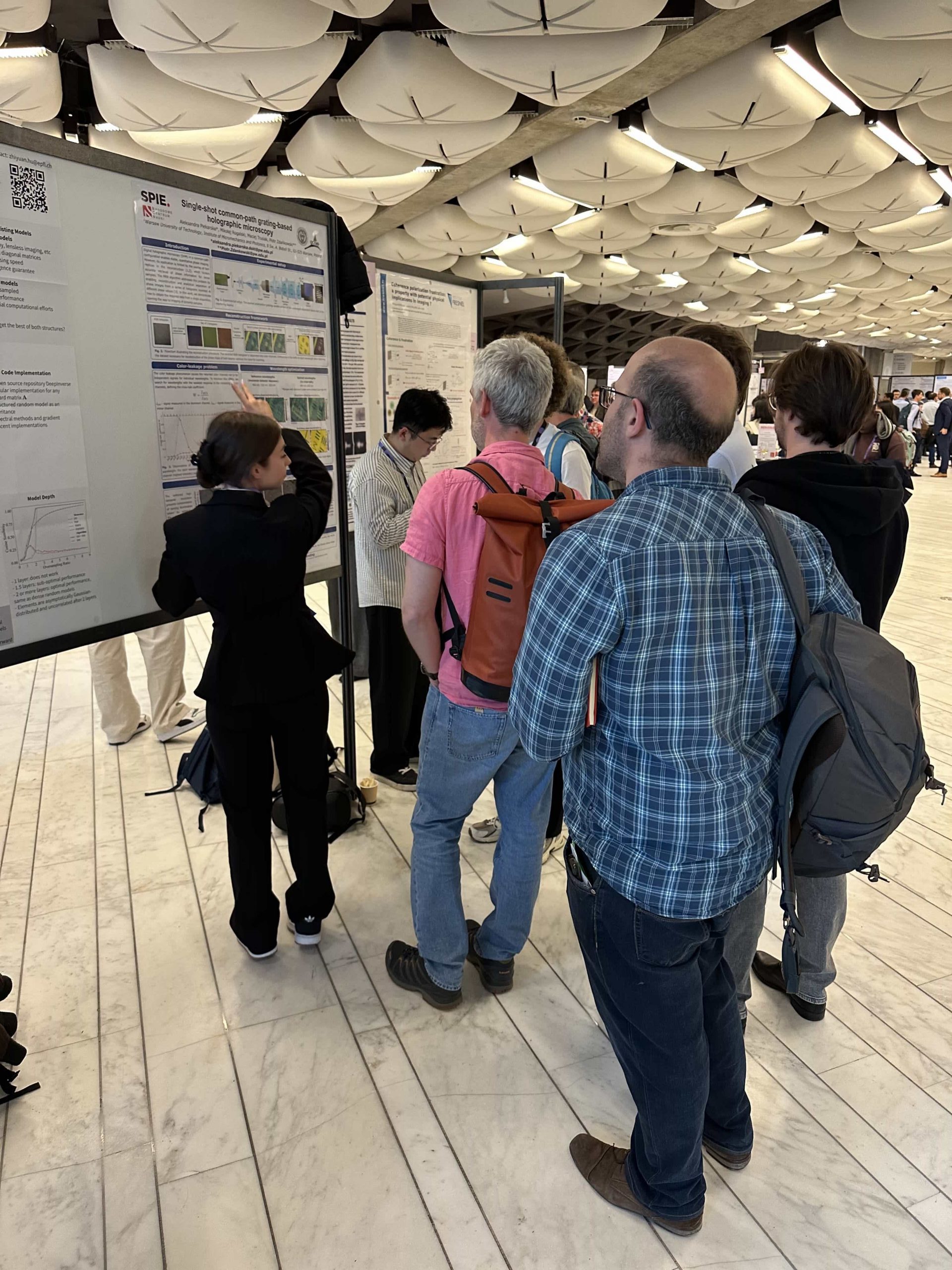
[April 2026] 𝐒𝐏𝐈𝐄 𝐏𝐡𝐨𝐭𝐨𝐧𝐢𝐜𝐬 𝐄𝐮𝐫𝐨𝐩𝐞 𝟐𝟎𝟐𝟔 — 𝐰𝐡𝐚𝐭 𝐚 𝐠𝐫𝐞𝐚𝐭 𝐞𝐱𝐩𝐞𝐫𝐢𝐞𝐧𝐜𝐞! ✨

Last week, our team had the pleasure of actively contributing to this inspiring event with 6 presentations. 🔬

Our work was presented through oral talks by Maciej Trusiak (Invited Talk), Linpeng Lu, and Damian Suski, as well as poster presentations by Aleksandra Piekarska and Damian Suski — with Damian presenting two posters! We were also glad to support the community through session chairing by Maciej Trusiak.

Gigantic thanks go to all co-authors of these works: Piotr Zdańkowski, Julianna Winnik, Mikołaj Rogalski, Michał Józwik from QCI Lab, Maria Cywińska and Małgorzata Kujawińska from Warsaw University of Technology, Xingyu Huang and Chao Zuo from Nanjing University of Science and Technology, Azeem Ahmad and Balpreet Singh Ahluwalia from UiT- The Arctic University of Norway.

Big thanks to everyone who attended our talks, visited our posters, and took the time to discuss with us, as well as to the organizers (SPIE, the international society for optics and photonics) creating such a great platform for scientific exchange, collaboration, and inspiring discussions.

[March 2026] This week, the microscopy community gathered in Stockholm for Focus On Microscopy FOM2026 🔬✨

Members of our research group had the pleasure of contributing to this inspiring event, sharing their latest results and engaging with colleagues from around the world.

Piotr Zdańkowski delivered an informative oral presentation on A unified 3D QPI platform enabled by single-shot polarization-grating shearing interferometry and incoherent microLED illumination, and Katarzyna Glinka presented a poster on her PhD research on Improved space-bandwidth product in lensless holographic microscopy for maximised information content.

The conference provided a fantastic platform for exchanging ideas, discussing research directions, and strengthening collaborations across the microscopy community. We are proud to see our team actively contributing to advancing optical imaging and quantitative phase techniques.

Thank you to everyone who joined the discussions, and a huge thank you to the organisers. See you at the next edition! 👋

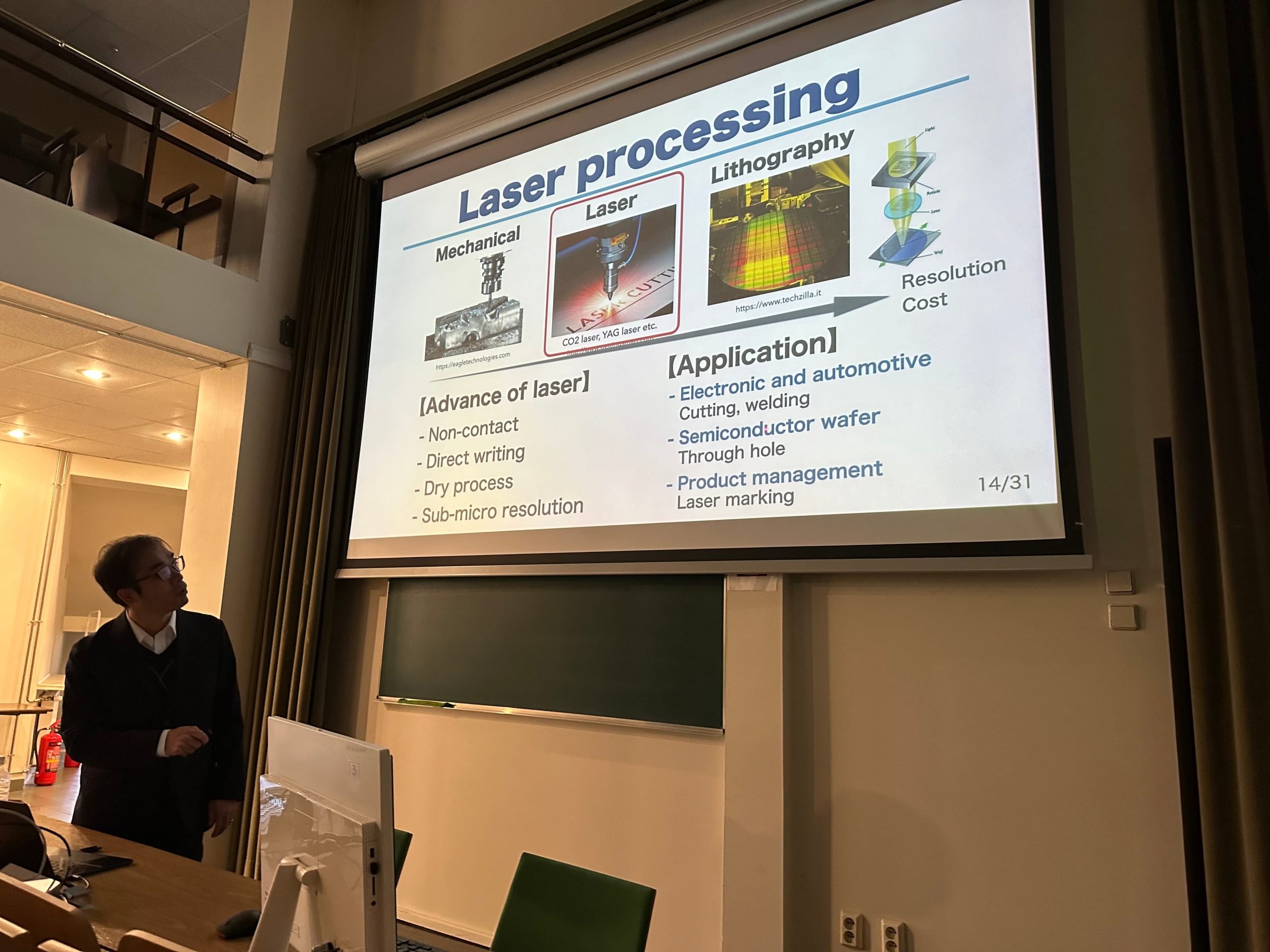
[March 2026] We were delighted to welcome Prof. Satoshi Hasegawa from Utsunomiya University, Japan, to our laboratory.

During his visit, he gave a seminar titled “Computer-generated holography for laser microfabrication”, presenting the latest developments in laser microfabrication using CGH and demonstrating how this technique enhances precision, efficiency, and flexibility in laser processing.

Prof. Hasegawa also toured our laboratories, and we had an opportunity to present our research setups and discuss ongoing projects. It was a pleasure to host him and exchange inspiring ideas. Thank you, Prof. Hasegawa, for your visit!

[March 2026] We are proud to share that our PI, Maciej Trusiak, has been awarded NCN National Science Centre SONATA BIS funding for the project: Lensless digital holographic microscopy with optical sectioning and chemical specificity for imaging thick and highly scattering samples [PHOT-OS] 🚀

In this project, we will develop a new platform for lensless digital holographic microscopy (LDHM) that combines:
🔬 Optical sectioning (true 3D, multilayer imaging through “encoded” holograms and advanced reconstruction algorithms),
🧪 Chemical specificity, based on molecularly selective refractive index modulation via mid-infrared (MIR) (photothermal effect).

All that in an extremely large field of view (comparable to whole-slide scans), without complex optics, and without staining (label-free). The goal is volumetric imaging of thick, highly scattering tissue samples with simultaneous structural and molecular contrast.

🌍 We are proud to cooperate with: Prof. Balpreet Singh Ahluwalia (UiT- The Arctic University of Norway), Dr Mukesh Varshney (Karolinska Institutet), Prof. Vicente Micó and Prof. Javier Garcia (University of Valencia), Prof. Marzena Stefaniuk and Dr Pawel Matryba (The Nencki Institute of Experimental Biology PAS), Prof. Chao Zuo (Nanjing University of Science and Technology), Prof. Tomasz P. Wrobel (Jagiellonian University), Prof. Sylvain Gigan (Sorbonne Université)

Excited to get started! ✨

The project is funded by the NCN National Science Centre.

[February 2026] Congratulations to Julia Dudek on her MSc defense with distinction — she’s now starting her PhD with us! ✨

Julia has been working with our group for over a year during her Master’s studies and is now continuing her journey with us as a PhD researcher.

Her research focuses on label-free computational imaging, particularly lensless holographic microscopy and tomography. She completed a BEng in Technical Physics (Nanoengineering) at Wrocław University of Science and Technology and an MSc in Neuroinformatics at the University of Warsaw, graduating with distinction last week. 🎉 

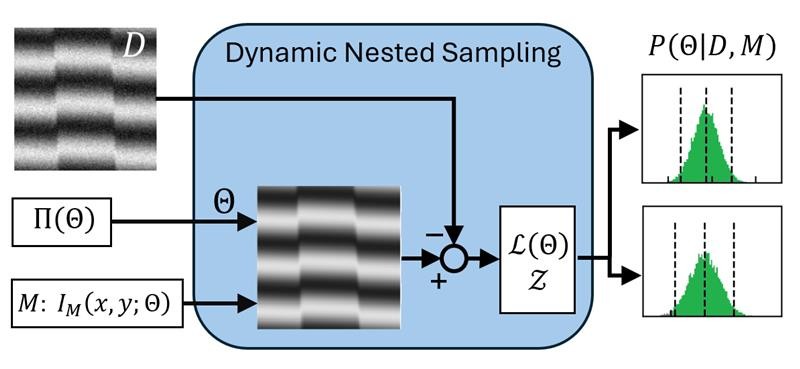
[February 2026] Discover our latest publication: “Uncertainty-Aware Bayesian Computational Imaging for Single-Shot Widefield Interferometric Nanometrology”, in Laser & Photonics Reviews

🖥️📏 The novelty
In this work, we present a novel computational framework that enables single-shot, widefield geometry measurements of nanoscale semiconductor structures. By combining an intensity forward model with Bayesian inference, our method delivers geometry-level parameters with quantified uncertainties, without explicit phase reconstruction. The widefield approach benefits from fully developed statistics over many pixels in a large field of view, significantly improving parameter estimation precision. We validate the framework in simulations and experiments, including the successful measurement of an 8 nm-high rib waveguide. This work points toward scalable, uncertainty-quantified metrology for semiconductor nanophotonics and process monitoring.

👥 Team
It was a result of fantastic cooperation between Damian Suski, Maria Cywińska, Julianna Winnik, Michał Józwik, Piotr Zdańkowski, Maciej Trusiak, Azeem Ahmad and Balpreet Singh Ahluwalia. Many thanks to our collaborators!

Funding
This research was funded by the NCN National Science Centre, Poland (PRELUDIUM BIS 2022/47/O/ST7/02360, OPUS 2024/55/B/ST7/02085) and Warsaw University of Technology within the Excellence Initiative: Research University (IDUB) (YOUNG PW Grant no.504/04496/1143/45.010012).

[January 2026] We’ve started a brand new project at QCI – Multimodal multiphoton nanoscopy using SPAD array detectors and adaptive optics, led by Piotr Zdańkowski. 🔬✨

The project focuses on developing a new generation of biological imaging methods that enable precise yet gentle visualization of structures deep inside biological tissue. 🧬

We are proud to cooperate with prof. Martin Booth (University of Oxford), prof. Giuseppe Vicidomini (Istituto Italiano di Tecnologia), prof. Fernando D. Stefani (CIBION Centro de Investigaciones en Bionanociencias – Center for Nanoscience) 🤝

The project is carried out within the First Team programme of the Foundation for Polish Science, co-financed by the European Union under the European Funds for Smart Economy 2021–2027 (FENG). 

More information about the Grant available on page.

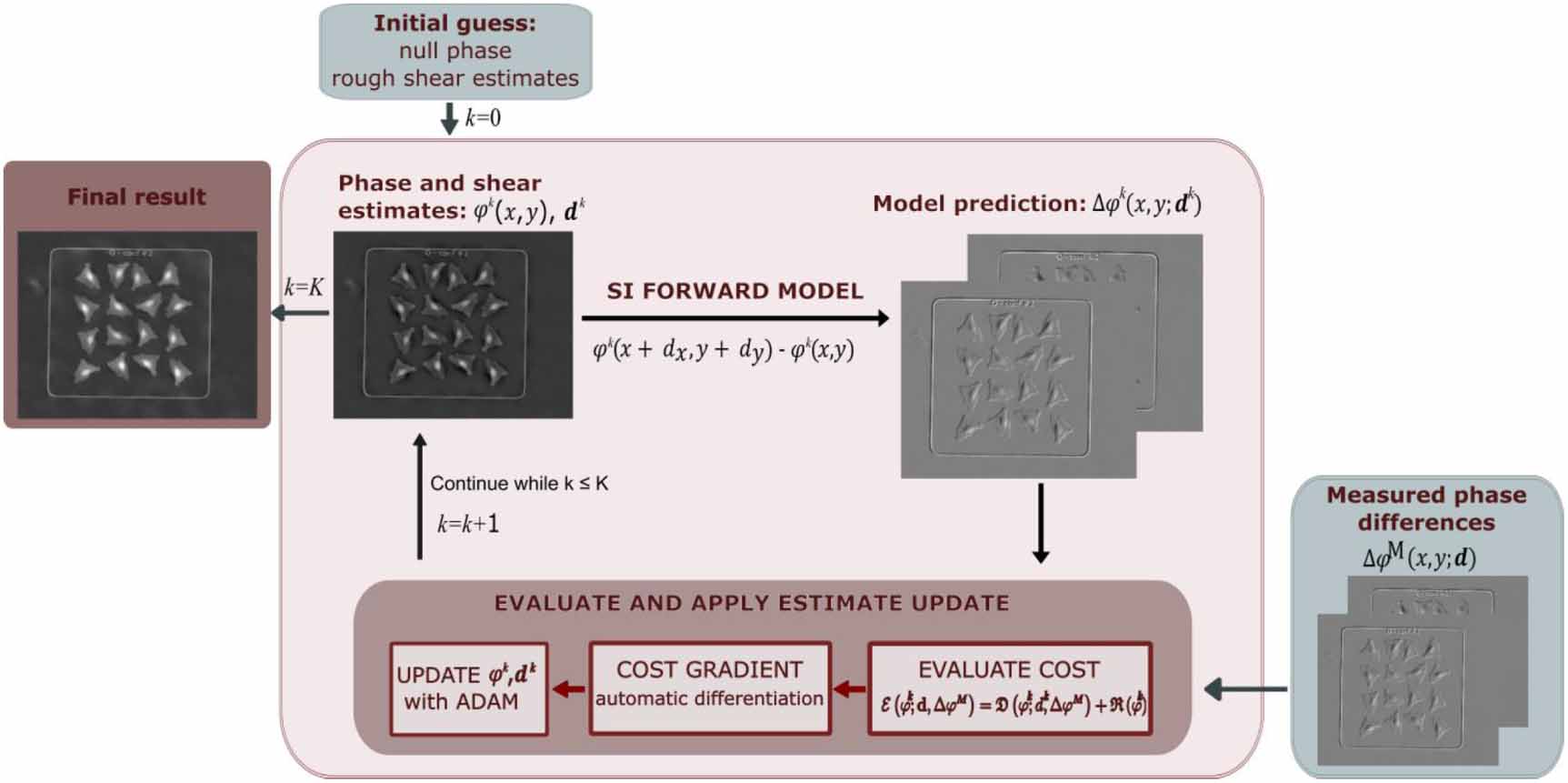
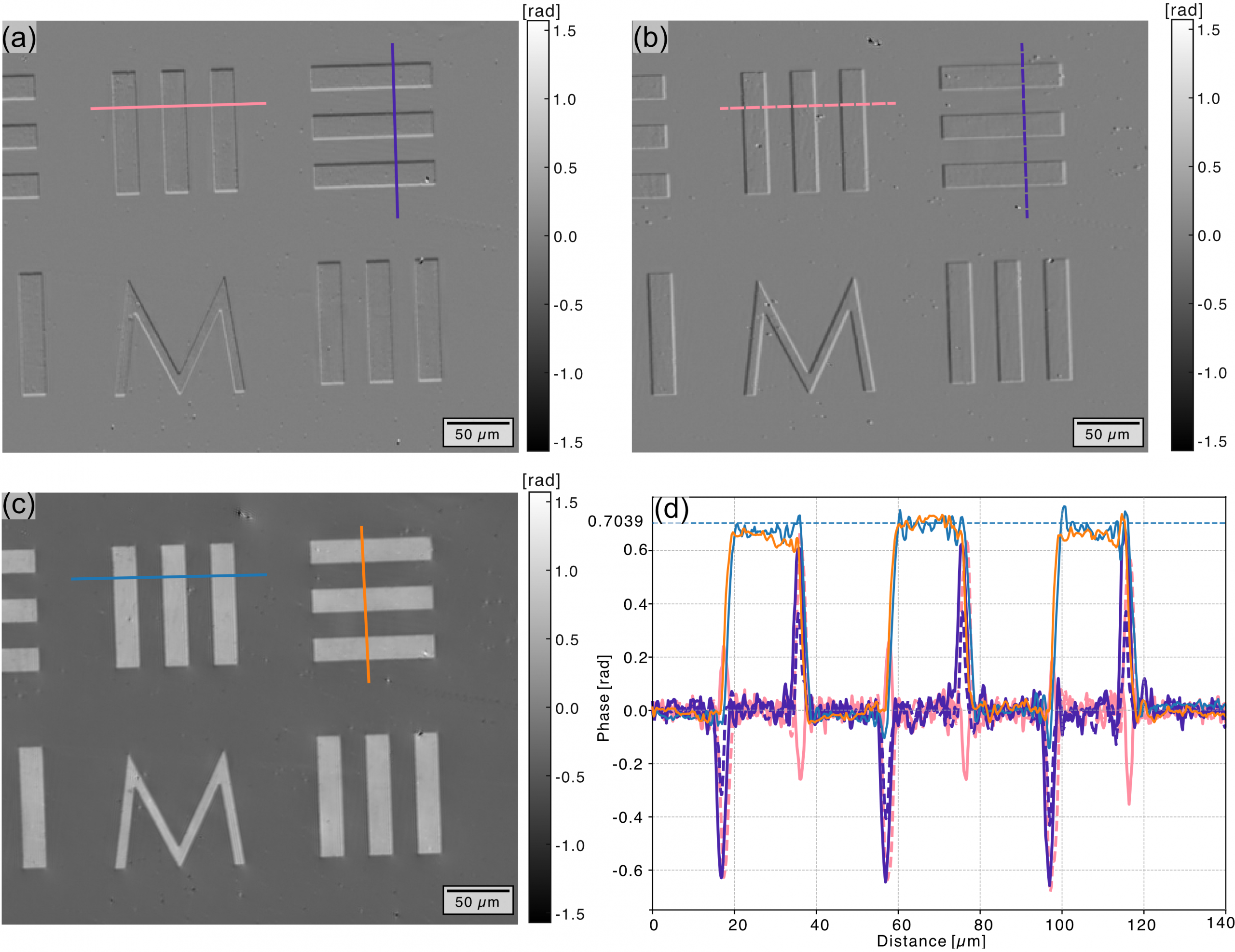
[January 2026] We’re happy to share our recent publication “OSI-flex: optimization-based shearing interferometry for joint phase and shear estimation using a flexible open-source framework” in JPhys Photonics, featured in the Emerging Leaders 2025 collection ✨

🔍 Tackled problem 
Shearing interferometry offers high stability and noise robustness, but it provides only sheared phase differences, not absolute phase. Accurate phase reconstruction is challenging – especially when shear values are unknown or hard to measure.

🛠️ Our solution
We introduce OSI-flex, an open-source, optimization-based framework that jointly estimates phase and shear. Built with automatic differentiation and adaptive moment estimation, OSI-flex adapts to real experimental conditions, supports arbitrary shear configurations, and remains robust even with single or nonorthogonal shears through regularization.

🧑‍🔬 Team
Made possible thanks to the outstanding collaboration of Julianna Winnik, Damian Suski, Matyáš Heto, Michał Ziemczonok, Michał Kołodziejczyk, Maciej Trusiak, Piotr Zdańkowski, and Małgorzata Lenarcik.

Funding
This work was supported by NCN National Science Centre, Poland (2024/55/D/ST7/02792, 2022/47/O/ST7/02360), and by The National Centre for Research and Development (Project No. WPC3/2022/47/INTENCITY/2024). The research was conducted on devices cofounded by the Warsaw University of Technology within the Excellence Initiative: Research University (IDUB).
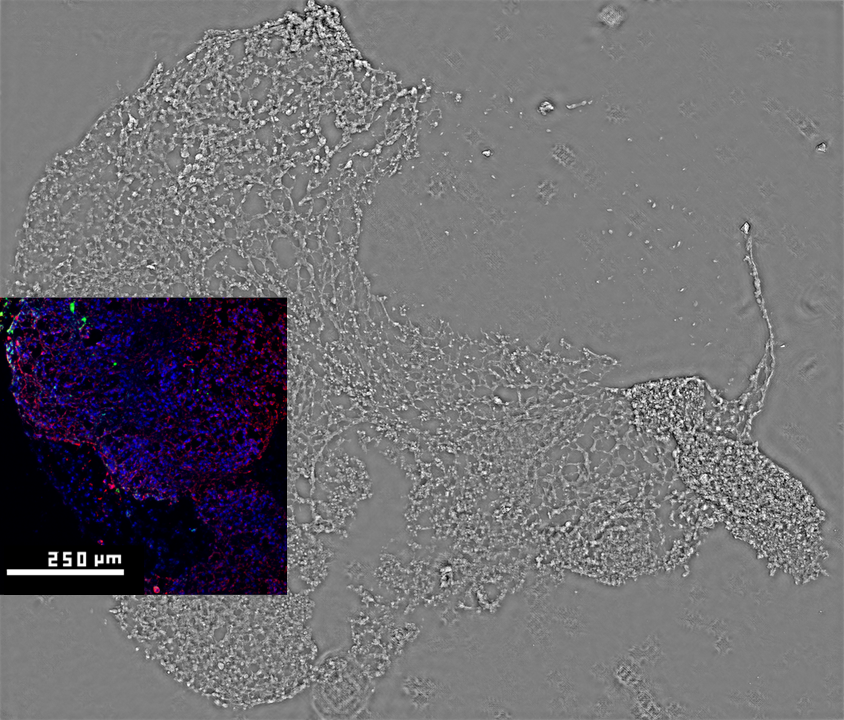
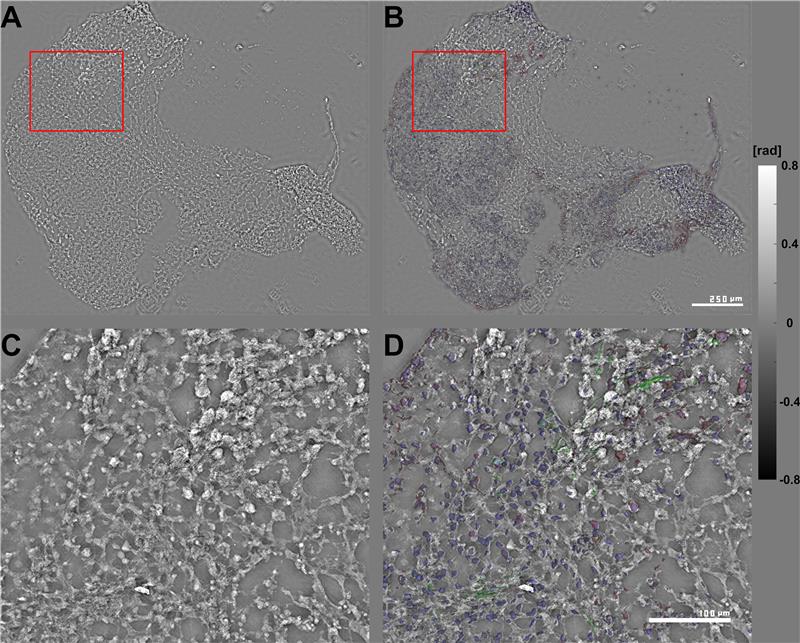
[January 2026] We are excited to share our new publication: „High Space-bandwidth Product Label-free Examination of iPSC-derived Brain Organoids via Fourier Ptychographic Microscopy” in IEEE Journal of Selected Topics in Quantum Electronics. 

🧠 What we imaged?
Brain organoids are miniature, three-dimensional models of the human cortex grown from stem cells and increasingly used to study disease and test drugs. In this work, we show that they can be visualized in their entirety, label-free, using Fourier ptychographic microscopy (FPM).

🔬 The technique & novelty
This computational technique combines multiple simple images into a single high-resolution, wide-field view. This allows us to image entire thin organoid slices with subcellular resolution using a low-cost, modified light microscope and an LED array. We then merge our phase images with conventional fluorescence microscopy, revealing, for example, that nuclei in neurogenic zones have higher phase values, reflecting higher cellular density and division activity. Our approach paves the way for cheaper, faster, and potentially fully label-free studies of brain development and disease modeling.

👨‍🔬 Team
This publication is the outcome of a fantastic collaboration between QCI Lab members: Mikołaj Krysa, Mikołaj Rogalski, Piotr Arcab, Kamil Kalinowski, Piotr Zdańkowski, Maciej Trusiak, together with Mukesh Varshney, Pawel Goclowski, Vishesh Dubey, Balpreet Singh Ahluwalia.  Many thanks to our amazing collaborators!

Funding
This work was supported by The National Centre for Research and Development (Project No. WPC3/2022/47/INTENCITY/2024), and by NCN National Science Centre, Poland (2020/39/D/ST7/03236)
[January 2026] This week the world of optics and photonics has focused its attention on San Francisco, CA, USA.
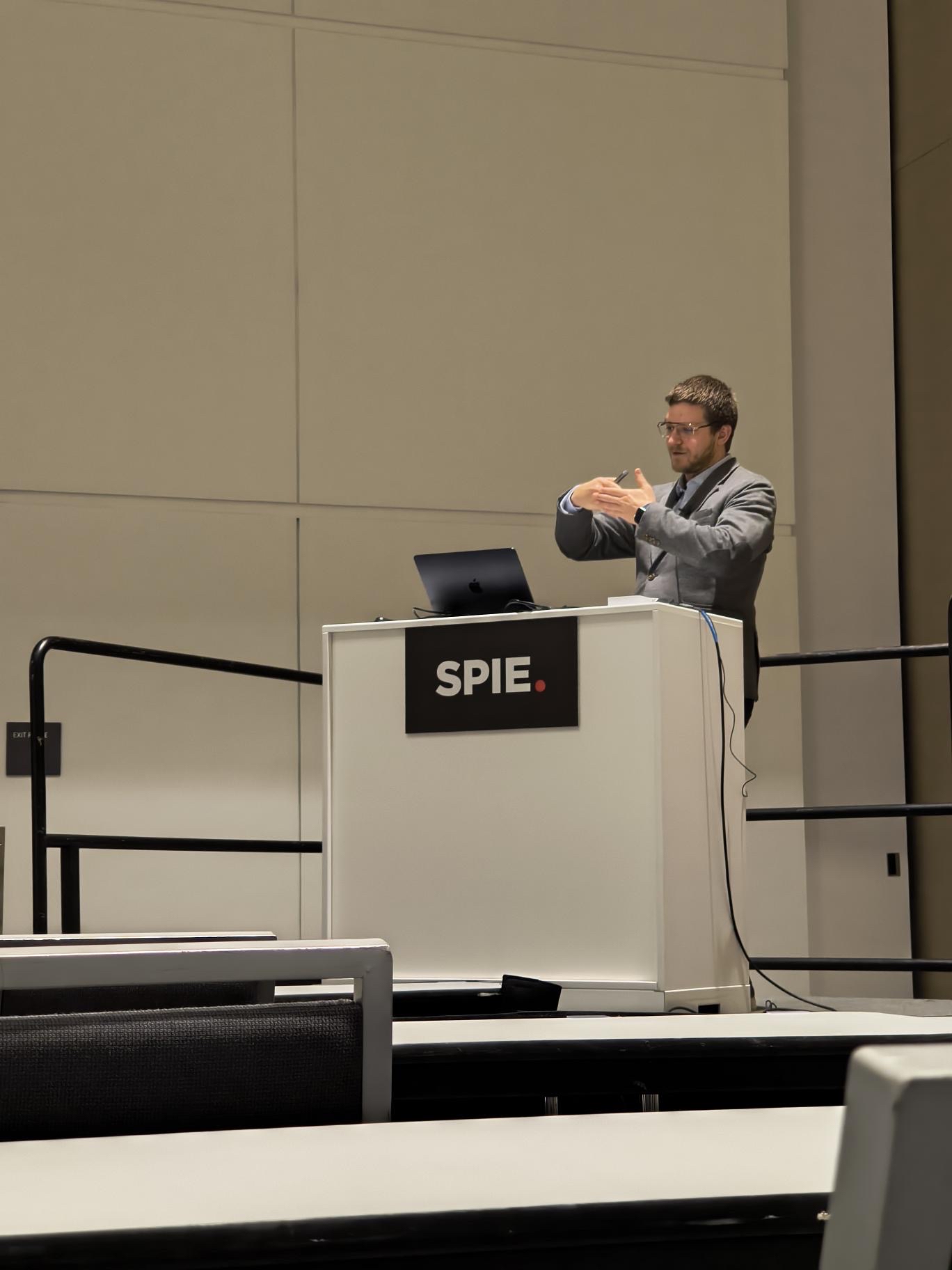
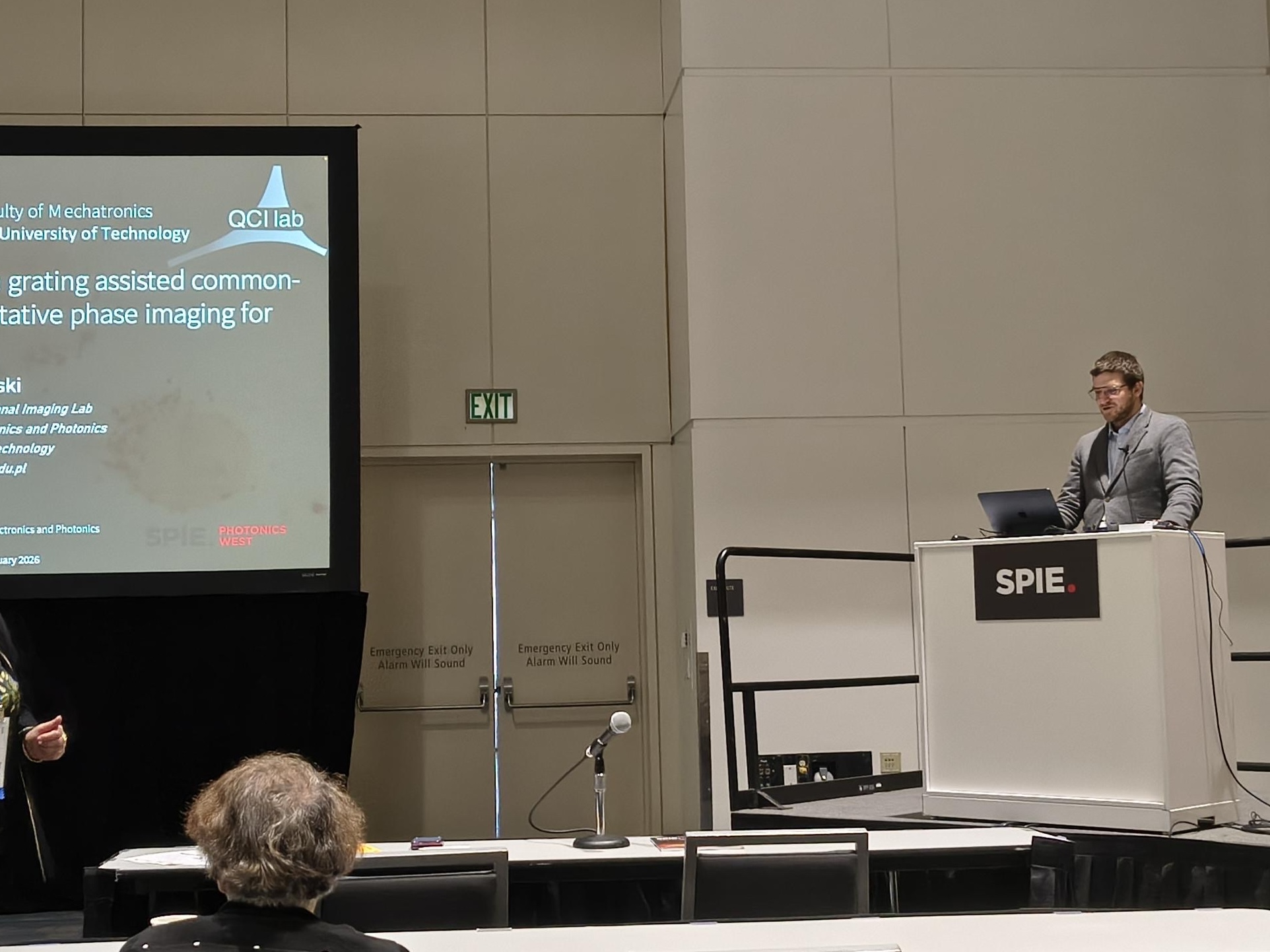
Piotr Zdańkowski had the pleasure of being part of SPIE Photonics West 2026 – one of the key global events in this field.

This year’s edition, brought together thousands of specialists at the Moscone Center – altogether 24,000 registered participants from over 75 countries.

Piotr presented as many as two presentations of the latest research works:
🔍“Compact Fourier ptychographic microscopy”
Co-authors: Maksymilian Chlipala, Mikołaj Rogalski, Maciej Trusiak
🔍“Polarization grating assisted common-path quantitative phase imaging for biosensing” (invited talk)
within the Quantitative Phase Imaging XII and Quantum Sensing and Nano Electronics and Photonics XXII conferences.

We are extremely proud to have contributed to this prestigious scientific exchange by sharing the results of our research with the global community of experts. See you at the next edition!